
In today’s fast-paced digital economy, legacy operations remain a bottleneck for many enterprises. Companies across manufacturing, finance, healthcare, and retail often struggle with outdated systems, siloed data, and inefficient processes. Transforming these operations isn’t just a matter of adopting new software—it requires a strategic approach that combines predictive analytics with workflow automation. By doing so, businesses can unlock operational efficiencies, reduce costs, and achieve a competitive edge in an increasingly data-driven world.
The Need for Transformation
Legacy operations, while often robust and reliable, were not designed for the real-time demands of modern business. Manual processes, paper-based approvals, and batch-based reporting slow down decision-making. Moreover, these systems are rarely integrated, leading to fragmented data that hinders predictive insights. According to a 2024 survey by TechInsights, 67% of enterprises cite legacy systems as the primary obstacle to digital transformation.
Predictive analytics and workflow automation provide a two-pronged solution. Predictive analytics leverages historical and real-time data to forecast trends, detect anomalies, and support proactive decision-making. Workflow automation, on the other hand, eliminates repetitive tasks, ensures consistency, and accelerates processes, allowing employees to focus on higher-value activities.
Implementing Predictive Analytics
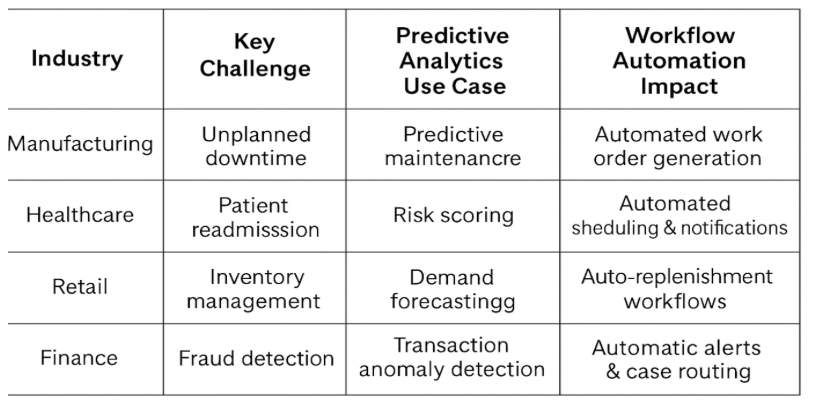
The first step in the transformation journey is embedding predictive analytics into operational workflows. Consider a manufacturing company aiming to reduce unplanned downtime. By integrating IoT sensors across equipment, predictive models can forecast failures before they occur. For example, vibration and temperature data from motors can be analyzed to predict when maintenance is needed, reducing costly interruptions.
In retail, predictive analytics enables demand forecasting. By analyzing historical sales data alongside external variables such as seasonality, promotions, and market trends, retailers can optimize inventory, reduce stockouts, and minimize excess inventory. Financial institutions leverage similar models for credit risk assessment, fraud detection, and customer churn prediction.
Integrating Workflow Automation
While predictive analytics provides insights, workflow automation ensures these insights translate into action. Automation platforms can orchestrate complex processes across departments, reducing human error and accelerating execution. In healthcare, for instance, predictive models might identify patients at risk for readmission, while automated workflows schedule follow-up appointments, notify clinicians, and manage resource allocation.
The combined effect is transformative: predictive analytics identifies what should happen next, and workflow automation ensures it happens efficiently.
A Multi-Industry Implementation Model
A structured approach is essential to successfully implement these technologies across industries. The following model outlines key stages:
1. Assessment: Evaluate existing operations, data infrastructure, and pain points.
2. Data Integration: Consolidate fragmented data from multiple sources.
3. Analytics Modeling: Develop predictive models tailored to operational objectives.
4. Automation Design: Map workflows and identify tasks for automation.
5. Pilot Testing: Run small-scale pilots to validate models and workflows.
6. Scaling: Roll out across departments or locations, with continuous monitoring and optimization.
Table 1: Sample Multi-Industry Implementation Metrics
Quantifying the Impact
Companies that successfully integrate predictive analytics and workflow automation see measurable benefits. A study by Deloitte found that organizations adopting these technologies achieved:
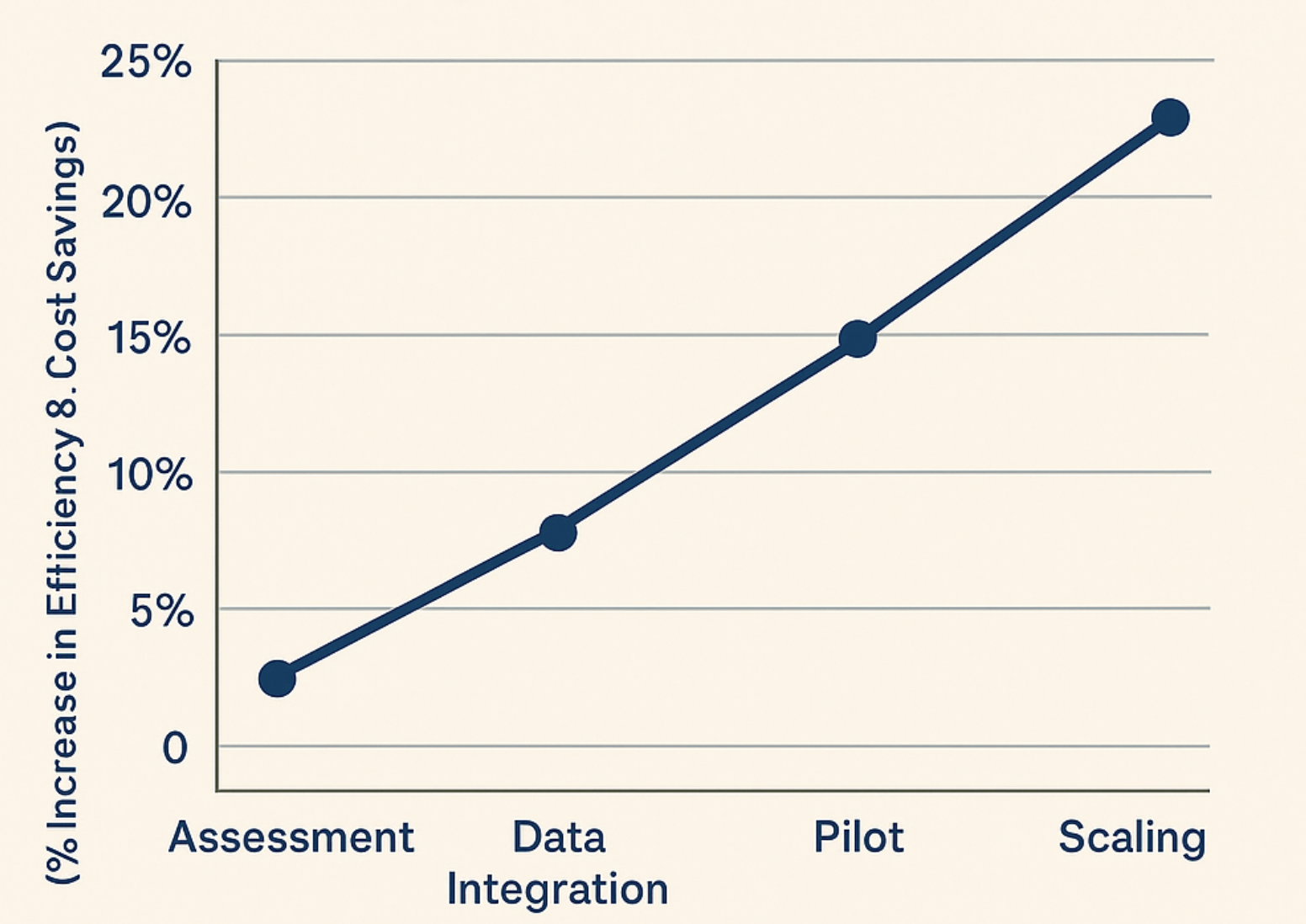
The graph below illustrates a typical ROI trajectory for enterprises implementing predictive analytics and workflow automation across different stages of deployment.
Graph 1: ROI Trajectory of Predictive Analytics & Workflow Automation Implementation
X-axis: Implementation Stage (Assessment → Data Integration → Pilot → Scaling)
Y-axis: ROI (% Increase in Efficiency & Cost Savings)
Overcoming Implementation Challenges
Despite the benefits, transformation is not without challenges. Common obstacles include:
To overcome these, organizations should adopt a phased approach, invest in training, and select flexible technology platforms that can integrate with existing infrastructure.
Conclusion
Legacy operations no longer need to be a barrier to growth. By combining predictive analytics with workflow automation, enterprises can transition from reactive management to proactive, data-driven decision-making. A structured implementation model, tailored to industry-specific needs, ensures that organizations not only modernize their operations but also achieve measurable efficiency gains and competitive advantages.
As businesses continue to navigate digital transformation, the synergy of predictive insights and automated execution will define the next generation of operational excellence.