
AI has become the talk of the boardroom and is a staple in countless technology strategies. However, despite the buzz, many organisations seem to be missing the real opportunity. Right now, most companies are using AI to make their old ways of working simply go faster, rather than taking the chance to rethink how things could be done altogether.
It’s a bit like strapping a jet engine onto a horse and cart: it sounds impressive, but it doesn’t really address the fundamental problem. If businesses want to tap into what AI can offer, they need to move away from asking how machines can copy human thinking and start exploring what intelligence could look like if it wasn’t limited by previous strategies.
Agentic AI marks a shift from relying on static models to developing systems that can act on their own, experience time in unique ways, and make decisions without simply imitating human logic. These systems do more than automate repetitive tasks; they have the power to reinvent how work gets done, transform the way decisions are made, and push us to reconsider what we really mean by “intelligence” in a business setting.
Taking advantage of the intelligence in artificial intelligence
While we make decisions sequentially, constrained by attention and memory, AI can simultaneously evaluate thousands of scenarios, learn from patterns across vast datasets, and act without the cognitive biases that shape human judgment.
For example, Airpro’s use of AI-powered optimisation in airport operations. Rather than simply digitising manual shift planning, their system continuously evaluates flight schedules, equipment availability and regulatory constraints to generate work rosters. It doesn’t wait for problems like clashing schedules or lack of staff to appear. Instead, it spots these issues early and adjusts plans automatically. This kind of accuracy and scale, handling many airports and flights, just isn’t possible with old-style spreadsheet planning.
This fundamentally challenges our assumptions about intelligence. Previously, people working in AI tried to get machines to think like humans, as though consciousness was the gold standard. But agentic AI is powerful precisely because it doesn’t follow human thought processes. It uses probability, spots patterns, and adapts as it learns, solving problems more quickly and effectively than traditional approaches allow.
The problem of blind spots in business
The uncomfortable truth is that the current focus on human-like AI creates blind spots in business strategy. Organisations pour resources into building systems that “reason” like people, while overlooking the strengths that make AI transformative.
Take data visibility. It’s often assumed that having data stored somewhere means it’s accessible and useful yet hidden or poorly catalogued data can cripple decision-making. Saxo Bank didn’t struggle with a lack of data; they had plenty. The blind spot was knowing what existed, its meaning, and who owned it. By adopting a data mesh approach and building a self-service data catalogue, they transformed opaque silos into transparent, searchable assets. With unified definitions and clear lineage, teams gained trust and clarity, enabling faster insights and better data control.
There’s a certain irony in how businesses are currently using AI. Many companies treat it like an extra pair of hands: helpful for drafting emails, summarising reports, or automating repetitive tasks. The real potential comes from reimagining processes from the ground up. Rather than wondering how AI can help your team work more quickly, consider what becomes possible when AI operates independently. It’s this shift in perspective that separates incremental improvements from transformative progress.
Trust and control in business
Of course, giving AI greater independence brings up important concerns about trust and control. It’s understandable that businesses feel uneasy about black-box models. These are systems where you can see inputs and outputs but not the internal processes connecting them. In high-stakes areas like finance, healthcare, or logistics, not knowing how an AI reached its decision can become a genuine risk.
That’s why enterprise AI must be interpretable and transparent. When AI systems make autonomous decisions, people need to understand not just what choices were made, but the reasoning behind them. Interpretability helps organisations verify logic, maintain compliance, and preserve accountability.
In practice, this often means choosing models that might be slightly less complex but are far easier to understand. It’s a sensible compromise, one that aligns with the growing demand for ethical and responsible AI.
What does this mean for businesses today?
Companies are standing at a crucial turning point. It’s tempting to stick with the apparent safety of using AI to make existing processes faster and celebrating minor efficiency gains. However, when competitors are using agentic systems to completely redesign operations, incremental changes won’t be enough.
Moving forward requires both courage and creativity. Instead of seeing AI as just another way to fine-tune old methods, business leaders should view it as an opportunity to imagine and create entirely new ways of working. This means investing in systems that can approach problems differently, act autonomously, and handle tasks at a scale that would be impossible for any human team. It means rethinking success metrics to capture new capabilities unlocked rather than just time saved. It means building for interpretability from the start, designing systems where AI reasoning can be audited and refined as organisations learn to work alongside autonomous intelligence.
Crucially, it’s time to move past the comforting belief that intelligence only has value if it resembles human thinking.
Being a business leader or a follower
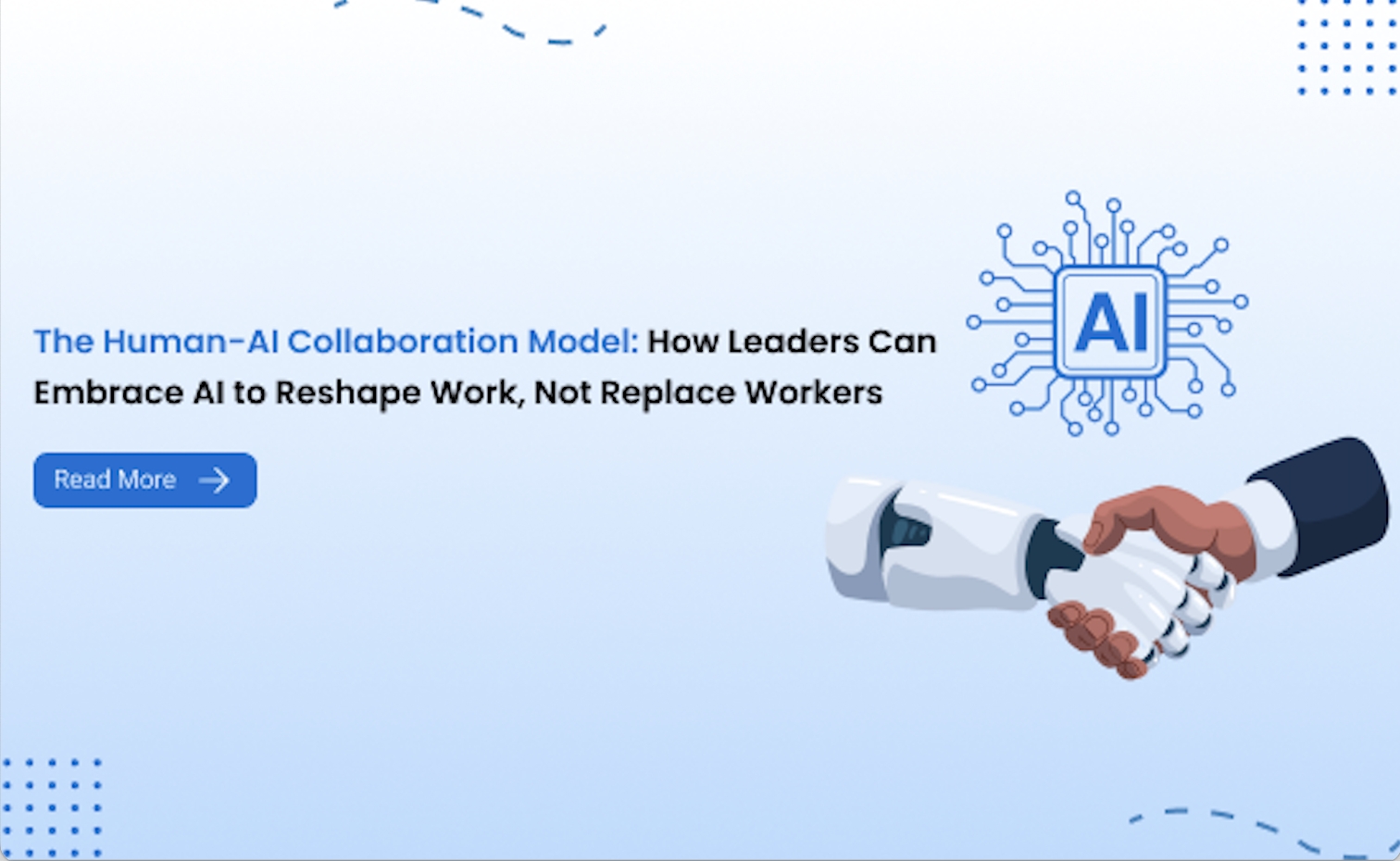
Agentic AI is not about taking people out of the picture. Rather, it’s about supporting and enhancing human abilities in ways that are still largely unexplored. By allowing machines to break free from the limits of human thought, we open the door to completely new possibilities for what businesses can achieve.
The real question is not whether this shift towards agentic AI will take place, but whether your organisation will be leading the way or playing catch-up.