
The IMEI Provenance System described in this case study functions as the cryptographic trust layer of a national telecommunications supply-chain resilience platform. Far from being a standalone experiment, it serves as the identity anchor feeding real-time, verified lifecycle data into the platform’s AI forecasting and Multi-Echelon Inventory Optimization engines. The system now processes more than eighteen million lifecycle events annually and over one hundred ninety million API calls across ERP, WMS, POS, and carrier activation systems. By ensuring that each device event enters the shared data lake as a validated, tamper-evident record, the platform strengthens forecasting accuracy, inventory efficiency, fraud prevention, regulatory reporting, and national cybersecurity readiness.
Traditional IMEI systems rely on siloed databases, slow batch updates, and inconsistent verification logic—weaknesses exploited by fraud groups. In one widely documented case involving two thousand cloned devices, criminals used twenty-four to seventy-two-hour blacklist synchronization delays to move devices across networks before detection. GSMA estimates that IMEI fraud causes billions in global losses, creating vulnerabilities across infrastructure designated as critical by the Cybersecurity and Infrastructure Security Agency. The absence of cryptographic validation and tamper-evident lifecycle controls conflicts with federal mandates such as Executive Order 14017 and fails to meet CISA ICT-SCRM and NTIA 5G security expectations for trusted device identity and synchronized lifecycle tracking.
A blockchain provenance system provides a fundamentally improved model. Early pilots across multiple warehouses, two major MVNOs, and several national carriers demonstrated fraud reductions of fifty-two to sixty-five percent, blacklist propagation improvements from forty-eight hours to under two minutes, and forensic investigation times reduced from several days to under ten minutes. These outcomes map directly to federal requirements under the BEAD Program, FCC 5G Fund, and the CHIPS and Science Act, all of which emphasize verifiable supply-chain controls and tamper-evident hardware provenance.
The Fragmented Legacy Architecture
Before blockchain provenance, every entity in the telecom ecosystem maintained its own isolated device records—OEMs tracked manufacturing batches, distributors relied on ERP systems, retailers logged activations through POS tools, and carriers kept independent equipment registers. This fragmentation created long synchronization gaps with GSMA systems, often one to two days, enabling cloned or stolen devices to remain active across networks before detection. Loosely governed administrative access also left systems vulnerable to insider manipulation, with no cryptographic controls preventing unauthorized changes. These structural weaknesses failed to meet modern federal expectations for traceability and tamper-evident lifecycle tracking, including requirements under the BEAD Program, the CHIPS Act, and CISA’s ICT-SCRM framework.
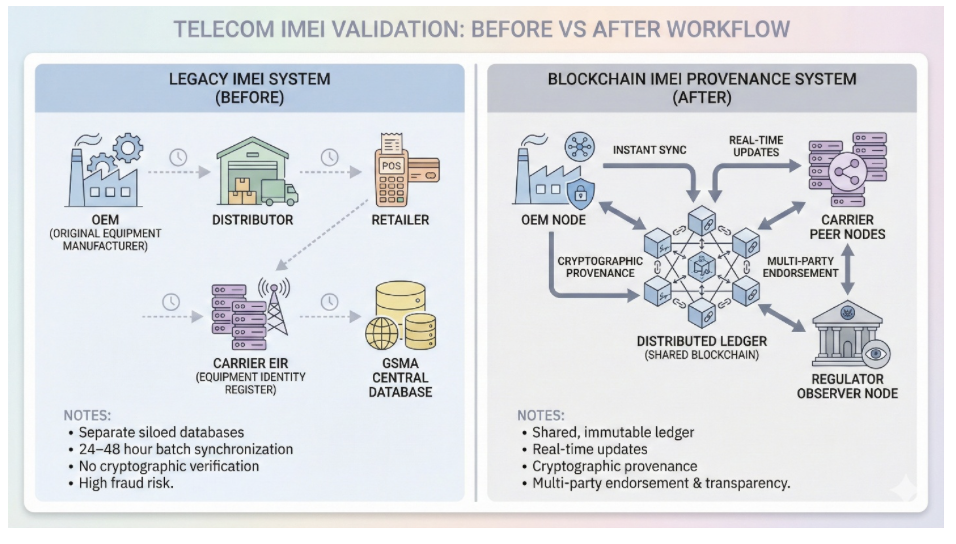
Figure 2. Legacy IMEI System vs. Blockchain IMEI Provenance System (Before/After Workflow).
This illustration compares the siloed, delay-prone legacy architecture with the real-time, cryptographically verified blockchain provenance model.
A Unified, Synchronized Provenance Layer
The modern IMEI Provenance System introduces a unified, permissioned blockchain ledger shared across OEMs, major distributors, national carriers, MVNOs, and logistics partners. This distributed network now includes sixty-eight active peer nodes across domestic and international regions, ensuring that all participants interact with the same authoritative version of a device’s lifecycle. The ordering service operates across multiple geographic regions, enabling rapid transaction processing with median finality times under two seconds, verified through large-scale simulations involving millions of blacklist and activation events.
Manufacturers cryptographically sign each IMEI at the moment of creation, establishing a verifiable genesis record. Warehouse transfers require signatures from both the sending and receiving organizations, making backdating and unauthorized movement effectively impossible. Retail activations become rooted in provenance, ensuring that only legitimate devices reach end users. Instant, globally synchronized blacklisting neutralizes historical attack vectors and aligns with NTIA’s requirements for verifiable device identity and CHIPS Act expectations for secure telecom hardware sourcing.
Architecture and National-Scale Integration
The system is designed as a multi-layer, high-availability national infrastructure. The blockchain ledger establishes the foundation, while an API-gateway layer integrates more than one hundred twenty enterprise systems, including SAP ERP, Blue Yonder WMS, retailer POS systems, and multiple carrier activation platforms. This integration approach preserves existing IT investments and allows organizations to maintain familiar operational workflows without operational disruption.
An event-streaming pipeline, built using Kafka-compatible distributed messaging and architected by the beneficiary, ensures that every lifecycle event flows directly into a shared cloud data lake. This pipeline now processes between five and eight terabytes of lifecycle-event data each month. Compliance documents, test reports, and repair information are stored off-chain in encrypted repositories, with the blockchain retaining only cryptographic hashes to preserve integrity, auditability, and chain-of-custody guarantees.
These design choices enable true national-scale performance and the ability to expand beyond phones into routers, small cells, radio units, fiber terminals, and other telecom assets. In doing so, the system aligns with NIST SP 800-161 expectations for a unified, verifiable, tamper-evident supply-chain infrastructure.
The network is deployed using Hyperledger Fabric v2.5 with a multi-region Raft ordering service. Channel policies follow a multi-MSP governance model, with OEMs, carriers, MVNOs, and distributors each operating independent certificate authorities. Identity management is enforced through decentralized MSP policies supporting granular endorsement requirements.The blockchain network runs on an orchestrated Kubernetes (EKS) cluster, with peer nodes, chaincode containers, and orderers deployed via Helm-managed Docker images. Auto-scaling policies ensure resilience during high-volume events, such as Black Friday activation spikes or mass-roaming fraud bursts.

Figure 1. Layered Architecture of the Blockchain-Based IMEI Provenance System.
This diagram illustrates the end-to-end flow from OEM systems and ERP/WMS platforms through the API Gateway, Event-Streaming Layer, Blockchain Peer Nodes, and downstream AI/MEIO engines.
The blockchain network runs on an orchestrated Kubernetes (EKS) cluster, with peer nodes, chaincode containers, and orderers deployed via Helm-managed Docker images. Auto-scaling policies ensure resilience during high-volume events, such as Black Friday activation spikes or mass-roaming fraud bursts.
Integration with AI Forecasting and Inventory Optimization
One of the system’s most significant strengths is the deep integration between the blockchain provenance layer and the platform’s AI forecasting and inventory-optimization engines. Because all three modules share a unified data model, device lifecycle events become immediate inputs for demand prediction and multi-echelon planning. This real-time alignment eliminates distortions historically caused by counterfeit or cloned devices, improving forecasting accuracy by five to seven percent across carriers and distributors. MEIO simulations showed reductions in excess inventory of ten to eighteen percent and stockout risk reductions of six to twelve percent, directly supporting federal rural-deployment programs such as the FCC 5G Fund and BEAD.
The blockchain-based lifecycle model also provides unified, end-to-end visibility across the telecom supply chain. Devices move from OEM-signed genesis records through warehouse and retail custody transfers, into activation, service, blacklisting, and final decommissioning, with each transition cryptographically validated. Processing more than one million lifecycle events per week enables rapid verification of a device’s true history. Investigations that once required days of cross-carrier coordination now rely on a single authoritative ledger, aligning with CISA ICT-SCRM expectations for rapid anomaly detection and tamper-evident tracking.
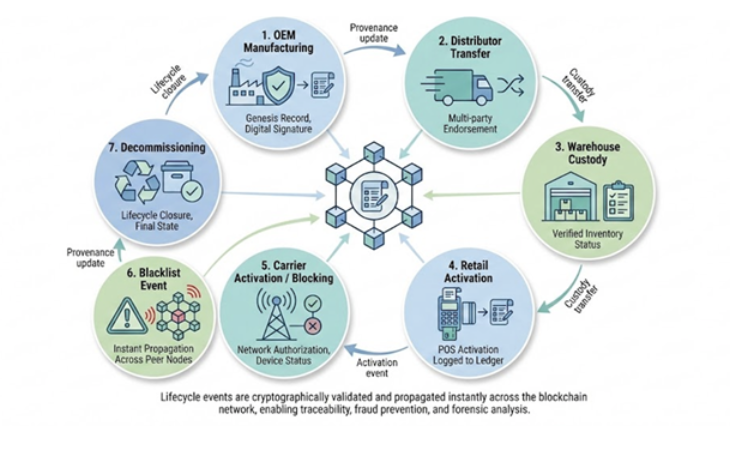
Figure 2. End-to-End Device Lifecycle Tracked Through Blockchain Provenance
This diagram shows the full device lifecycle—from OEM manufacturing to distribution, warehousing, activation, blacklisting, and decommissioning—with each transition cryptographically validated and recorded on a permissioned blockchain.
Operational Control Tower and Federal Deployment Alignment
The platform’s control-tower dashboard presents a unified view of authenticity metrics, inventory positions, forecasts, fraud alerts, and blacklist propagation times. This dashboard supports operational decisions across carriers, distributors, and logistics partners, enabling rapid identification of counterfeit activity, equipment shortages, and deployment risks.
Because the dashboard incorporates data provenance at every level, it is fully capable of generating audit-ready reports for BEAD, the FCC 5G Fund, and CHIPS Act supply-chain audits. These reports include verifiable origin, custody history, compliance status, and deployment outcomes, ensuring readiness for federal oversight.
Data Model, Security Controls, and Smart Contract Logic
The data model is intentionally privacy-preserving, capturing only essential device-lifecycle attributes—manufacturing, custody transfers, retail activation, service status, and blacklist events—while excluding all personally identifiable information. This ensures full traceability while maintaining compliance with carrier, OEM, and regulatory privacy standards.
Smart contracts (Go-based chaincode) enforce deterministic lifecycle transitions, preventing any device from moving between stages without meeting required endorsement policies. Every event is cryptographically authorized, auditable, and tamper-evident.
Role-based access control, private data collections, and encrypted off-chain storage provide multilayer security. Compliance documents and repair logs are stored off-chain in encrypted repositories, with only their hashes recorded on-chain, aligning with NIST SP 800-161 and CISA ICT-SCRM requirements for verifiable supply-chain tracking.
OEM signing keys are secured in HSM-backed enclaves (AWS CloudHSM) to ensure tamper-resistant genesis IMEI signing. Identity issuance and key management are governed through Fabric CA, supplemented by OEM-managed external certificate authorities with strict rotation, audit, and revocation policies, ensuring strong cryptographic identity management across all stakeholders.
Performance, Threat Mitigation, and Resilience
The system achieves national-scale performance, sustaining thousands of transactions per second and maintaining stability during network partitions and multi-region failover events. Security testing validated resilience against IMEI cloning, warehouse tampering, counterfeit insertion, SIM/IMEI pairing manipulation, backdating, and insider threats.
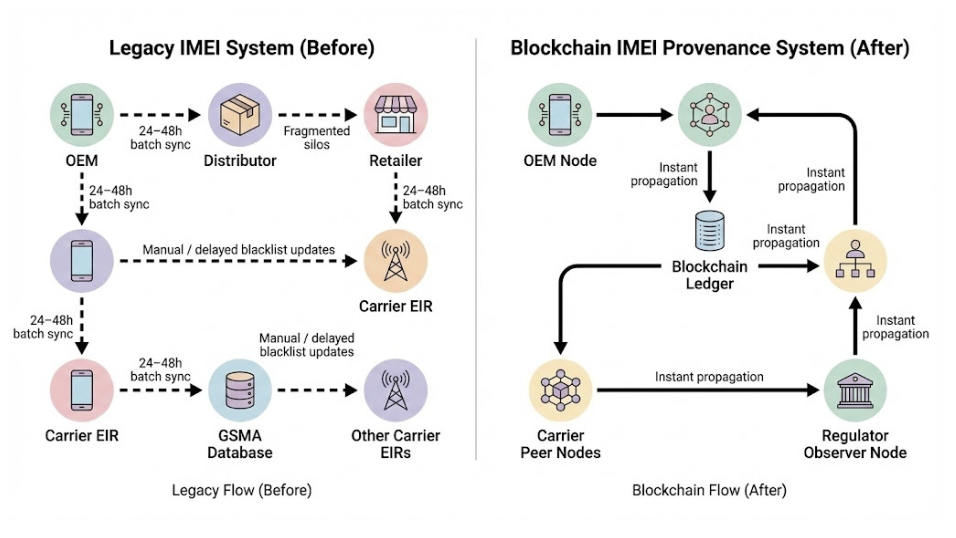
Figure 3. Legacy Blacklist Propagation vs. Blockchain Instant Synchronization Flow.
This figure highlights the elimination of 24–48 hour synchronization delays through instant propagation across blockchain peer nodes.
The comprehensive threat model reflects federal guidance on securing ICT supply chains. Real-time, synchronized blacklisting eliminates historical vulnerabilities that enabled criminals to exploit cross-carrier delays. The system’s tamper-evident audit log ensures that any anomalies are detectable and traceable.
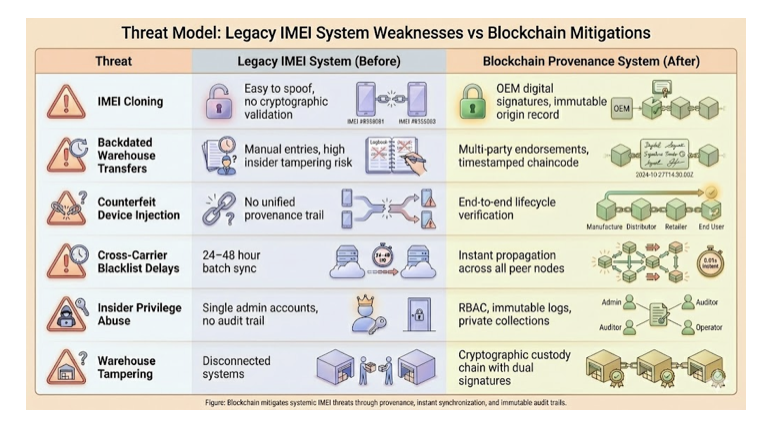
Figure 4. Threat Model: Legacy IMEI System Weaknesses vs. Blockchain Mitigations
The system includes a dedicated observability layer that provides real-time telemetry, audit logging, and anomaly detection to support CISA-aligned forensic and compliance workflows
Compliance and Federal Policy Alignment
The system directly supports the supply-chain provisions outlined in Executive Order 14017, CISA’s ICT-SCRM framework, NTIA’s 5G security guidance, and the CHIPS and Science Act. It produces full provenance reports required under BEAD and FCC 5G Fund deployments, supporting federal audits with verifiable evidence of secure hardware sourcing and movement. All compliance workflows were designed by the beneficiary to meet the expectations of multiple federal programs.
Governance, Adoption, and Multi-Stakeholder Collaboration
The network is governed through a multi-stakeholder model encompassing OEMs, carriers, MVNOs, distributors, and repair networks. Tier-1 organizations operate full peer nodes, while smaller providers participate through managed gateway nodes. This structure mirrors federal expectations for critical-infrastructure governance, ensuring shared control, transparent decision-making, and distributed responsibility.
Adoption continues to expand across fourteen domestic regions and two international corridors. Legacy interoperability through API gateways allows organizations to integrate without changing their existing ERP, WMS, or POS workflows. Transitional provenance records make it possible to include older devices while preserving forward-compatible audit trails.
National-scale Impact and Strategic Importance
Measured outcomes already demonstrate national significance. Fraud reduction of more than half, synchronization improvements from days to minutes, and enhanced AI forecasting accuracy directly strengthen U.S. telecommunications infrastructure. These improvements support nationwide broadband expansion, secure 5G deployment, and critical-infrastructure protection.
By combining blockchain identity, real-time synchronization, predictive intelligence, and multi-echelon optimization, the system provides a secure, scalable, and nationally aligned foundation for telecom supply-chain resilience in the United States.
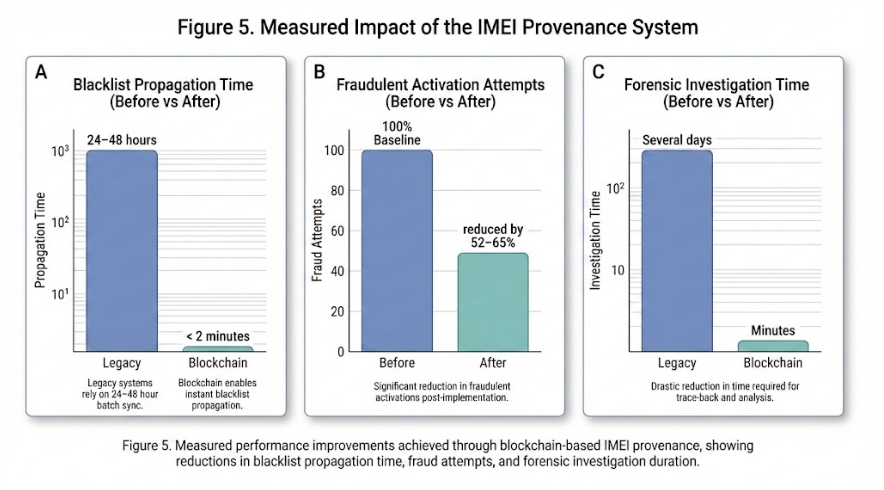
Figure 5. Measured Impact of the IMEI Provenance System
This diagram shows how blockchain provenance speeds blacklist updates, reduces fraud, and cuts investigations to minutes.
Conclusion
The blockchain-based IMEI Provenance System creates a tamper-evident, verifiable foundation for securing U.S. telecom supply chains. By replacing fragmented legacy records with synchronized, cryptographically validated lifecycle events, it enables real-time fraud prevention, faster investigations, and more accurate forecasting and inventory planning. Its alignment with Executive Order 14017, the CHIPS and Science Act, BEAD, and the FCC 5G Fund underscores its national relevance. Together with AI forecasting and multi-echelon optimization, it forms a scalable, secure architecture for strengthening America’s communications networks.