
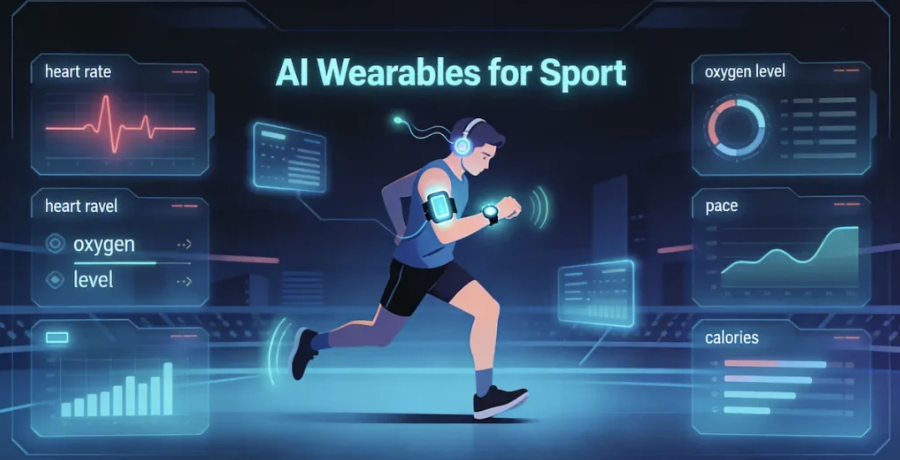
AI wearables for team sports are changing how coaches see the game by turning live tracking data into practical tactical feedback instead of just after-the-fact fitness summaries. They combine sensors, positioning, and machine-learning models so staff can monitor team structure, workload, and injury risk in a single view during training and matches. This article looks at how these systems support coaching decisions, from positioning and substitutions to long-term load management and risk alerts.
From Fitness Tracking To Tactical Insight
In many clubs, AI wearables started as simple GPS vests and heart-rate belts used to logdistance, speed, and basic conditioning metrics. Over the last few years, these systems have evolved into full athlete-tracking platforms that combine GPS, inertial sensors, and time-synced video or event data to map how a team behaves tactically over 90 minutes or more. Instead of only reporting who ran the most, they highlight spacing between lines, pressing intensity, and which zones different roles actually occupy during phases of play. AI models help by automatically clustering movements into patterns such as counter-pressing, overlapping runs, or late box arrivals, which would be time-consuming to tag manually. For coaches this means that wearable data increasingly feeds directly into match-plan reviews, scouting of opponents, and small-sided game design in training sessions.
Position Tracking And Team Shape
In modern setups, AI wearables often rely on GPS, ultra-wideband, or local positioning systems to capture every player’s location several times per second on the pitch. These coordinates let software reconstruct team shape in real time and compute metrics such as team length, width, and surface area, which are linked to compactness and how effectively space is used or left open. Coaches can review sequences where lines stretch too far apart, leaving gaps between midfield and defense, or where wide players fail to maintain enough width to stretch the opposition block. Because the data is objective, it helps separate perception from reality, for example showing that a back four is actually dropping deeper than the staff believes in certain game states. Over time, teams build a baseline of their “typical” shape in different formations, so deviations in matches or training can be flagged quickly after a session or even on the bench via tablets.
Load Management Across The Squad
AI wearables give coaches a continuous view of both external and internal load, so they can keep the squad fresh over long seasons instead of reacting only when fatigue is obvious. External load metrics like total distance, high-speed running, accelerations, and decelerations quantify the mechanical work that joints and muscles experience in drills and matches. Internal load, often tracked via heart rate or derived measures such as training impulse, shows how stressful a given session is for the cardiovascular system relative to an individual’s capacity. Machine-learning models then combine these inputs to detect when a player’s recent load is unusually high or low compared to their typical pattern, flagging under-recovery or under-training risk. For coaches, the practical output is not a raw data dump but clear guidance like suggesting a reduced-intensity block for selected players or recommending a conditioning top-up for those returning from injury.
Real-Time Coaching And Substitutions
During competitive matches, AI wearables for team sports enable a more informed approach to in-game coaching and substitutions instead of relying purely on visual cues and player feedback. Many systems provide live dashboards that show player load indicators such as accumulated high-intensity efforts, repeat sprint counts, and deviations in movement efficiency, which can signal mounting fatigue before it is obvious to the eye. Coaches can use these signals alongside context from the match to time substitutions earlier for key positions that perform frequent sprints, reducing the chance that a winger or full-back fades late in the game. When a player’s intensity or coverage suddenly drops without a tactical reason, it may also prompt questions about minor knocks or discomfort that the athlete has not reported yet. Over the season, patterns in these live metrics help refine substitution strategies for different game plans, such as maintaining pressing levels in a high-intensity style or preserving creative output from attacking midfielders.
Heatmaps, Metrics, And Key Outputs
AI wearables generate a variety of tactical and physical outputs that can be summarized in simple visualizations and numbers coaches actually use day-to-day. Heatmaps based on geolocation data show where each player and the team as a whole spend most of their time, helping staff see whether intended overloads or half-space occupations really happened in matches or small-sided games. Composite metrics like player load or high-intensity distance condense complex movement profiles into a single indicator that can be tracked across sessions and compared within a squad.
A simple way to see how different outputs support decisions is to group them by their main use case.
|
Primary Output Type |
Example Metric OrView |
Coaching Use Case |
|
Tacticalpositioning |
Team and playerheatmaps |
Evaluating shape, spacing, and zone usage |
|
Physical load |
High-speed distance, player load |
Managing fatigue and training intensity |
|
Risk indicators |
Sudden spikes in workload |
Flagging players who may need recovery focus |
These outputs become more powerful when they are compared over time, allowing staff to connect specific training blocks or tactical changes with changes in both performance and risk metrics.
Injury Risk Signals And Limitations
One of the most discussed promises of AI wearables is the ability to highlight players with elevated injury risk before a problem becomes serious. Machine-learning models trained on historical tracking and medical data can learn patterns where rapid increases in workload, high volumes of intense efforts, or unusual asymmetries are associated with soft-tissue injuries. When similar combinations appear in current data, systems can flag the player so medical and performance staff review them more closely or adjust the upcoming schedule. However, research consistently notes that these models provide probabilities rather than certainties, and they work best when combined with clinical assessments, subjective wellness scores, and sport-specific knowledge from staff. For that reason, teams typically treat risk scores as one input among many when planning deload weeks, individual modifications, or decisions about whether someone is ready for full-intensity sessions.
Practical Challenges And Implementation
Even when budgets allow, integrating AI wearables into daily coaching routines requires careful planning and change management. Coaches and analysts need clear workflows so that the most relevant insights, such as simple traffic-light load indicators or short tactical clips linked to tracking data, are delivered at the right time instead of overwhelming staff with dashboards. Player acceptance can also be a factor, particularly if athletes are concerned about constant monitoring or how data might be used in contract or selection decisions, so communication and transparency around goals matter. On the technical side, ensuring data quality across different venues, maintaining sensors, and synchronizing tracking with video or event logs all influence how trustworthy the outputs are for tactical analysis. Over time, teams that invest in staff education and iterative processes tend to move from basic descriptive use of data toward more predictive and prescriptive applications embedded into their regular review and planning cycles.
FAQ
How Do AI Wearables Help With Tactical Analysis?
In many systems, tracking data from AI wearables is converted into heatmaps, spacing metrics, and movement clusters that show how the team actually occupied and used space in different game phases. Coaches then compare these patterns with the intended game model to adjust roles, pressing triggers, or training drills for upcoming sessions.
Can AI Wearables Really Guide Substitution Timing?
AI wearables provide live indicators such as cumulative high-intensity efforts, sprint counts, and deviations from a player’s normal workload profile, which can signal rising fatigue before performance visibly drops. Staff use these trends alongside the match context and player feedback to support, rather than replace, their judgment on when to refresh key positions.
What Kind Of Injury-Risk Signals Can AI Wearables Provide?
By learning from historical data, AI models can flag risky patterns such as sudden spikes in running load, repeated high-intensity work without enough recovery, or unusual asymmetry in movement derived from wearable sensors. These alerts help medical and performance teams decide when to monitor a player more closely or modify their short-term training plan while recognizing that the output is probabilistic rather than a diagnosis.
Conclusion
AI wearables are shifting from simple fitness trackers into integrated tools that connect positioning, workload, and contextual data to coaching decisions before, during, and after matches. For tactical staff, the main value lies less in raw numbers and more in clear visualizations and metrics that describe how well the game model appears on the pitch.
Performance and medical teams gain another layer of information for managing load and identifying players who might benefit from modified work or closer monitoring in busy periods. At the same time, practical issues such as data quality, workflow design, and player trust determine how effectively clubs can translate these technical capabilities into everyday habits.
As systems mature, teams that align staff, athletes, and processes around meaningful questions rather than technology for its own sake are most likely to benefit from AI wearables for team sports.