
Abstract
This paper proposes a vendor‑neutral, open‑source, multi‑layer AI agent architecture designed to unify enterprise workflows through natural language understanding, structured intent modeling, automated execution, generative communication, and autonomous reasoning. As organizations adopt AI‑driven automation across technical support, operations, HR, governance, customer service, and risk management, traditional siloed structures create bottlenecks. The architecture discussed here presents a scalable and academically grounded framework that allows AI agents to interpret human language, map intents to actions, generate high‑quality documentation, and orchestrate complex workflows with minimal human intervention.
1. Introduction
Enterprises increasingly rely on AI‑enabled systems to manage service operations across technology, HR, customer service, risk, and compliance domains. Despite widespread adoption of workflow platforms, most organizational processes still require human interpretation at the intake level. Analysts manually classify requests, evaluate urgency, map actions, and document outcomes. This dependency slows operations and introduces variability.
The emergence of large language models (LLMs) and agentic reasoning frameworks presents an opportunity to unify enterprise workflows under a single cognitive architecture. Instead of routing requests manually, AI agents can autonomously:
• interpret user intent
• extract structured meaning
• execute context‑aware actions
• generate readable insights and summaries
• maintain memory for multi‑step planning
This article proposes a multi‑layer AI agent model that integrates these functions while preserving transparency, auditability, and platform independence.
2. Multi‑Layer AI Agent Architecture
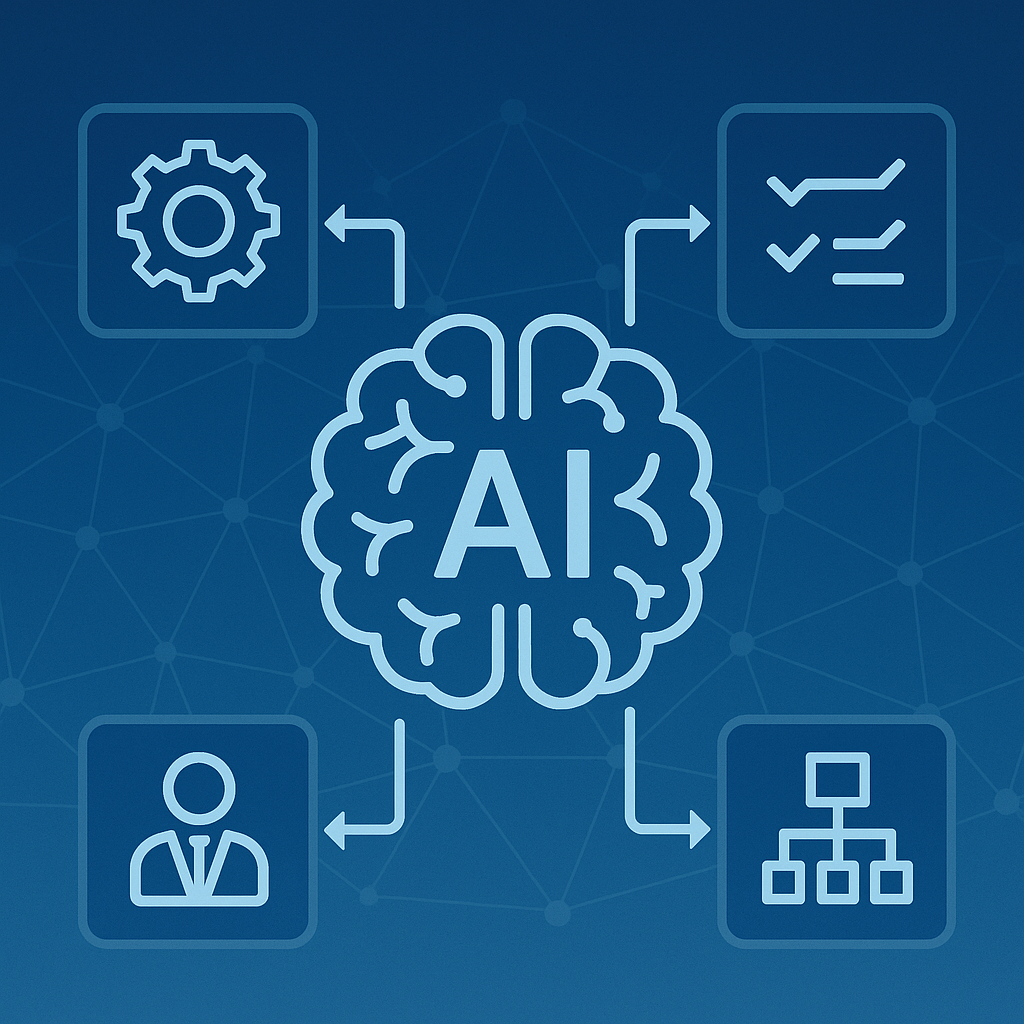
The architecture comprises four layers, each representing a distinct stage of cognitive processing. Together, these layers transform natural language into automated enterprise workflow execution. This modular approach ensures the system remains adaptable, extensible, and aligned with academic agent‑system design principles.
2.1 Domain‑Specific Language Understanding Layer
This foundation layer uses prompt‑engineering, taxonomic modeling, and contextual interpretation to convert unstructured language into structured representations. The output typically includes module detection, action classification, field extraction, priority assessment, and confidence scoring.
2.2 Tool‑Calling / Execution Layer
This layer bridges the structured intent with an execution framework. It selects the correct workflow based on the intent model and executes the corresponding system action. Examples include creating records, retrieving data, updating statuses, or triggering alerts.
The execution layer ensures parameter integrity, error handling, and compliance alignment.
2.3 Generative Communication Layer
After action execution, enterprises must maintain clean audit trails, analyst notes, and stakeholder communication. This layer produces narrative, domain‑specific outputs that adhere to enterprise writing standards. It ensures that knowledge transfer remainsconsistent regardless of who executes the workflow.
2.4 Autonomous Agentic Layer
The topmost cognitive layer enables autonomous multi‑step workflows. It incorporates
• planning
• reflection
• memory formation
• adaptive decisioning
This elevates the system from simple task automation to advanced agent‑driven orchestration.
3. Expanded Enterprise Use Cases
The multi‑layer architecture supports a wide range of enterprise workflows:
• Technical operations: alert processing, incident summarization, RCA generation
• HR services: onboarding workflows, case management, policy inquiries
• Customer service: intelligent ticket routing, sentiment‑aware responses
• Governance & compliance: risk statements, audit trails, documentation automation
• Cybersecurity: threat triage, impact estimation, evidence summarization
• Operations: multi‑step workflow scheduling, monitoring, and escalation
4. Benefits of Vendor‑Neutral Architecture
Vendor neutrality ensures the design remains platform‑agnostic, portable, and adaptable. Open architectures allow organizations to avoid lock‑in, integrate diverse tools, and gain full transparency over processing logic. This is crucial for audit readiness, compliance, and system governance.
5. Challenges and Considerations
Adopting such architectures requires consideration of:
• reliability and accuracy of interpretations
• governance and risk controls
• human‑in‑the‑loop checkpoints
• error‑handling and fail‑safe recovery
• model drift and periodic retraining
• ethical and fairness considerations
6. Future Enhancements
Future research directions include:
• multi‑agent ecosystems
• autonomous knowledge generation
• predictive intervention models
• dynamic policy adaptation
• self‑healing workflows
• reinforcement‑learning‑driven decision orchestration
7. Conclusion
A multi‑layer AI agent architecture provides a foundation for unified enterprise automation. By combining language understanding, structured intent modeling, autonomous reasoning, and generative communication, organizations can operate with greater intelligence, efficiency, and consistency across diverse domains.