
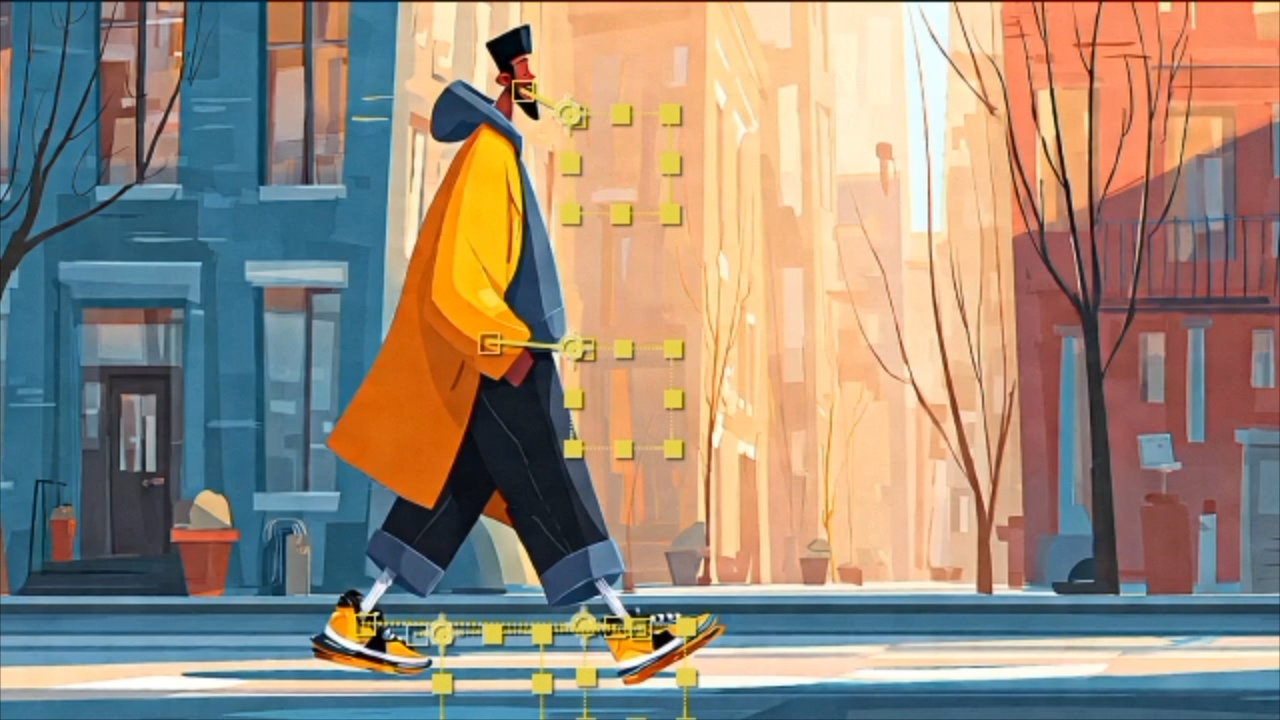
In an AI-saturated market, the bottleneck isn’t going to be making content; it’s getting people to care about the content you are making and persuading them to choose yours. Generative tools are already flattening the production advantage. The “render-then-wait” cadence that characterised the industry is being eroded. Pixar and Disney, DreamWorks, Sony Pictures Animation, and even smaller studios are experimenting with AI to speed up look-dev, previs, and story exploration. What used to require years of specialised labour that was typically completed in assembly-line style, can now be accomplished quickly and successfully by anyone with the right tools and prompts. The result is a world where “pretty good” animation and endless variations become cheap, fast, and everywhere.
Making IP the value
This abundance of content changes the landscape, providing near-unlimited choice for audiences, and making attention hard to come by. And this scenario can only worsen as quality continues to rise, which is where value begins to be pushed upstream to IP.
The studios that win will be the ones who own (or acquire) worlds with built-in demand, the way Disney leans on Marvel and Star Wars, Illumination compounds Minions and Mario, and DreamWorks keeps returning to universes like Shrek or How to Train Your Dragon. Familiar engines reduce risk. But more importantly than that, they reduce decision fatigue for audiences. And there’s a lot of data to back up that assertion. In 2024, established IP dominated demand and retention, and adaptations consistently outperformed originals because attention is finite. So, where viewing is increasingly driven by algorithms, it’s recognition that captures the attention, rather than the lure of discovering something new.
That’s why the franchises keep growing. We’re not seeing a lack of creativity within the industry with the seemingly ceaseless iterations of existing franchises, but rather a response to public demand, the provision of familiarity, and the maximising of the IP’s potential.
The need for an IP-led strategy
With that in mind, the strategy for the next few years is simple. Buying or partnering around great IP with an existing audience is essential. When there are already lifetimes of content out there, AI doesn’t just add more; it accelerates the flood. In that environment, people safeguard their time by defaulting to (A) what they already know, or (B) what trusted curators recommend. IP functions like a cognitive shortcut, a promise of tone, quality, and identity. It’s the hook that encourages would-be viewers to press play.
What does this mean for studios?
For studios, this shifts the core competency. Execution speed and production efficiency will matter less than world stewardship. The question won’t be “Can we make this?” but “Is this worth extending?” AI can help you explore alternative storylines, test character arcs, localise humour, or spin out adjacent formats. What it can’t do is manufacture emotional attachment from nothing. That attachment is accumulated slowly, through consistency and repetition.
AI will be the studio’s microscope for testing formats and iterating faster, but IP is the magnet. The differentiator is no longer who can generate the most; it’s who can build, protect, and expand story worlds that audiences will repeatedly choose in the noise. The winners won’t be those who shout the loudest, but the ones most capable of protecting, developing, and enhancing the legacy of the most valued IP.
AI isn’t just reducing the cost of creation; it’s decimating it, making it almost endlessly accessible. But in the process is it putting a premium on recognition, familiarity, and sentiment. And that’s where IP can carry such enormous value.