
It’s coming…
For years, governments, businesses and organizations have speculated on the impact of AI on employment. Yet, despite AI having been in use for decades now, there is still no consensus on how it will reshape the job market.
The World Economic Forum reports that although AI will create some new jobs, it is expected to displace 92 million jobs worldwide by 2030. Roles most at risk include cashiers and ticket clerks, administrative assistants, caretakers, cleaners and housekeepers.
Research by JP Morgan suggests that younger workers and those in certain tech industries,which have already stopped growing, have already been impacted by AI, with the release of ChatGPT being identified.
Conversely, some companies, including Salesforce, have suggested that AI will simply change how we work, rather than replacing jobs altogether.
It’s clear that no one agrees on the outcome; whilst everyone agrees that AI will change the employment market, there is no consensus on what the new market will look like.
Having worked in AI for decades now, my belief is that millions of jobs are going to disappear, and quickly. In the next five years, AI will replace many workers’ roles; it’s just that no one wants to admit this is the case.
It’s true that AI will lead to some new jobs being created, but those lost will be repetitive, admin-heavy roles like data entry, customer service or administration. Instead, the new positions will be for specialised roles such as prompt engineers, AI trainers and data curators.Those who lose their jobs will not be able to simply step into new ones.
Human and machine symbiosis
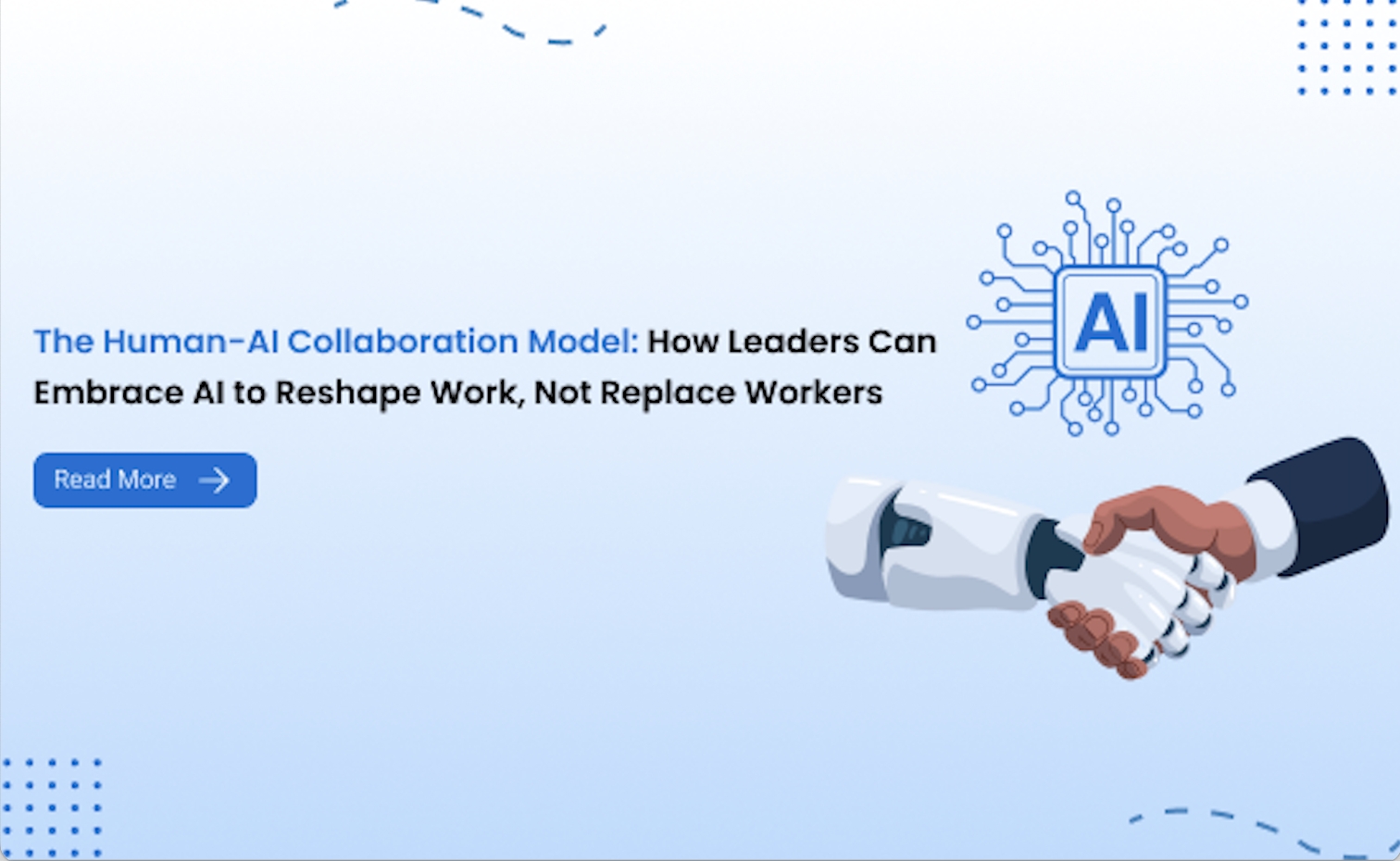
Part of the solution to this problem is to get humans and AI working together.
New systems, such as Humanix, are being developed whereby people from diverse backgrounds are paid to teach AI. Essentially, think of it as a reverse ChatGPT: a curiosity engine that asks humans questions to fill gaps in its knowledge and learns directly from them.
Not only will these solutions solve the employment crisis, but using humans to teach AI also helps to correct AI’s weaknesses:
• The data drain
Since AI cannot ‘think’ independently, it generates outputs solely from the data it is trained on. Since real-world data is limited, synthetic data is often used to expand training sets. However, because synthetic data is derived from existing data, AI cannot truly learning anything new – essentially creating an echo chamber.
• Cultural bias
It’s well known that AI suffers from a bias problem. It has been taught based on a limited view of the world and can only operate within those parameters. A good example is the Paralympic athlete who tried to use ChatGPT to enhance her photo, but found that it replaced her left arm, which she is missing.
By learning from voices across ages, professions, cultures, and perspectives, AI moves beyond a narrow viewpoint and begins to truly reflect humanity.
• Lack of human traits
Whilst AI is good at mimicking human language and behaviour, there are many traits that make us uniquely human – qualities AI cannot replicate. Empathy, creativity, judgment and intuition are not learned from data, so AI has not been taught them.
Using humans to teach AI means that we can help address these weaknesses. In doing so, we can move beyond AI that simulates intelligence to AI that understands and can meaningfully collaborate with humans by addressing the limitations outlined above.
Ironically, addressing AI’s limitations is key to solving the employment crisis it is creating. Leveraging uniquely human traits and intelligence in this way is the only way to make progress toward Artificial General Intelligence (AGI), and at the same time, this approach can help us address the looming unemployment crisis.
By bringing humans and AI together in this way, people become essential partners in building responsible, ethical AI. This approach enables the development of truly intelligent systemswhile managing the employment transitions, protecting workers from displacement, and producing AI that aligns more closely with human values.