
Software development automation has reached an important turning point. For years, engineering teams used AI primarily as an assistant: developers remained responsible for deciding what to do, while AI helped write functions, explain unfamiliar code, generate tests, or troubleshoot errors. In 2026, that relationship is changing.
The emerging model is autonomous software development, where AI agents can take responsibility for multi-step engineering work. Given a goal, an agent may gather organizational context, analyze a repository, develop an implementation plan, write code, run tests, create a pull request, respond to failures, update related systems, and hand the result back to an engineer for approval.
At a Glance
| Platform | Primary Role | Autonomous Strength |
| Port | Agentic SDLC platform | Governed orchestration across the SDLC |
| Devin | Autonomous software engineer | End-to-end implementation tasks |
| Claude Code | Agentic coding | Repository-level coding and terminal workflows |
| OpenHands | Open-source software agent | Extensible autonomous task execution |
| Factory | Agent-native development | Parallel software engineering execution |
How We Evaluated Autonomous Software Development Tools
Autonomy is different from assistance.
A tool capable of generating excellent code is not necessarily capable of independently completing engineering work. Autonomous systems need to reason across multiple steps, use tools, react to results, recover from failures, and understand when human input is required.
For this list, we evaluated platforms around six broader capabilities.
- Execution depth. Can the system move beyond code suggestions and independently execute meaningful engineering tasks?
- Engineering context. Does it understand repositories, services, ownership, infrastructure, deployment history, documentation, and other information needed to make appropriate decisions?
- Tool interaction. Can agents interact with Git, CI/CD systems, issue trackers, infrastructure, APIs, and other components of the engineering environment?
- Workflow orchestration. Can autonomous activity span multiple steps and systems rather than remaining inside a single coding session?
- Human control. Can organizations establish approvals and boundaries around consequential actions?
- Enterprise governance. Can engineering leaders understand what agents exist, what they can access, and what work they are performing?
These distinctions matter because autonomous software development becomes considerably more complicated as adoption expands from one developer using one coding agent to hundreds of engineers and agents operating simultaneously.
The 5 Top Tools for Autonomous Software Development in 2026
1. Port
Port approaches autonomous software development from a fundamentally different direction than standalone coding agents. Rather than attempting to become the agent that writes every line of code, Port provides the engineering platform through which organizations can run AI agents across the software development lifecycle.
Its architecture combines a context lake, workflows, agent management, governance, and interfaces that keep developers and platform teams informed and in control. That distinction becomes particularly important as companies move from experimenting with individual coding agents toward autonomous engineering at organizational scale.
Port’s Context Lake provides that shared engineering knowledge layer. It connects information from repositories, infrastructure, deployments, incidents, services, ownership data, and other engineering systems into a semantically connected source of truth. Agents can reason over this organizational context rather than operating from repository contents alone.
Key Features
- Agentic SDLC orchestration
- AI registry for agents, skills, prompts, and MCP
- External coding-agent orchestration
- Engineering governance and scorecards
- Self-service workflow automation
- AI Builder for agentic workflows
Best For
Port is best suited to engineering organizations that want to move from isolated AI coding tools toward governed autonomous software development across the SDLC. Its strongest value emerges when multiple developers, agents, repositories, infrastructure systems, and engineering workflows need to operate from shared context and common organizational guardrails.
2. Devin
Devin helped establish one of the defining ideas behind autonomous software development: instead of continuously prompting an AI assistant while coding, developers should be able to delegate an engineering task and allow an AI software engineer to work through it independently.
A developer can describe an objective, and Devin can work through multiple stages required to reach a result. Depending on the task, that can involve examining an existing codebase, researching technical requirements, editing files, executing commands, running tests, debugging failures, and producing code for review.
The effectiveness of autonomous development still depends heavily on task definition, repository quality, test coverage, available context, and review processes. Ambiguous architectural decisions remain very different from clearly bounded implementation tasks.
Key Features
- Autonomous engineering task execution
- Repository exploration
- Multi-file code changes
- Terminal interaction
- Test execution and debugging
- Asynchronous development workflows
- Iterative problem solving
- Pull request workflows
3. Claude Code
Claude Code brings agentic software development directly into the developer’s working environment. Its appeal comes from combining strong code reasoning with the ability to inspect repositories, edit files, execute commands, work with development tooling, and carry multi-step tasks forward from a high-level instruction.
Instead of requesting individual code snippets, developers can assign larger objectives: investigate a bug, understand a subsystem, implement a change, update tests, or refactor code across several files. Claude Code can then explore the repository and determine many of the intermediate steps required to complete that objective.
Key Features
- Repository-level reasoning
- Agentic code editing
- Terminal execution
- Multi-file changes
- Test and debugging workflows
- Git integration
- Developer-controlled autonomy
- Extensible tool interaction
- SDLC orchestration compatibility
4. OpenHands
OpenHands provides an important alternative for organizations that want autonomous software engineering capabilities with an open-source foundation.
The project is designed around software agents capable of performing real development work rather than simply answering programming questions. Agents can interact with repositories, modify code, use terminals, execute commands, and iterate on tasks inside controlled development environments.
Autonomous software development introduces important questions about where agents execute, which models they use, what tools they can access, and how deeply organizations can customize their behavior.
Key Features
- Open-source software agents
- Autonomous task execution
- Repository interaction
- Code modification
- Terminal and tool usage
- Iterative debugging
- Flexible model support
- Customizable agent environments
- Extensible architecture
5. Factory
Factory represents another direction in autonomous development: moving from individual AI coding interactions toward an agent-native software delivery model.
The platform is built around delegating substantial engineering tasks to AI agents that can operate across software development workflows. Rather than requiring developers to supervise every generated line, the objective is to allow agents to take ownership of more complete units of engineering work while humans retain review and strategic control.
Key Features
- Agent-native software development
- Autonomous engineering execution
- Parallel task workflows
- Repository-level context
- Multi-step development tasks
- Automated implementation
- Testing and iteration
- Enterprise engineering workflows
- Human review
The Autonomous Development Stack Is Becoming Multi-Agent
Another misconception is that enterprises will eventually choose one AI agent and standardize every developer around it.
The market is moving in almost the opposite direction.
Different agents are becoming good at different jobs.
An organization might use one coding agent for feature implementation, another for security remediation, another for infrastructure, specialized agents for incident response, and internal agents for company-specific engineering processes.
The challenge then becomes orchestration.
Who determines which agent receives a task?
What context does that agent receive?
What permissions does it have?
What happens when the agent completes its work?
Which actions require approval?
How are results recorded?
How does another agent continue the workflow?
These questions explain why the agentic SDLC platform is becoming an important category alongside coding agents themselves.
Port’s architecture explicitly accommodates multiple forms of agents, including custom Port agents, external code-first agents, and cloud-managed agents, while centralizing their relationship with organizational context, skills, prompts, and MCP resources.
This model resembles other major shifts in software infrastructure.
Kubernetes did not win because organizations wanted one enormous container. It became valuable because organizations needed a control plane for many workloads.
Similarly, autonomous engineering may ultimately depend less on finding one universally superior AI developer and more on creating a reliable control plane for many specialized agents.
What Changes When Agents Become Engineering Teammates?
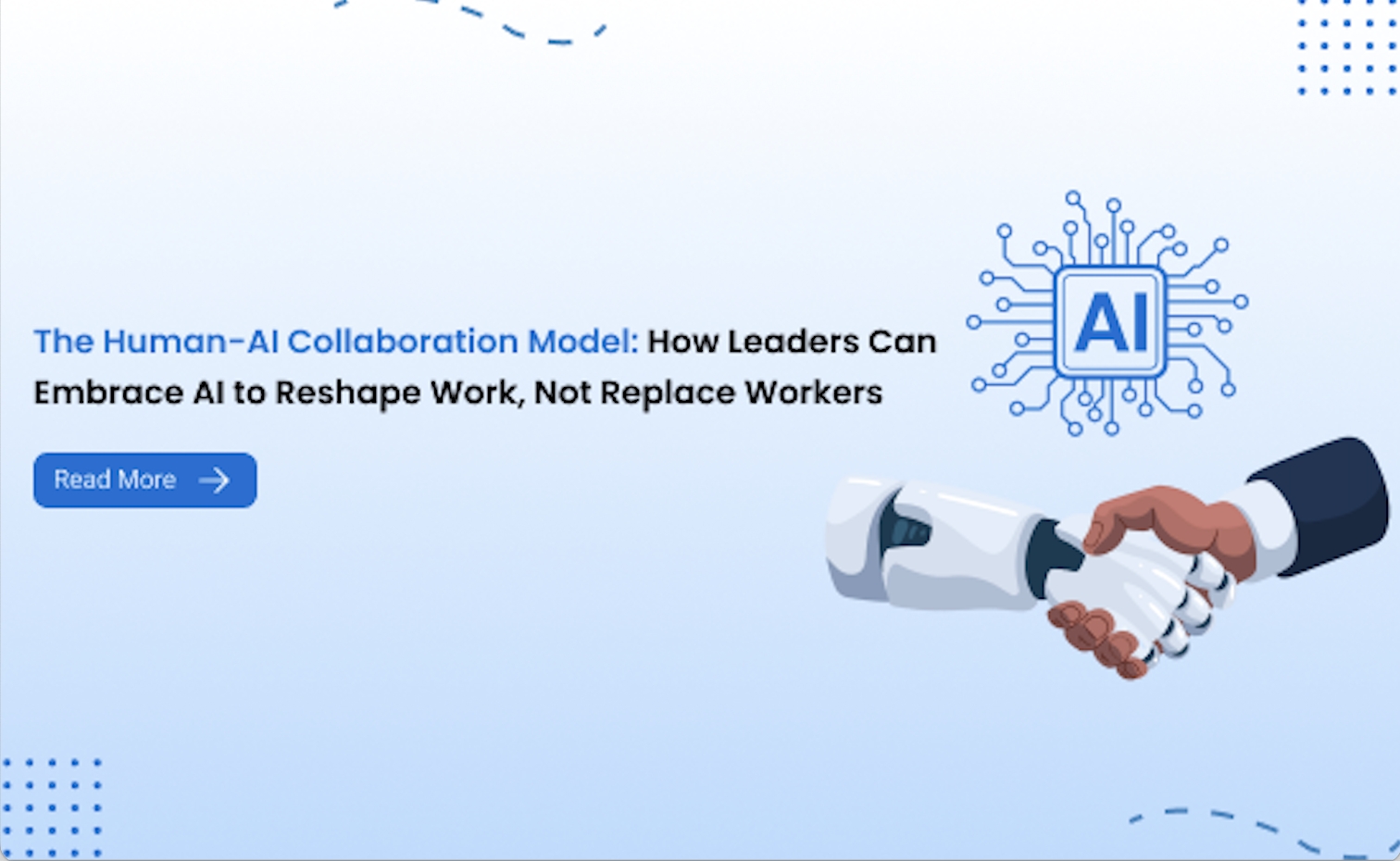
The rise of autonomous development also changes the role of human engineers.
Developers do not suddenly become unnecessary because agents can write larger amounts of code. Instead, the highest-value engineering work moves toward areas where human judgment remains especially important.
That includes architecture, product understanding, system design, tradeoff analysis, security decisions, review, and defining what “correct” means for the organization.
Engineers increasingly move from performing every implementation step toward supervising systems capable of execution.
This makes several organizational capabilities more important.
Task quality becomes critical. Poorly specified work creates poor autonomous outcomes. Engineering organizations need clearer requirements and acceptance criteria.
Context becomes infrastructure. Documentation, ownership, service metadata, architectural relationships, and operational history must be accessible to agents rather than trapped in disconnected systems.
Reviews become more important, not less. If agents dramatically increase the volume of generated changes, review quality becomes a limiting factor.
Governance must become programmable. Organizations cannot manually supervise every agent action. Permissions, policies, and approval requirements need to be encoded into workflows.
Engineering metrics need to evolve. Lines of code become even less meaningful when agents can generate them almost instantly. Lead time, deployment quality, reliability, and business outcomes become more useful measures.
The companies that benefit most from autonomous software development will therefore not necessarily be those that deploy the most coding agents. They will be the organizations that redesign engineering systems around productive human-agent collaboration.
Frequently Asked Questions
What is autonomous software development?
Autonomous software development uses AI agents to independently execute multi-step engineering work rather than simply suggest code. Depending on the platform and workflow, agents may interpret requirements, explore repositories, plan implementations, modify files, run tests, troubleshoot failures, create pull requests, or interact with other engineering systems. Enterprise implementations typically combine this autonomy with human approvals, organizational context, permissions, governance, and observability.
How is autonomous software development different from AI coding assistants?
Traditional AI coding assistants primarily respond to developer requests by generating, completing, explaining, or refactoring code. Autonomous development tools can take responsibility for larger objectives and determine intermediate actions themselves. Instead of asking for each individual change, an engineer might assign a bug or feature and allow an agent to investigate, implement, test, and prepare the resulting work for review with significantly less continuous supervision.
Can autonomous AI agents replace software developers?
Autonomous agents can perform a growing range of implementation and maintenance tasks, but software engineering involves far more than generating working code. Architecture, product judgment, security decisions, complex tradeoffs, organizational knowledge, and accountability still require significant human involvement. The more realistic 2026 model is human-agent collaboration: AI performs more execution while engineers define objectives, design systems, review outcomes, and control consequential production decisions.
Why does autonomous development require engineering context?
An agent may understand programming extremely well while knowing almost nothing about how a specific organization operates. Reliable autonomous development requires information about service ownership, dependencies, infrastructure, standards, deployment history, documentation, security requirements, and internal processes. Context platforms help agents reason within the actual engineering environment instead of making decisions based solely on the source code and instructions provided in an isolated session.