

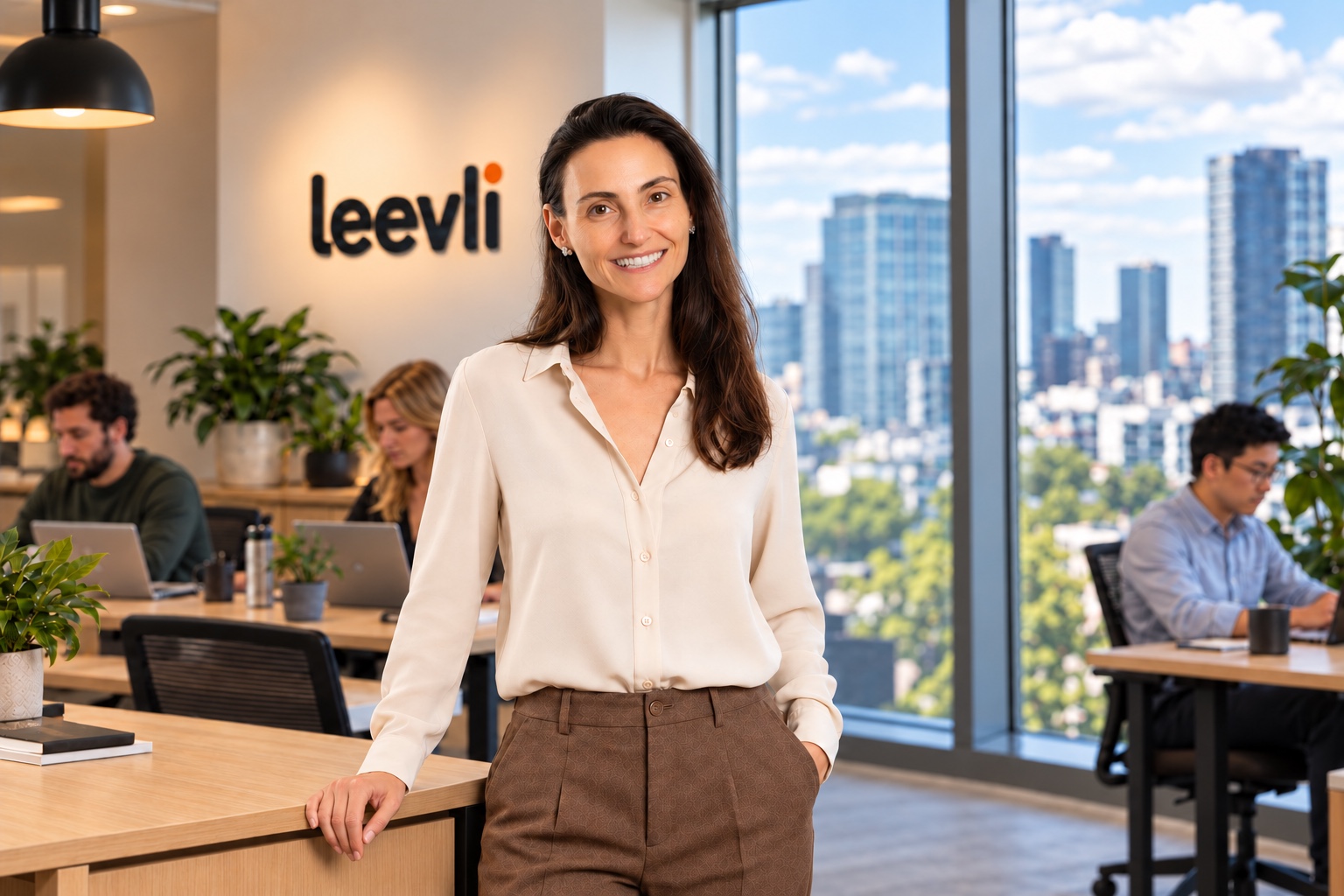
For decades, one of the most important questions before a move depended almost entirely on luck: “Do you know anyone who lives in that building?” Leevli, the U.S. proptech founded by Brazilian lawyer Natalie Geller alongside a team of engineers and artificial intelligence specialists, was built to answer it at scale. Valued at approximately US$5 million in its first round, the company has now reached a US$55 million valuation. The platform brings together more than 2 million property listings and more than 58,000 reviews across 12 U.S. states, and offers Leevli Legal, a legal due diligence tool for property buyers.
What problem is Leevli solving?
Listings tell you the square footage, the price and the number of bedrooms. They don’t tell you whether the building is quiet, whether management actually fixes problems, whether neighbors stay for years or move out constantly, or whether there’s a lot of noise on weekends. For a long time, the only way to find that out was word of mouth, and that depended on knowing someone, or knowing someone who knew someone. The internet transformed how people search for homes, but that part of the experience was still left to chance. Leevli exists to close that gap.
How does the platform work?
It starts with search: more than 2 million listings across the U.S. What makes Leevli different is what comes after the listing. Future residents can talk to people who already live in the building or the neighborhood. We also offer Leevli Legal, which analyzes documents and cross-references records to flag points that deserve attention before someone buys a property. We’re not trying to replace brokers, specialists or real estate agencies. We’re connecting people. What used to be a privilege for a few, having someone on the inside, we’ve turned into something accessible and scalable.
You often say that information and experience are different things. Why does that distinction matter?
Information can be searched, but experience is meant to be shared. The difference seems small, but it changes how people make decisions. It’s why reviews from other consumers became so important online. On Amazon, shoppers read other buyers’ accounts of a product. On Airbnb, guests’ experiences help people choose where to stay. On Reddit, communities trade recommendations on almost anything. In every case, other people’s experience adds a perspective that a commercial description rarely offers. Real estate took longer to get there.
What has been the hardest part of building Leevli?
Verifying the connection between residents and the places they talk about. On many review sites, it’s hard to know who’s on the other side of the screen, and the value of an answer depends on where it comes from. Knowing a neighborhood as a visitor is different from living there every day. In a court case, the testimony that carries weight is from someone who witnessed the facts. At Leevli, we apply the same standard by valuing the opinions of people who can prove they live in that building or neighborhood.
How did your legal background shape the company?
I trained in law in Brazil and in the United States, and I worked in due diligence, advising clients on decisions involving property purchases, asset structuring and relocation. That experience is what shaped Leevli Legal, our legal intelligence layer for investigating properties. When you analyze a property, a single document rarely tells the whole story.
Can you give an example?
Condo association meeting minutes might mention a construction project. A budget might show how that project will be financed. Public records might add information about whether it was approved. Looked at together, those pieces raise questions that reading each one separately might never reveal. That’s the logic of Leevli Legal. Residents know the day-to-day, brokers guide buyers on the market and the negotiation, and Leevli Legal examines what lies behind the address. They’re complementary roles.
Leevli also has an international arm. Who is it for?
Leevli International serves foreign buyers looking for property as an investment, a second home or a move to the United States. Being Brazilian, I understand that buyer well. Distance adds real difficulty: understanding how a region works, finding the right professionals and interpreting documents in a different legal system. By bringing all of those perspectives into one platform, we’re trying to make the search less fragmented.
Leevli was built by engineers and AI specialists, yet you’re skeptical of AI-only answers. Why?
Technology is what lets us do this at scale. But people don’t just choose properties. They choose where they’re going to build their lives. And no artificial intelligence knows a neighborhood better than someone who wakes up there every day and calls it home.
What should buyers take away from Leevli’s approach?
Making that choice better informed starts with an old question, “Do you know anyone who lives there?”, and with the possibility of finally finding someone who can answer it.