

As the global business community sank its teeth into AI initiatives this year, three letters kept coming back up: R.O.I. The obsession on return on AI investments is understandable. Looking at corporate America alone, AI-related investments are expected to reach $581 billion just this year, marking a record capital allocation for a tool that’s still unproven in many ways. In this march to strengthen ROI, executives are doubling down on token strategies – Google says it saw four times as much interest in token efficiency terms since January 2026 – employee training, and other ways they can help the AI bill match the value of its output.
But having worked with AI for over 25 years and having guided hundreds of businesses in its implementation, I can say with confidence that many executives are looking in the wrong direction when it comes to increasing the ROI of their AI projects.
Token strategies and employee trainings are important, no doubt, but they’re breadcrumbs compared to where the mass of AI gains are being lost.
Without New WorkFlows, AI is Limited
Sixty-one percent of CEOs recently reported that their boards are rushing AI transformation. That probably doesn’t come as a shock, because many of us have already witnessed the key failing this corporate rush has produced: AI being added like a layer of icing onto old workflows and expecting it to automatically modernize the work.
Modernization isn’t about adding new technologies in, it’s about redesigning the way work happens for new technologies. This makes AI integrations a lot less about AI and a lot more about the problems your work is actually built around solving, and the most efficient ways to arrive at those solutions with the tools available.
Consider a customer-service team. A company can give every associate access to an AI assistant that summarizes calls, drafts responses and retrieves information, and that may save a few minutes per interaction, but it doesn’t fundamentally change the workflow. A more transformative approach would use AI to identify recurring customer issues, automatically route complex cases to the right specialist, surface relevant account history before an interaction begins and flag emerging problems for the product team. The difference isn’t the AI model being used, it’s the way it’s being applied to solve the problems customer service even exists to address.
In this same vein, sometimes AI won’t be the right tool for the job. That may sound like sacrilege in today’s AI-obsessed world, but the smartest businesses don’t index on a technology for the sake of it, they use technology as practical vehicles for specific capabilities.
Coming to Terms with Transformation
When we think about companies that have truly transformed their field, they do justice to the term “digital transformation.” Think about Netflix. Today’s streaming giant started off as a DVD-by-mail company. They could have easily leaned on advancements in media hardware, but they instead fundamentally rethought how they were delivering value to their customers based on the latest technologies available, and made media streaming the norm.
The term “digital transformation” however, fails to convey just how much of the challenge is human, and not digital. Completely redesigning workflows for AI usually isn’t so much a technical obstacle as an emotional one. Few of us would be immediately comfortable rewriting how a core process has been done at a company that has been successful for decades, when we are the ones at the helm. Digital transformation takes courage, as well as faith that we have the ability to pioneer better ways of working than those which may have worked for us in the past.
Refocusing from Technology to Outcomes
AI transformation is intimidating. We just listed out all of the reasons it’s incredibly tough to get it exactly right, but there are a few general pointers executives can keep in mind when formulating their AI plans:
Design around what you want to solve: change the meeting that’s on the calendar to discuss AI to instead revisit your core value proposition, the biggest challenges the business faces and then address how the tools can fit in to address these. Resist the urge to fixate on new features and capabilities of popular AI platforms. The latest AI agent won’t be worth the investment if you don’t have a clear idea of the problem they should go about solving.
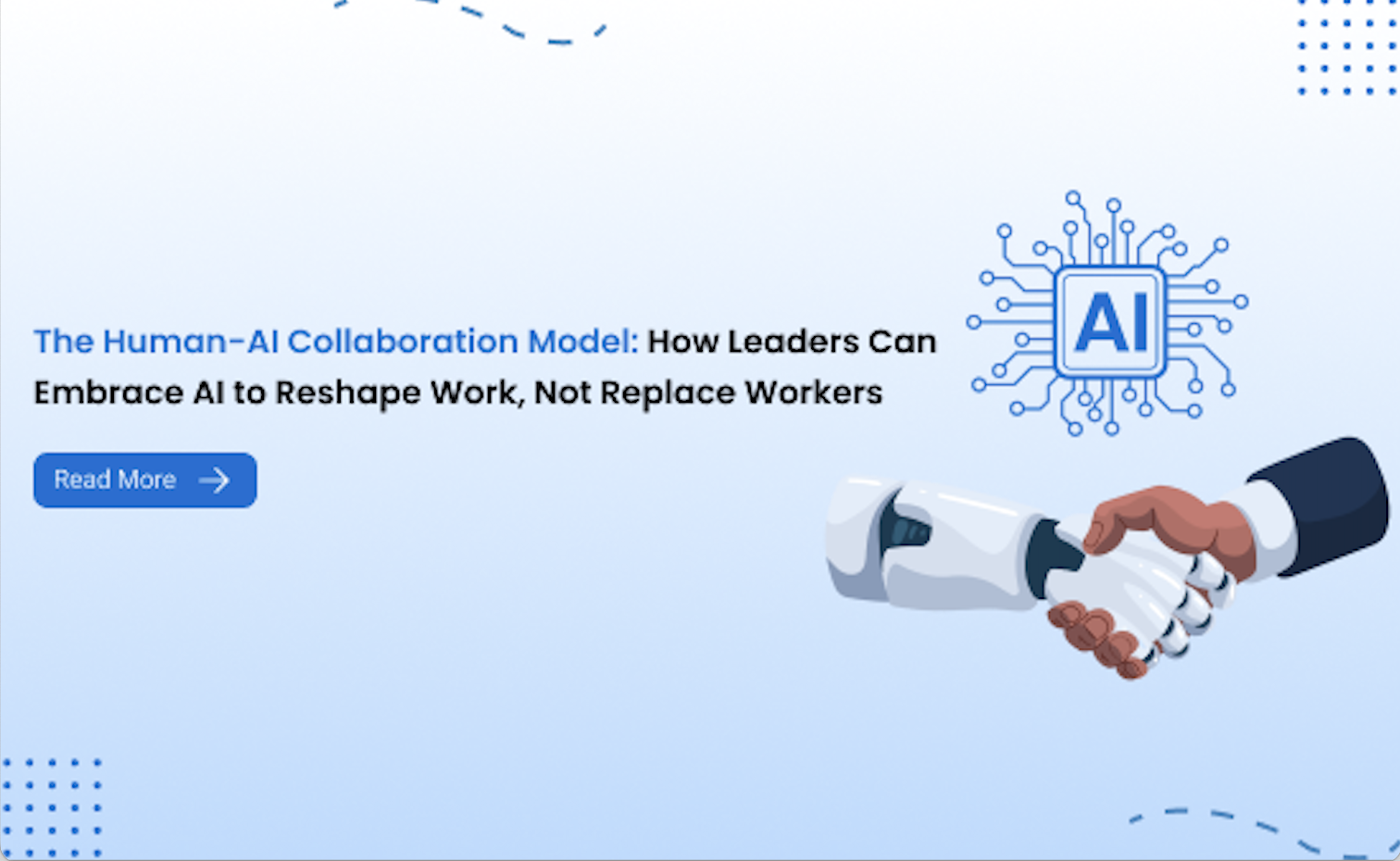
Don’t count the human out: once you have a clear picture of how AI can actually transform your processes, pay attention to where its limitations are going to fall and how that changes the role humans play. Remember that AI still needs oversight, especially in new deployments where potential risks may be discovered in real time. Outside of AI oversight, this is also the opportunity to consider, if AI is taking on a large piece of a process a human used to conduct manually, what other problems that person can and should now be focused on addressing.
Token strategies and AI training playbooks will continue to evolve and there will always be time to figure out these efficiencies, but true ROI gains will require a more custom approach. While the pressure to deploy AI quickly is real, we cannot allow it to hinder us from implementing it in the smartest way possible.