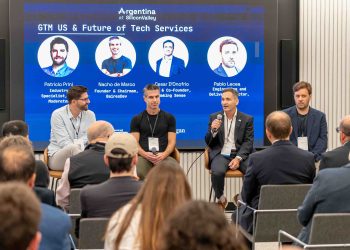
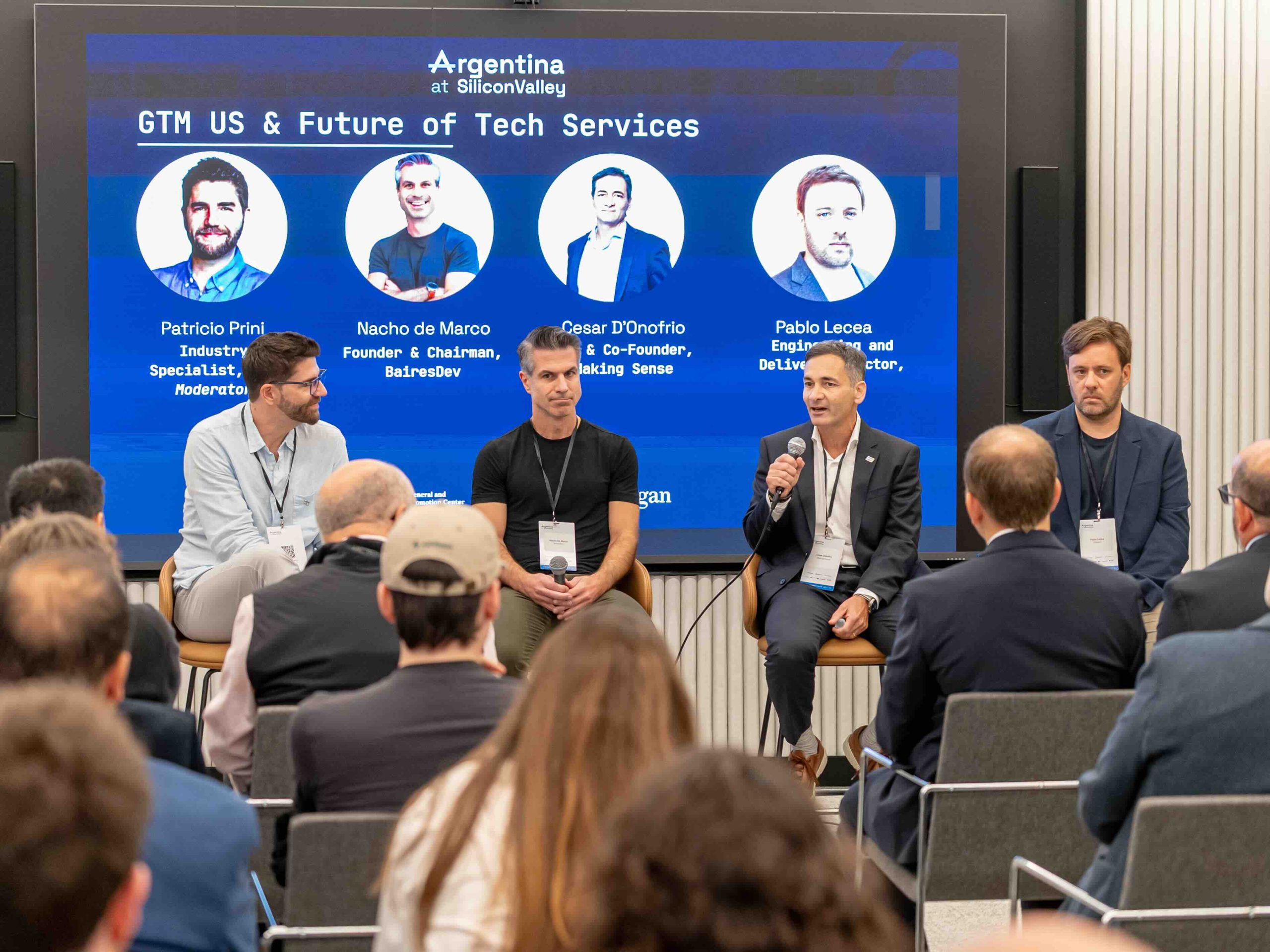
On October 7, Making Sense CEO and co-founder Cesar DOnofrio took the stage at “Argentina at Silicon Valley,” a full-day event organized by the Embassy of Argentina in the United States as part of San Francisco Tech Week.
His message reflected a shift in what US companies expect from technology partners, as AI reshapes the industry and creates new opportunities for Argentina’s engineering talent.
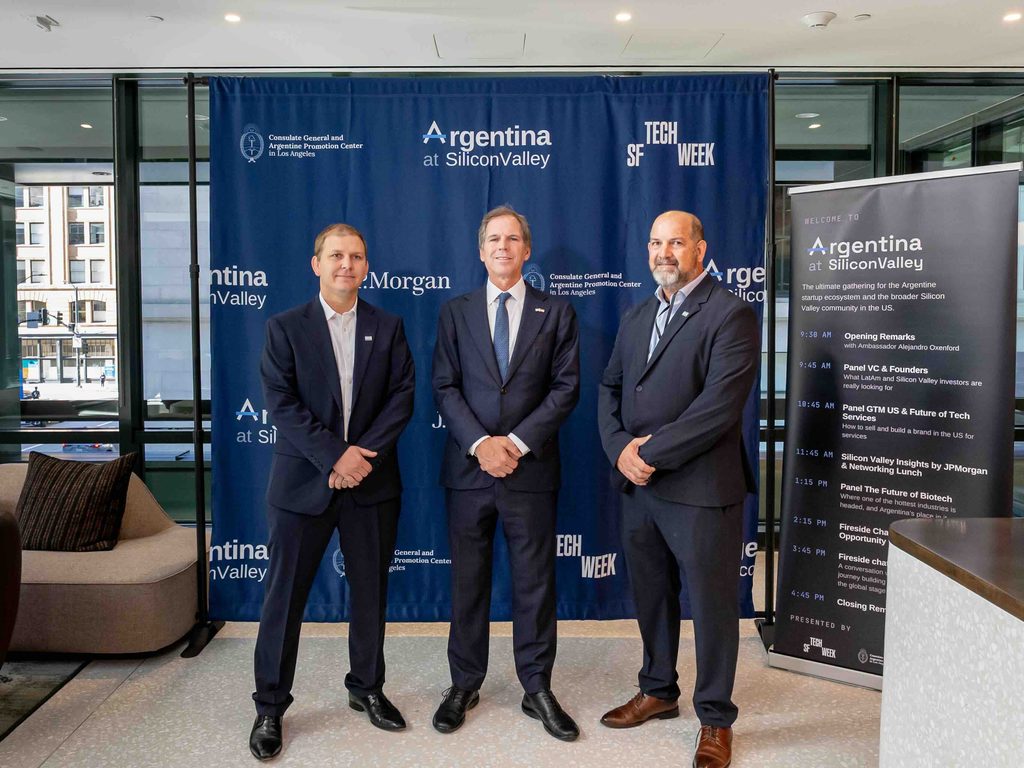
Led by Ambassador Alec Oxenford, the first edition of the event brought together more than 500 founders, investors, and technology leaders at JPMorgan’s San Francisco building. The agenda included panels on venture capital, with investors from a16z and MELI VC; the future of biotechnology; Argentina’s energy opportunity to supply the computing power AI demands, featuring YPF; and the expansion of Argentine technology services companies into the US market, where DOnofrio spoke.
Roughly half of the attendees were startup founders and executives, joined by Argentine-born global companies such as Mercado Libre, Globant, Despegar, and Tiendanube, professionals from Google, Microsoft, AWS, NVIDIA, and OpenAI, and investors including SoftBank, Goldman Sachs, and Endeavor.
The panel, “Development and Engineering Services from Argentina,” drew around 120 attendees. Alongside DOnofrio were two other Argentine technology leaders: Diego Fernández, Senior Vice President at Globant, and Nacho De Marco of BairesDev. The panel brought together three perspectives on Argentina’s technology services industry: Globant, BairesDev, and Making Sense, a technology partner helping US mid-market and private-equity-backed companies accelerate growth through AI-driven solutions and software modernization.
The conversation centered on how Argentine companies sell into the US market. “My message was simple: today it’s a buyer’s market,” DOnofrio said. “Companies aren’t looking for capacity; they’re looking for someone who has already solved their problem. That’s why specialization and trust are what open doors, and trust is built in person.”
For DOnofrio, who lives and works in Silicon Valley, events like this are especially valuable for the relationships built beyond the stage, the conversations between sessions, and the opportunity to see where the industry is heading.
SF Tech Week was organized by a16z (Andreessen Horowitz), one of the leading venture capital firms of Silicon Valley. The event has hundreds of sessions organized individually. Around 30% of attendees are founders, alongside investors, senior executives, operators, and technical talent.
According to the National Statistics Institute (INDEC), knowledge-economy exports reached a record US$9.6 billion in 2025. That is 53% of all services Argentina sells abroad and makes the sector the country’s third-largest export complex. The Ministry of Economy’s breakdown puts professional and technical services at 63.7% and software and IT services at 27.7%, supported by more than 285,000 formal jobs.
The trend has continued: industry group Argencon says exports crossed US$10 billion for the first time in the twelve months through March, up 11.7%. Argencon also noted that generative AI brings both challenges and opportunities for countries with specialized human capital.
These figures highlight the scale of Argentina’s technology services industry. As AI reshapes software development, Argentine companies have an opportunity to build on their engineering expertise, helping US businesses modernize systems, integrate technologies, and turn AI investments into measurable results.
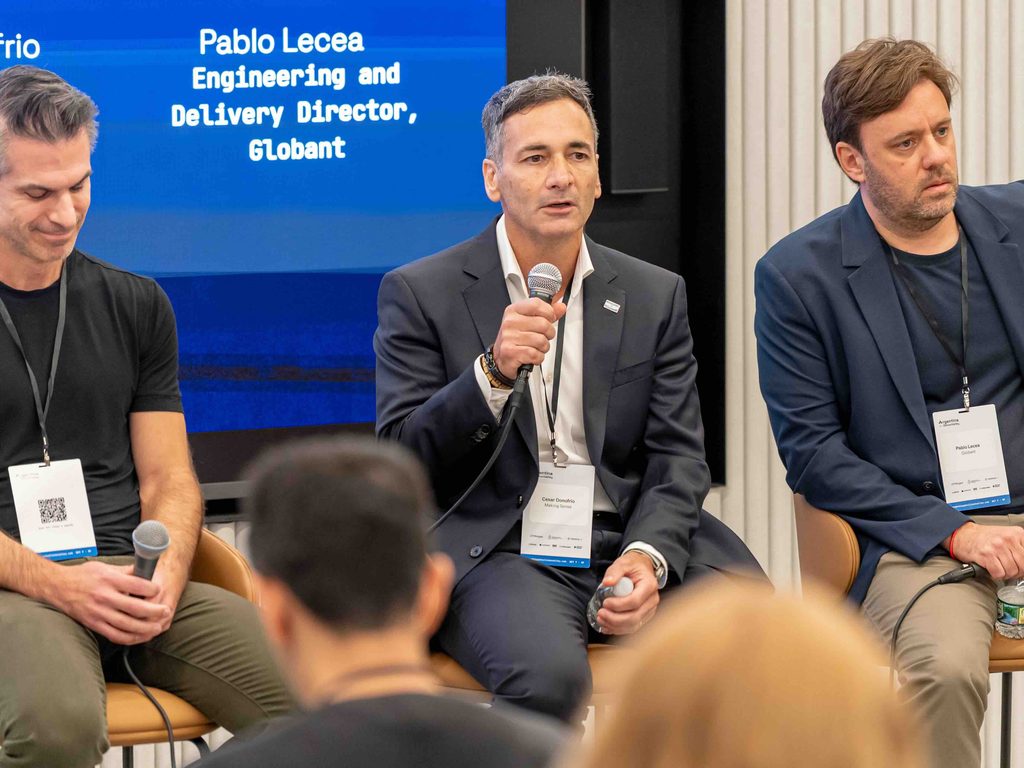
“AI is shifting value away from writing code and toward solving business problems,” DOnofrio said, “and it makes projects viable that used to be too expensive, like modernizing legacy systems.”
Artificial intelligence and energy were recurring themes throughout the day, and DOnofrio sees them as two sides of the same opportunity. “Argentina has something very few countries have: top-tier talent and the energy to power AI infrastructure,” he said. “It’s an enormous opportunity, and we have to seize it.” Ambassador Oxenford made a similar case from the stage, pointing to Vaca Muerta’s shale reserves and Patagonia’s wind, sun, and cold climate as reasons Argentina could become a natural home for the energy and data centers AI will require.
The discussion also highlighted the importance of connecting AI to tangible business outcomes. According to Fernández, moving AI from research to real-world impact requires understanding its organizational context, rather than simply deploying models, pilots, or agents. Together, the panelists emphasized the opportunity for Argentine technology companies to turn engineering expertise into measurable business results.
For Making Sense, this approach is already central to its work with US mid-market and private-equity-backed companies, where AI adoption and software modernization are increasingly tied to broader business priorities.