
Japan is rethinking how it builds AI infrastructure: rather than developing giant campuses on the edge of towns, it’s going smaller and smarter. A quiet revolution in energy, cooling and distributed computing is making this possible — and it’s creating big opportunities for international technology firms.
Not your typical data center story
When most people think about the global race to build AI infrastructure, they picture vast campuses in remote locations consuming hundreds of megawatts of power.
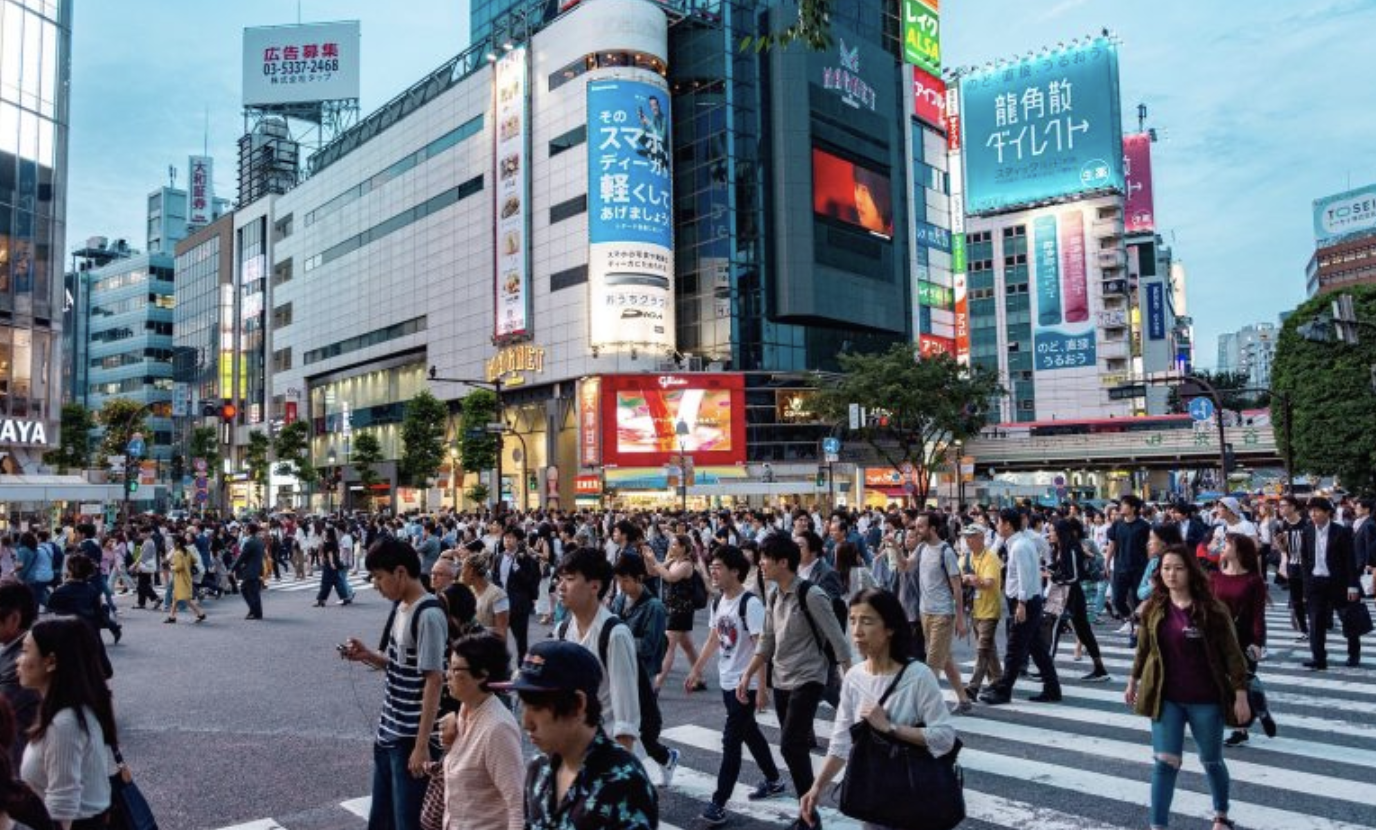
Japan’s answer looks rather different. Hemmed in by expensive urban land, a constrained power grid and a government increasingly watchful about where and how digital infrastructure gets built, the country is pivoting toward a network of smaller, high-density, urban-scale facilities — typically ranging from a few megawatts up to around 25 MW — that slot into existing urban fabric or repurpose legacy industrial buildings.
The numbers behind this shift are significant. Japan’s AI-optimized data center market is projected to grow from $0.64 billion in 2025 to $2.07 billion by 2030 — a CAGR of over 26%.
Today, roughly 90% of the country’s data centers are clustered in and around Tokyo and Osaka. But policymakers have set an explicit goal to change that. A government-convened advisory body, the ‘Watt-Bit Collaboration’, is building a framework to redistribute compute capacity away from congested metros and toward regions like Hokkaido, Tohoku, Chubu and Kyushu — where renewable energy is more abundant, land is cheaper and grid headroom exists.
Mega-campuses are not disappearing. SoftBank, for example, is transforming a former Sharp LCD plant in Sakai into an AI facility initially rated at 150 MW and scalable to 400 MW, and a 3.1 GW campus was announced in Toyama at the end of last year. But these are exceptions within an overall strategy that increasingly favors distributed, urban-scale expansion.
The policy direction is unmistakable: from FY2029, new data centers must meet minimum energy efficiency standards — or face financial penalties.
The cooling challenge — and why Japan is becoming a testbed
Running GPU clusters at 80 to 140 kW per rack in a repurposed city building is a tough engineering challenge. Traditional air cooling simply cannot handle the heat densities that modern AI workloads demand, and the physics of heat removal becomes even more acute when you’re working within the constraints of an existing structure, rather than designing from scratch.
Japan is emerging as a live testbed for the technologies that will solve this. Preferred Networks, Internet Initiative Japan and the Japan Advanced Institute of Science & Technology are already running direct liquid cooling and Air-Assisted Liquid Cooling (AALC) pilots that slot liquid circuits into legacy air-cooled halls — a retrofit-friendly approach that’s critical for urban-scale facilities.
Meanwhile, Fujitsu — working with Supermicro and Nidec — is validating a software-orchestrated liquid cooling platform at its Tatebayashi data center that targets up to 40% lower cooling energy versus conventional air systems.
Japan is also exploring cooling approaches that are harder to find elsewhere. Hokkaido’s cold climate and geothermal resources are being assessed as natural heat sinks, while policy discussions are promoting heat recovery to district heating networks and agricultural greenhouses — approaches that are well established in Scandinavia but relatively new to Asia.
This matters not just for efficiency, but for community relations: urban data centers that donate waste heat to local infrastructure are a much easier sell to urban planners and residents.
This is precisely where international companies have an immediate opening. Advanced immersion cooling systems, compact CDU designs, sub-floor coolant distribution rails and the software intelligence to orchestrate it all in real time are areas where North American and European vendors are ahead of what Japan can deliver at scale.
Power in a smaller box — DC distribution, SiC and intelligent control
Cooling is only half the equation. Getting clean, reliable, high-density power into an urban-scale facility — and managing it efficiently — requires an equally significant rethink of the power architecture.
Japanese operators are moving toward ±400V DC distribution, parallel UPS architectures and silicon carbide (SiC) power electronics to squeeze more efficiency out of tighter footprints. And solid-state transformers (SSTs) are attracting growing interest as a next step. These are compact, power-electronics-based alternatives to bulky conventional units that could deliver native DC output, built-in power quality management and bidirectional flow, making them a natural fit for grid-interactive urban data centers.
A new generation of high-density power delivery technologies that reduce the wiring harness footprint itself — shrinking the copper and cabling burden inside the rack — could also free up precious space in facilities that were never designed for today’s AI workloads.
SiC is an area where Japan already has formidable domestic capability — ROHM and Mitsubishi Electric are global leaders — but the broader AI-ready power stack, from SSTs and high-density rectifiers to DC busway systems and power-aware orchestration software, still has significant gaps that international partners can fill.
Looking further ahead, superconducting cables — capable of carrying several times the current of conventional alternatives through the same conduit footprint — may prove the most elegant solution to the urban last-mile power problem. For a data center operator trying to feed 20+ MW into a retrofitted building on a constrained urban street, the ability to move far more power through existing conduit is a compelling proposition.
Japan’s New Energy & Industrial Technology Development Organization has already funded live grid demonstrations of high-temperature superconducting cable technology, and as urban data center power densities continue to climb, the case for superconducting grid feeds will only strengthen.
On the supply side, expect to see urban data centers increasingly paired with micro-power purchase agreements (PPAs), on-site solar and storage and grid-interactive operations — demand response, peak shaving and load shifting — to make the most of constrained grid connections.
Japan’s utilities, including TEPCO and regional providers like Kansai Electric and Hokuriku Electric, are already investing in grid reinforcements, but transformer and substation lead times of three to five years mean that smart demand management is not optional — it’s a core part of the urban data center operating model.
Distributed AI: the architectural consequence of going small
A network of smaller urban data centers is not just a different way of building the same infrastructure — it requires a fundamentally different approach to running AI workloads.
Synchronous distributed training across multiple sites taxes inter-site bandwidth in ways a single large campus does not suffer. Inference at scale across a meshed footprint demands low-latency fabric and intelligent workload scheduling that can move jobs to where power is cheapest or most available.
Japan is not ignoring this. NTT’s IOWN program — which is advancing photonic and optical networking to reduce latency dramatically across distributed sites — is one of the most ambitious efforts of its kind anywhere in the world.
Modular, containerized GPU pods that can be deployed close to demand centers or renewable sources are attracting growing interest from systems integrators and cloud service providers. And KDDI’s Osaka Sakai Data Center — built in partnership with HPE and powered by NVIDIA Blackwell infrastructure and direct liquid cooling — is an early example of how modular, distributed AI factories are being brought online in practice.
For international companies, the distributed AI wave creates openings across distributed training frameworks, silicon-photonics switching fabrics, high-bandwidth interconnects and the microgrid controls that allow GPU pods to operate with a degree of energy autonomy. These are technologies where global HPC and hyperscaler expertise translates directly to what Japan’s integrators need.
Cleaning up the power mix
There is one further dimension to the urban data center strategy that shapes everything else: energy sourcing.
Japan’s data center operators are pursuing renewable PPAs. Equinix, for example, signed its second Japan solar deal in February, the largest vPPA in the country’s data center sector to date, while Microsoft inked agreements with Shizen Energy covering four solar projects in late 2025. But renewables are still projected to account for only around 17% of data center power supply by 2030, well below operator sustainability targets.
The government is stepping up support through its GX 2040 vision, which includes a ¥210 billion ($1.3 billion) subsidy program covering companies — including data center operators — that rely entirely on decarbonized electricity, with Hokkaido identified as a priority region given its wind, solar, and geothermal resources.
But the gap between ambition and reality on clean energy remains one of the most significant challenges facing Japan’s urban data center strategy, and there’s plenty of scope for international players to step in to help.
Nuclear is also back in the conversation. Japan has restarted Kashiwazaki-Kariwa Unit 6 — the first TEPCO-operated reactor to come back online since 2011 — as part of a broader policy shift to restore stable, low-carbon baseload capacity in support of the AI era’s power needs. And small modular reactors (SMRs) remain a longer-term prospect for the nation. Domestic construction timelines are likely post-2030, but the political direction of travel is clear.
The geographic mismatch between where data centers are today (Tokyo and Osaka) and where most clean energy is being generated (Hokkaido and Kyushu) is a central challenge that the Watt-Bit Collaboration framework is designed to address. Technologies for grid-aware load shifting, AI-driven virtual power plants and renewable co-location are not peripheral add-ons here — they’re core to making the whole distributed model work.
Thinking beyond the hyperscale playbook
So, Japan’s urban data center strategy is, at its core, a constraint-driven innovation story — and this requires durable technology partnerships.
The country’s systems integrators, cloud service providers, colocation operators and municipal utilities are already in motion. What they need from international players are the enabling technologies that Japan’s own ecosystem has not yet developed at the required scale or maturity.
This means advanced liquid and immersion cooling systems ready for retrofit environments. It means AI-ready power shelves, intelligent data center distribution and demand-response platforms calibrated for Japan’s grid conditions.
It means distributed training frameworks, photonic interconnects and modular GPU pod blueprints that can be factory-assembled and rapidly deployed.
And it means expertise from markets, such as the Nordics and the US Pacific Northwest, where renewables-paired data centers are already an operational reality.
Meanwhile, Japan’s own tech firms are quietly building capabilities that will be relevant well beyond their home market: Nidec in cooling distribution, Fujitsu in thermal control software, NTT and NEC in optical systems and ROHM in SiC power electronics. As other countries face the same pressures of urban density, constrained grids and AI-led demand growth, Japan’s urban data center model may well become a vital export.
Japan has always had a knack for engineering elegant solutions to problems the rest of the world will eventually encounter. In the race to power the AI era, it turns out that thinking small might just be the biggest opportunity of all.
About the author

Oren Bernstein is a VP at Intralink North America and can be contacted at oren.bernstein@intralinkgroup.com
Intralink is a business development consultancy that helps tech scaleups to secure customers, partners and investors in international markets. You can see more at www.intralinkgroup.com