

With the rise of AI, the venture capital industry is entering a new era. For more than a decade, investors competed to identify the next disruptive app. In 2026, the race has shifted toward something much bigger.
The emergence of agentic AI, with investment recently passing an unprecedented $1.6 trillion mark, is reshaping how ventures are built, scaled, and valued.
At the same time, the AI economy is creating opportunities far beyond Silicon Valley. Universities, venture studios, accelerators and industry-specific innovators are all playing a role in determining which companies become category leaders.
The individuals shaping this transformation are not just writing checks; they are building founder networks, creating new funding models and helping entrepreneurs navigate one of the fastest technological shifts in modern history.
The most influential investors today are no longer simply looking for companies that use AI, they are also searching for entrepreneurs building entirely AI-native businesses.
As capital flows toward the next generation of intelligent software, here are fifteen investors, acquirers and ecosystem leaders helping shape the future of innovation.


Anjli Jain, General Partner, ElevenX Capital
Few investors have embraced the AI transition as comprehensively as Anjli Jain. As General Partner of ElevenX Capital, Jain oversees investments in AI-first companies spanning education technology, cybersecurity, healthcare, workforce technology, and enterprise software.
ElevenX’s venture studio model allows the firm to actively build alongside founders rather than simply invest in them, creating a unique advantage in the rapidly evolving AI economy. The firm’s focus on AI-enabled infrastructure and operational technology positions Jain among the most closely watched investors in the sector.
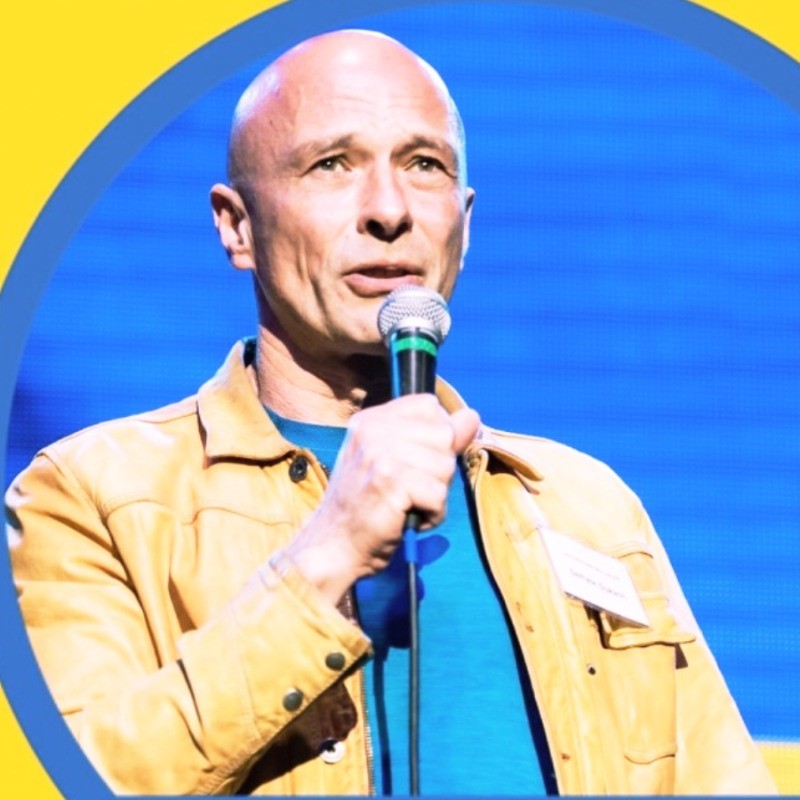
Semyon Dukach, Founder and Managing Partner, One Way Ventures
Semyon Dukach built One Way Ventures around a simple observation: immigrant founders consistently create outsized impact. As AI talent becomes increasingly global, that thesis has become even more relevant. Many of today’s most promising AI startups are being launched by founders who bring international technical expertise and global market perspectives.
Dukach’s focus on identifying exceptional immigrant entrepreneurs gives him access to a growing pipeline of AI-native companies before they reach mainstream attention.

Laura González-Estéfani, Founder and CEO, TheVentureCity
Laura González-Estéfani has spent years building bridges between startup ecosystems across North America, Europe, and Latin America. Through TheVentureCity, she has focused heavily on product-led growth companies, including startups operating in AI, machine learning, data infrastructure, fintech, and healthtech.
As AI entrepreneurship expands beyond Silicon Valley, González-Estéfani’s global network and operational approach make her one of the most influential investors supporting the next generation of international AI founders.
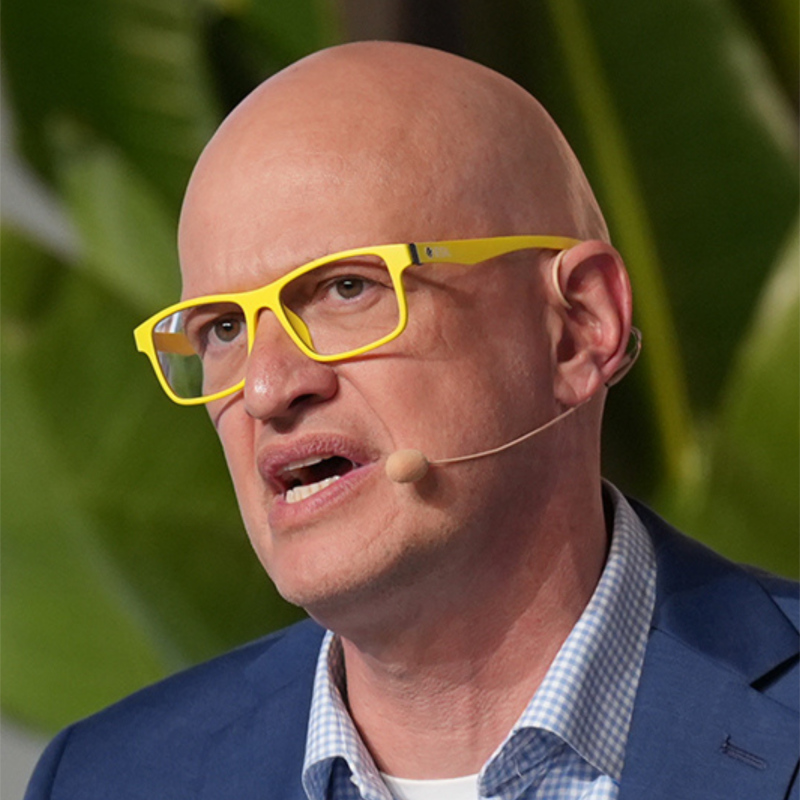
Adeo Ressi, VC Lab and Decile Group
While many investors focus on individual startups, Adeo Ressi has spent his career building systems that create entrepreneurs and venture funds at scale. Through VC lab and Decile Group, Ressi has helped thousands of founders launch companies and supported emerging venture managers globally.
As AI lowers barriers to company creation, the infrastructure supporting startup formation becomes increasingly valuable—making Ressi one of the most influential ecosystem builders in venture capital.

Odille Sánchez, Orion Startups
Universities are becoming critical contributors to the AI economy, and few institutions have invested more aggressively in entrepreneurship than Tec de Monterrey and Orion Startups.
Through her work advancing innovation and startup development, Odille Sánchez is helping connect academic research, emerging founders, and venture capital across Latin America. As AI innovation increasingly emerges from university ecosystems, leaders like Sánchez will play an important role in shaping the region’s future technology champions.
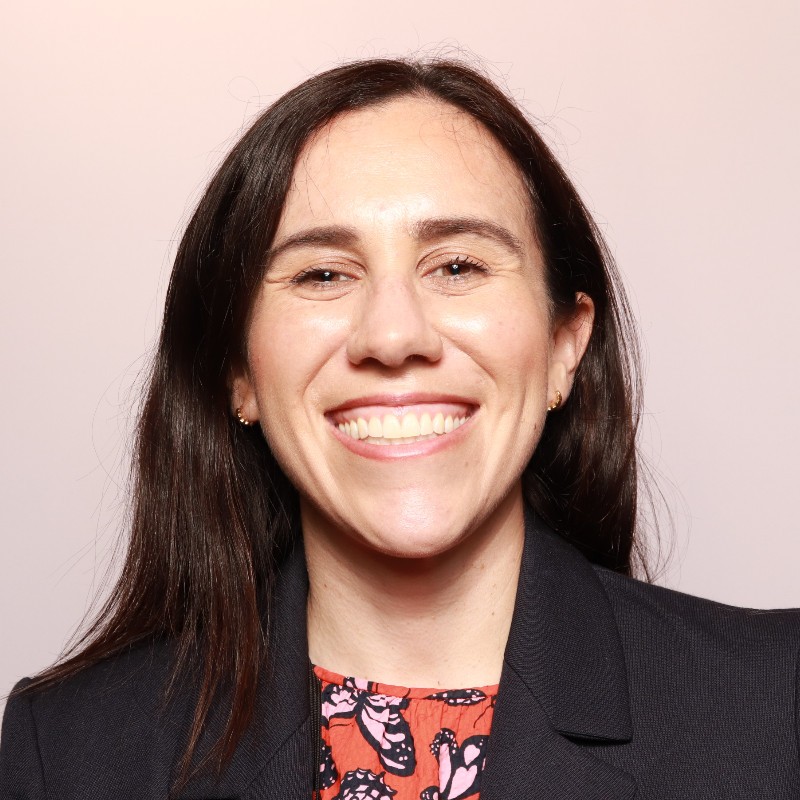
Rachel Sheppard, Leap Venture Studio
AIe is beginning to transform industries that were once considered largely traditional, including pet care. Rachel Sheppard, Ventures Director at Mars Petcare and a leader behind Leap Venture Studio, has helped position the accelerator as one of the most influential innovation platforms in animal health, veterinary technology, diagnostics, and pet wellness.
Recent cohorts have included startups applying AI to veterinary diagnostics, pet health monitoring, personalized nutrition, and predictive care. As investors increasingly look beyond horizontal AI applications toward industry-specific opportunities, Sheppard’s work sits at the intersection of AI and one of the world’s fastest-growing consumer categories.

Lauren Cascio, Founding Partner, Gulp Data
As aAI becomes increasingly dependent on proprietary datasets, Lauren Cascio is championing a concept that could reshape how startups finance growth: treating data as a financial asset. Through Gulp Data, Cascio has pioneered data-backed financing, enabling companies to leverage the value of their data for non-dilutive capital.
Her work sits at the intersection of AI, data infrastructure, and venture innovation, addressing a critical challenge for startups seeking growth capital without sacrificing ownership. As enterprises race to build competitive advantages through AI, the value of proprietary data is rising rapidly—making Cascio’s vision of “data as an asset” increasingly relevant to founders, investors, and the broader technology ecosystem.

Ibrahim Hasanov, Founder and CEO, MyUser
The AI revolution is creating winners far beyond the venture capital community. Ibrahim Hasanov, founder and CEO of MyUser, is among a new generation of operators building AI-native platforms designed to transform how companies interact with customers. By helping organizations leverage intelligent automation and customer insights at scale, Hasanov is addressing one of the largest opportunities in enterprise AI: turning data into meaningful engagement.
As investors increasingly seek startups that deliver measurable AI-driven business outcomes rather than simply AI features, companies like MyUser offer a glimpse into where the market is headed next.

Brandon Tobman, Founder and CEO, GetCovered
While Brandon Tobman is not an investor, his growing influence on the startup ecosystem earns him a place on this list. This month GetCovered expanded its footprint through the acquisition of Revyse, signaling continued consolidation in the proptech market.
As AI increasingly transforms industries such as insurance, operators like Tobman are becoming important signals for where venture capital may flow next. Strategic acquisitions often reveal emerging market opportunities before they become obvious to investors.

Alex Nephew, Co-founder and CEO, First Party
Alex Nephew is and entrepreneur and investor with more than 20 years of experience building and scaling data, AI, and technology businesses. He is the CEO and Co-Founder of FirstParty, a company focused on helping organizations unlock the full value of their data through monetization and strategic utilization. Prior to FirstParty, he co-founded and served as President of 7Park Data, one of the pioneering alternative data companies in the market. U
Before launching his entrepreneurial ventures, he held leadership positions at ITG, Majestic Research, and Datamonitor. He holds a B.A. in Economics from Denison University. As an investor, he is particularly focused on companies operating at the intersection of data, artificial intelligence, and enterprise technology, leveraging decades of experience turning emerging market opportunities into scalable businesses.

Daniel Domingues, Founder and CEO, Planno
Daniel Domingues is proving that some of the most valuable AI companies are not building general-purpose models, but applying intelligence to solve highly specific industry bottlenecks. As founder and CEO of Planno.io, Domingues is using GeoAI, satellite imagery and business intelligence data to help commercial and industrial solar developers identify viable rooftop opportunities at scale.
The platform addresses one of renewable energy’s most persistent challenges: prospecting. By automating what has traditionally been a manual and fragmented process, Planno enables solar companies to build stronger project pipelines and accelerate deployment across global markets.

Nate MacLeitch, Founder and CEO, QuickBlox
As healthcare organizations race to implement AI responsibly, Nate MacLeitch is positioning QuickBlox at the center of one of the industry’s most promising opportunities: AI-powered patient engagement. Under MacLeitch’s leadership, QuickBlox has expanded beyond communications infrastructure to develop healthcare AI agents capable of supporting patient interactions, care coordination, scheduling, and administrative workflows.
As providers face mounting pressure to improve outcomes while reducing operational burdens, AI-powered healthcare engagement platforms are attracting growing attention from both enterprise buyers and investors. Healthcare AI agents are increasingly being used for functions such as patient intake, appointment scheduling, patient engagement, administrative automation, and escalation to human staff, MacLeitch’s work highlights a broader trend shaping the AI market in 2026: the rise of vertical AI solutions designed to solve highly specific industry challenges rather than broad, horizontal use cases.

Sergiu Matei, Founder and CEO Index.dev
Finding good AI engineers is hard. Finding enough of them is even harder. Sergiu Matei built Index.dev to tackle what has quietly become one of the biggest bottlenecks in the AI economy: the widening gap between the demand for AI engineering talent and the supply of people who can actually do the work.
In 2026, Matei made a significant move, acquiring Hirebolt, a Y Combinator-backed talent matching company, and folding its high-speed matching infrastructure into Index.dev’s platform. The goal is straightforward: help companies go from needing AI engineers to having them, without the months of searching that typically stand in the way. In a market where execution is everything, that kind of speed matters more than most investors yet realise.

Cesar D’Onofrio, Co-founder and CEO, Making Sense
Cesar D’Onofrio is an entrepreneur, technology executive, and investor with more than two decades of experience building and scaling software, AI, and digital innovation companies. Since founding Making Sense in 2006, D’Onofrio has led the company’s expansion across the United States and Latin America, helping enterprises leverage emerging technologies to create measurable business value.
He is also the Co-founder of Doppler, one of Latin America’s leading email marketing platforms, as well as other technology ventures including Viallion and Lander. A recognized voice in the technology ecosystem, he has been named among Nearshore Americas’ Power 50 Leaders, selected for the Stanford Latino Entrepreneur Leaders Program, and recognized among the industry’s leading midmarket technology executives.