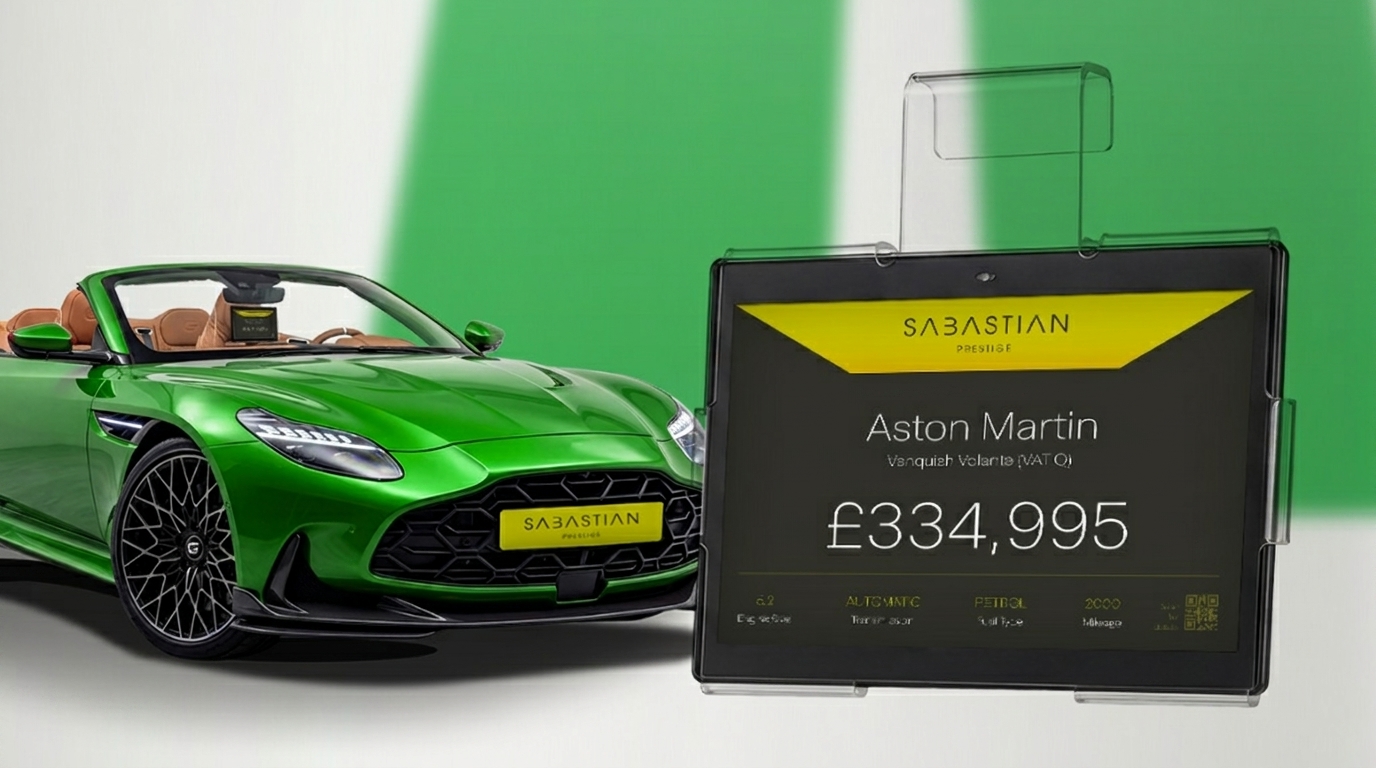
The modern car dealership is one of the most technology driven retail environments in the world.
Customers can search thousands of vehicles online, compare specifications instantly, complete finance applications digitally and receive automated communications throughout the buying journey.
Yet when many buyers arrive at a dealership, one of the first things they see is still a printed sheet of paper attached to a vehicle windscreen.
After more than 25 years working in automotive, I’ve watched the industry transform almost beyond recognition. Dealerships moved from handwritten stock records to Dealer Management Systems, from newspaper advertising to online marketplaces and from manual customer management to sophisticated digital retail platforms.
But one part of the journey remained disconnected: the vehicle sitting on the forecourt.
The Forecourt Is Still Part of the Customer Journey
That matters because the physical dealership is not becoming irrelevant. It remains central to the buying journey. Recent research found that 72% of UK car buyers still want to see, test drive, and buy a vehicle at a dealership.
The question is no longer whether customers will visit physical dealerships. The question is whether the physical experience will match the digital experience customers have already come to expect.
For years, dealerships invested in technology that transformed their internal operations. Dealer Management Systems, CRM platforms, online marketplaces and digital finance tools have all helped create more connected businesses.
Yet the final customer facing step remained manual.
A price changes; a finance offer updates; a vehicle specification changes.
Someone still has to print a new card and walk outside.
That process survived because it was familiar, not because it was efficient.
The Next Stage of Digital Transformation
Every industry has these moments. Manufacturing moved from manual processes to connected factories. Logistics moved from paper tracking to real time visibility. Retailers connected online behaviour with physical stores.
The next stage of digital transformation is connecting physical assets to the same live data that already powers digital channels.
The physical world is becoming software defined.
Automotive retail is simply reaching that point now.
The technology needed to achieve this has existed for years. Cloud platforms, secure APIs, low power displays and wireless connectivity can now connect physical environments with business systems in real time.
The challenge has not been whether it is possible.
The challenge has been recognising that the forecourt is part of the digital customer journey.
Connecting the Physical and Digital Dealership
Security also becomes increasingly important as more physical environments become connected. Enterprise connected devices must be designed with secure communications, access controls and careful data handling from the beginning. The UK Government has highlighted the importance of improving cybersecurity practices across connected business devices as adoption increases.
The automotive industry is already moving towards more connected retail experiences. The next step is ensuring that the vehicle sitting outside the showroom benefits from the same technology infrastructure as the website, CRM system and sales platform behind it.
Five years from now, I believe printed windscreen price cards will feel as outdated as handwritten stock books.
Not because paper was the problem.
Because disconnected systems were.
Digital transformation does not end when a business modernises its software.
It ends when every customer touchpoint is connected.
Turning the Forecourt into Digital Infrastructure
That’s the thinking behind AutoTalker. By connecting dealership management systems directly to digital vehicle pricing displays, it turns the forecourt from a static, manually updated environment into an extension of the dealership’s digital infrastructure.
When vehicle data changes in the system, the information displayed to customers can change with it, removing the need for teams to print, replace and manually check individual price cards. It’s a relatively small change in the overall retail journey, but it demonstrates what digital transformation looks like when it reaches the physical customer touchpoint.
The Commercial Case for Going Digital
There’s also a straightforward commercial benefit. Removing the need to repeatedly print, replace and check price cards can save dealerships significant amounts of staff time across their forecourts, particularly for larger groups with hundreds of vehicles in stock.
What looks like a small operational change can quickly add up through reduced printing costs, fewer manual processes and less time spent maintaining vehicle information.
For dealers, the value of digitising the forecourt is therefore not just about creating a more modern customer experience: it’s about making the business itself more efficient.