
Investors have learned to question how AI startups report revenue. The next test is simpler: do customers pay a second time?
In May, TechCrunch reported that investors know of at least one high-profile enterprise startup that reported passing $100 million in ARR, when only a fraction came from currently paying customers.
The rest came from signed contracts that hadn’t been deployed yet.
That gap matters now, because many AI deals that began as pilots in 2025 are reaching their first renewal.
A signed contract is a promise. A renewal is the buyer’s verdict.
Most coverage looks at this from the investor’s side. This piece looks at it from the buyer’s side, using published surveys of the people who buy AI tools. Then it turns what they say into questions you can ask before renewal numbers arrive.
ARR Isn’t Always Saying Customers
The shortcut TechCrunch describes is calling contracted ARR, or CARR, plain “ARR.” CARR includes signed customers who haven’t been onboarded yet.
That is risky if a rollout is slow or goes wrong. A buyer can cancel before paying all, or even any, of the contracted amount.
One VC told TechCrunch he has seen CARR run 70% higher than ARR. In the same report, a former employee at one startup said a substantial yearlong free pilot was counted as ARR.
A third meaning is annualized run-rate: recent revenue stretched across twelve months. That can mislead when customers pay by usage or outcome, because the revenue can move.
This isn’t true of every company. Some founders told TechCrunch they report clean numbers on purpose.
A Pilot is Not a Renewal
Enterprise AI has plenty of money behind it. Madrona surveyed 150 senior enterprise decision-makers and found that 74% plan to expand AI budgets over the next 12 months.
Yet 83% moved fewer than half of their AI pilots into production in the past year. Only 1% got past three quarters.
Deloitte’s 2026 State of AI in the Enterprise report, based on more than 3,000 senior leaders, points the same way. Only 25% had moved 40% or more of their pilots into production.
These numbers track pilots reaching production, not contracts renewing. Public renewal data for this group is still thin.
But a pilot that never reaches production gives a buyer very little to renew.
Buyers Renew What People Actually Use
You might expect weak technology to be the main reason pilots stall. Madrona’s data says otherwise.
“Didn’t work as promised” ranked only sixth among reasons pilots fail to convert. Integration came first, then security, privacy and compliance, then pressure to prove ROI.
What tips a pilot into production is people. Strong end-user adoption was the top factor, named in the top three by 65% of buyers. Clear ROI ranked fourth.
Madrona’s reading is that the formal ROI review often confirms a decision people have already made informally.
For investors, that order is useful. Usage and an internal champion show up early. The ROI deck shows up late.
Switching is Easier Than it Used to be
Winning the contract is only the start. Madrona found that 77% of enterprises re-evaluate their AI vendors at least every six months, including 29% who do it on a rolling basis.
So an annual contract protects revenue less than it used to.
Cost and unclear value add to the pressure. Gartner predicts that over 40% of agentic AI projects will be canceled by the end of 2027, citing rising costs, unclear business value or weak risk controls.
That is a forecast, not a count. Gartner also estimates that only about 130 of the thousands of agentic AI vendors are real.
Pricing is another sore spot. Madrona found that buyers prefer outcome-based pricing most but meet it least, while nearly half mainly see usage-based pricing. A separate a16z survey of 50 technical buyers, reported by TechCrunch, found that more than half want to pay for outcomes, not tokens.
Price level matters too. In ChartMogul’s analysis of 3,500 software companies, AI-native products above $250 a month kept 70% of revenue before upsells. Products under $50 a month kept just 23%.
Ask What the Product is Used for
This is the part ARR can’t show. A buyer renews what it uses, and a contract says little about use.
ChartMogul lists kinds of revenue that get treated as recurring but may not be:
- Experimental revenue from products that aren’t in production
- Contracts with a three-month opt-out, where 70–80% of customers opt out
- Usage- or success-based pricing
- Professional services from forward-deployed engineers
Its author suggests separating experimental spend from serious spend, rather than lumping them together.
Here is one way to apply that to enterprise deals. This framework is my own, not a published benchmark. Look for three gaps:
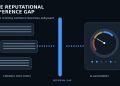
- The scope gap. What the contract says the tool will do, versus what teams actually use it for.
- The reach gap. How many seats or teams are paid for, versus how many people use it regularly.
- The proof gap. Whether the buyer can point to a result tied to the original business case.
Madrona’s findings back the last two. Adoption is the top tipping factor, and pressure to prove ROI is a leading reason pilots stall.
Six Questions to Ask Before Renewal Numbers Arrive
- How is ARR defined, and how much of it is live and paying today? This is the question TechCrunch’s reporting raises.
- How much comes from pilots, free periods or contracts not yet deployed? Ask for the figure, not a description.
- Do any contracts have early opt-outs, and how often are they used? ChartMogul flags these as revenue that looks more recurring than it is.
- What is gross retention by cohort and price tier? Gross retention shows how much revenue survives before any upsells.
- How many pilots became production deployments? Madrona’s benchmark is that most enterprises convert fewer than half.
- Can the startup show a customer result tied to the original business case? Logins alone don’t answer this.
What the Numbers Can’t Tell You
Surveys capture what buyers say, not always what they do. Madrona is also a venture firm, so read its findings with that in mind.
ChartMogul grouped companies by scraping their websites. Its AI-native group had about 200 companies, and it calls its smaller price-tier groups, at roughly 50 companies each, directional. It also leans toward smaller price points, not multi-year enterprise deals.
And re-evaluating a vendor isn’t the same as dropping it. Plenty of buyers will look around and stay.
Check the usage, not just the contract
The first full renewal cycle for AI contracts will show which revenue was real. You don’t have to wait for it.
Check what ARR is counting. Check how much of it is in production. And check how closely real use matches the reason the product was bought.
A renewal is the buyer’s verdict. The usage data is where it gets written.