
The next phase of UK AI policy should reflect how businesses are actually using the technology: alongside human craft, judgement and accountability.
The UK’s AI debate is becoming increasingly polarised. On one side sits the promise of rapid automation, productivity and growth. On the other are legitimate concerns about jobs, national security, copyright, trust and whether regulation is keeping pace.
AI minister, MP Kanishka Narayan has pushed back on what he called “tech boosterism“, while making the case for a more sovereign, security-conscious approach to AI. In September, he also underlined the importance of SMEs in government AI adoption. This is not a side audience to this debate: SMEs account for more than 99% of UK businesses and are where a huge amount of AI adoption will actually happen.
Yet the policy conversation still tends to be dominated by the extremes: frontier labs building the most powerful models, major rights holders protecting valuable IP, and scenarios centred on wholesale automation or existential risk. There is a large, practical middle that gets far less attention.
The missing middle of AI adoption
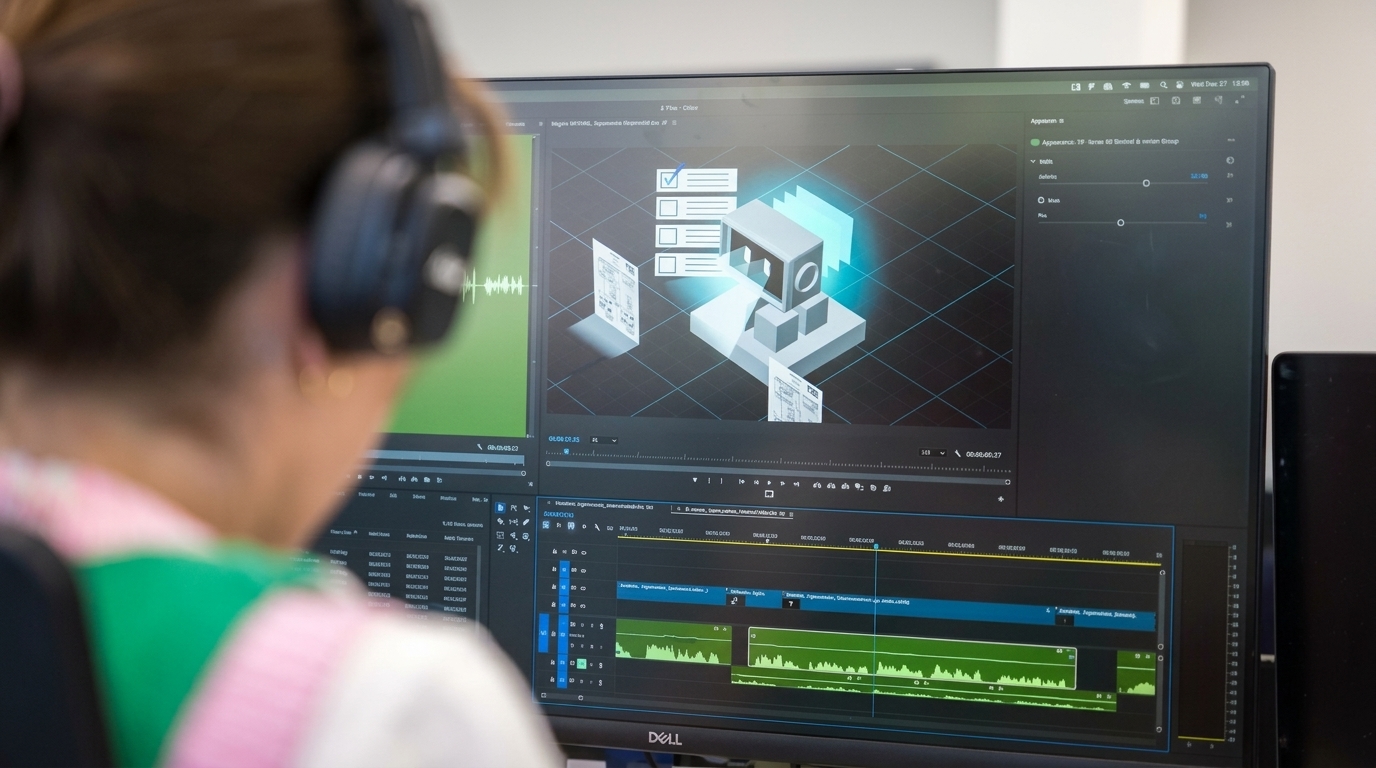
I run a video production company that works across traditional live action, AI video production and hybrid production models. And our day-to-day experience of AI looks very different from the idea that a business simply switches the technology on and replaces an entire team.
Sometimes AI is the right tool. Sometimes it is not. Often the best answer is a mixture.
We use AI selectively across areas such as storyboarding, concept development, scripting, voiceovers and visual image and video generation, then combine it with live-action shooting, editing, visual effects, production expertise and human review. We have also had projects where we started with an AI-first approach and realised that filming with actors in a studio would be easier, more controllable and no more expensive, so we switched.
That judgement is key because one of the biggest misconceptions around AI is that it is automatically faster and cheaper. It can be, but complexity changes the equation quickly. Consistent characters, precise and emotional performances, branded details and tiny visual changes can require repeated generations and extensive post-production.
AI does not remove the need for judgement
My rough rule is that AI can get you 80% of the way surprisingly quickly. The final 20% can contain a disproportionate amount of the work. That is where taste, production knowledge, editing, quality control and the ability to spot what is wrong become valuable.
This is also why policy should pay attention to businesses already building hybrid workflows. They offer a more useful picture of what adoption looks like beyond the headlines.
New tools are changing jobs, not simply removing them
The impact on jobs is similarly more complicated than either side of the debate sometimes allows. Some tasks will shrink. Some roles will change. We have seen that ourselves. But we have also hired specifically because of AI demand, including new AI Artist roles that barely existed in this form a few years ago.
The underlying skill is not simply prompt writing. It is knowing how to combine new tools with visual literacy, craft and process. It is knowing when a model has produced something technically impressive but creatively wrong, culturally off, legally risky or simply unusable. Someone still needs to make those calls.
The same applies to responsibility. Access to AI tools is becoming less of a differentiator every month. The harder question is how businesses use them. Who signs off the output? Where are the checkpoints? What happens when the technology is the wrong fit? What will a company refuse to make, even if the tools make it possible?
Policy needs evidence from the people actually using AI
Those questions are becoming more urgent. The EU AI Act’s transparency requirements began applying in August 2026, while further high-risk obligations are due later. UK businesses that operate across European markets are already adapting to a more explicit expectation of disclosure and accountability.
That gives the UK an opportunity to shape its own approach with evidence from real deployment, rather than designing policy around hypothetical extremes.
Big technology companies need to be in the room. So do rights holders, researchers, unions and civil society. But SMEs and working practitioners should be there too. They can show policymakers where AI genuinely creates efficiency, where it creates new friction, where human oversight remains essential and where the sensible answer is to stop using AI altogether.
If UK AI policy is meant to support adoption as well as manage risk, that practical experience needs to be part of the evidence base.
Most businesses are not choosing between automating everything and rejecting AI altogether. They are learning where it works, where it fails and how to build human judgement around it. Policy will be stronger if it reflects that reality.