
The dream of total automation didn’t start in 2026, but ChatGPT Health certainly hyper-charged it. As the most recent in a very long series of major breakthroughs in the space, its arrival flooded the market with pure-play AI models and cemented a pre-existing narrative that we are heading toward a world where AI solves every problem.
In healthcare, the narrative that “AI will solve everything” has encountered the adoption wall. Long-term value in healthcare is not derived from the most automated systems, but from the most trusted ones. In this sector, trust is not a soft concept: it is the only currency that matters.
Physicians who cannot audit an algorithmic decision will not act on its advice, and public health agencies that cannot trace accountability through a system will block its commercial deployment. Pharma Research and Development (R&D) leaders fear that models divorced from laboratory validation or biological mechanisms will result in unreplicable science and regulatory rejection.
At every layer of the stack, trust is the critical filter that either enables or prevents real-world value from being realized. In the frantic race to automate healthcare, many have prioritized AI buzz over the fundamental blueprint of a well-characterized need, ultimately building a trust deficit.
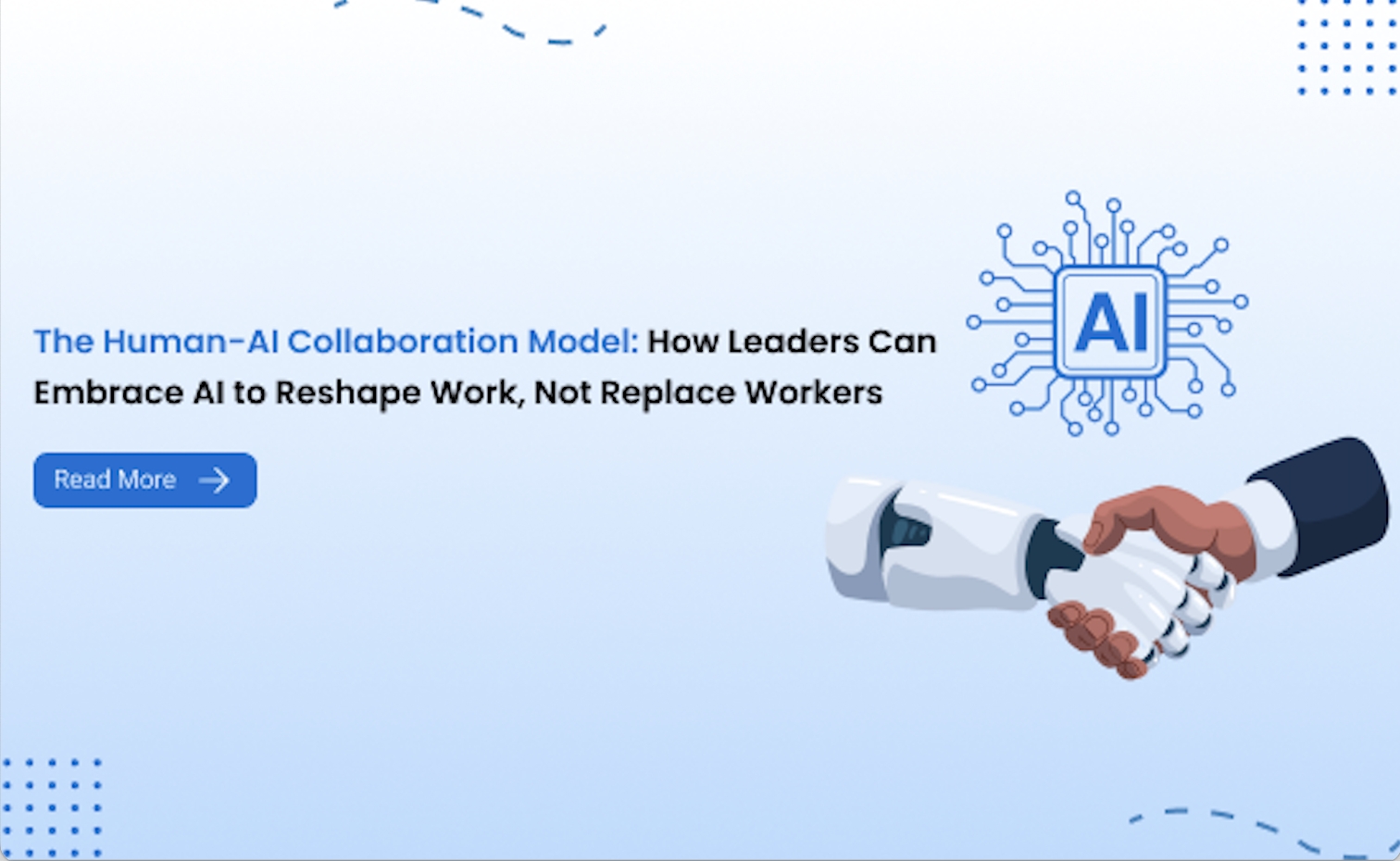
For AI to truly move beyond the hype cycle and transform the system, humanity must be re-embedded into the stack. Human oversight is not a limitation to be engineered away; it is a fundamental source of value. In these hybrid stacks, AI handles the cognitive drudgery of data at scale, while humans provide empathy, accountability, and contextual judgment. Far from a compromise, this Human-in-the-Loop configuration is a strategic asset that improves trust in AI systems within high-stake healthcare environments.
The value of oversight in healthcare
When it comes to AI-powered health services, a fully automated system might detect distress, but it hits the adoption wall unless those signals lead to a genuinely empathetic response – and a clinical outcome that currently only careful human supervision can deliver. This oversight is non-negotiable for pediatric services, where safeguarding requirements are even higher. Without this layer of accountability, these tools remain solutions in search of problems that fail to prove their true ROI.
This Human-in-the-Loop approach is validated by recent legislation, such as Senate Bill 243, which passed in California in 2025. This first-of-its kind bill requires chatbot operators to implement safeguards in interactions between AI and users, effectively reinforcing human supervision as a core need for AI companion services.
The same logic extends to primary care. Europe is facing a well-documented shortage of General Practitioners (GPs), particularly in rural areas. Hybrid models offer a credible solution. Today, nurses can perform procedures traditionally reserved for doctors, beyond administering vaccinations, managing minor infections, and assessing cases of colds and minor pain.
This technology also empowers doctors to focus on remote surveillance and consultations that require more clinical expertise. AI is not being used to replace GPs, but extend their reach to ensure that patients in underserved communities still receive quality medical care.
In diagnostics, the case is equally clear. AI can scan vast amounts of data to identify potential indicators of critical conditions like heart failure far faster than a human reviewer. However, speed without accuracy is not a valuable asset, and human oversight remains essential for filtering false positives and ensuring that clinically significant symptoms are not missed.
This combination of machine efficiency and human verification makes these tools extremely impactful and thus investable. Technical brilliance without commercial traction leads to investors having to put even more money in, rather than getting any in return.
Humanity in the pharmaceutical sector
Hybrid stacks balancing AI with human oversight are equally vital for the revolution occurring within the pharmaceutical sector. In this arena, trust takes a different form, one built around regulatory accountability, reproducible evidence, and clinical validity.
In drug development, the management of clinical coding is traditionally a high-friction process, involving multi-week cycles that delay study timelines and carry significant financial risk. Companies building AI-assisted approaches to this problem are trying to solve the same underlying issue as the care-facing models – increasing efficiency without sacrificing the quality of results.
By using AI to accelerate technical workflows while maintaining a human layer of expert validation, these companies ensure the output isn’t just fast, but audit-ready and capable of scaling past the adoption wall. Trust, in this context, has nothing to do with bedside manner; it is about repeatability and accountability at scale, ensuring that evidence remains within the necessary regulatory guardrails. This is how Service-as-Software will ultimately displace legacy CRO models – by proving that the moat is not just the algorithm, but a reliable, audit-ready data supply chain.
Hybrid stacks are the future of healthcare
These examples illustrate that the value of healthcare AI does not sit primarily in the algorithm, but in the utility it unlocks: faster decisions and interventions that were previously too expensive or complex to sustain at scale. The human capacity for empathy, accountability, and contextual reasoning remains the most valuable and most under-appreciated component of the entire stack.
The companies chasing full automation are building for a world where trust is assumed, but healthcare has never worked that way – and there is little evidence that patients, clinicians, or regulators are ready to extend that assumption to autonomous systems.
Those creating hybrid stacks understand that while AI can predict a crisis, in most situations, only a human can resolve one. This distinction is not a limitation of current technology, but a feature of how trust works in high-stake, regulated environments. In healthcare, the strongest exits will come from startups that reach their commercial scale by balancing machine efficiency with human oversight.