

The apartment industry gathers this week at AIM Conference 2026, hosted at the Hyatt Regency Huntington Beach Resort and Spa through May 6th.
This year, the usual mix of industry leaders now shares the floor with an increasing presence of AI builders and proptech founders. T
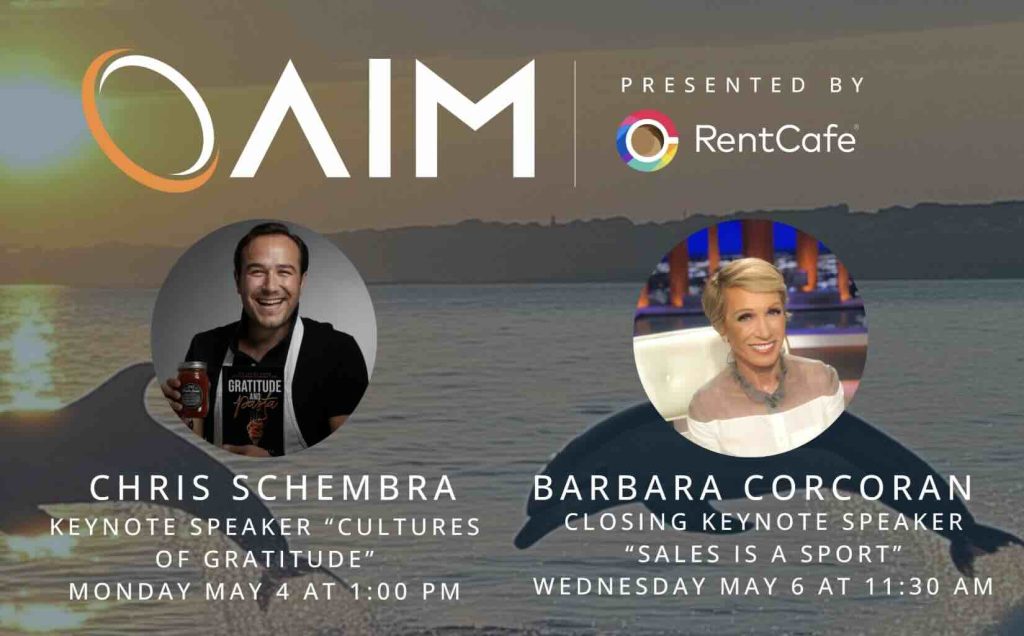
Big personalities are still part of the draw. Chris Schembra, known for his work on gratitude-driven leadership, headlined the conference with a talk on how emotional intelligence can shape business outcomes.
Meanwhile, Barbara Corcoran brings her trademark focus on sales culture, reframing leasing as a high-performance discipline rather than a transactional function.
But beneath those marquee names, something more structural is happening. The multifamily sector, which hasn’t always been the fastest to adopt to new technology, is now absorbing ideas directly from Silicon Valley while adapting them to the realities of large-scale housing markets.
AI is no longer a side conversation. It’s a big part of this year’s agenda. Increasingly in B2B industries, including real estate, sales with companies such as MyUser led by Ibrahim Hasanov, and more; AI is increasingly playing a role as a disruptor.
For instance, at the event speakers like Anurag Sakhamuri of OpenAI represented that bridge between cutting-edge AI and real-world application.
That Huntington Beach influence also continues to matter. The region’s massive rental ecosystem, combined with its proximity to Silicon Beach and venture capital, has turned it into a testing ground for proptech. What gets discussed at AIM increasingly reflects what’s already being piloted throughout Southern California.
Companies on the ground reinforce that shift. Get Covered, for example, sits at the intersection of insurance and fintech, tackling one of the industry’s most persistent inefficiencies: renter compliance.
By automating policy verification and tracking across millions of units, the company is emblematic of a broader trend: turning back-office friction into software-driven efficiency.
This convergence of Silicon Valley software thinking and Los Angeles real estate scale is reshaping expectations. Owners and operators are no longer asking whether to adopt AI, they are figuring out how fast they can do it without breaking what already works.
That urgency is why AIM continues to grow in relevance. It’s no longer just a gathering for multifamily professionals.
It’s turning into a convergence point: where West Coast tech ambition meets the operational complexity of real estate, and where the future of housing is being quietly, but decisively, evolving.