
The companies winning with AI aren’t chasing better benchmarks. They’re engineering something far harder to measure, reliability that users actually believe in.
There’s a moment every enterprise AI team dreads. Not a system outage. Not a data breach. Something quieter and far more expensive.
A customer calls or chats in, and before the AI system can even finish its greeting, says one word: “Agent.“
That single syllable represents months of failed investment. It means the system may be working exactly as designed, routing queries, pulling data, generating responses, and still losing. Because the customer has already made up their mind. They learned, somewhere along the way, that the AI won’t actually help them. And now they’ll never give it the chance to try again.
This is the adoption trap that enterprise AI teams rarely talk about publicly, but almost universally encounter.
The Benchmark Obsession Is a Red Herring
The enterprise AI market is saturated with accuracy claims. Models boast about hallucination reduction. Vendors publish benchmark scores. Procurement teams compare scores and context window sizes as if they’re buying a processor. None of that captures what actually determineswhether an AI deployment succeeds in the field.
Accuracy is a model metric. It measures performance in controlled conditions, on curated datasets, evaluated by researchers. It tells you almost nothing about what happens when a 62-year-old airline passenger tries to rebook a canceled flight while standing in a crowded terminal, or when a small business owner calls a bank at 11pm to dispute a transaction. What determines success in those moments isn’t whether the model scored 94% or 97% on a benchmark. It’s whether the user, in that moment and under that pressure, trusts the system enough to let it help them.
Trust is a system outcome. And the industry has been optimizing for the wrong variable.
The Failure Modes Nobody Talks About
After deploying AI across industries including airlines, financial services, and large-scale contact center operations, the same failure modes appear repeatedly. They’re rarely dramatic. They compound slowly, interaction by interaction, until users simply stop engaging.
Most enterprises treat human handoffs as a feature, a safety valve that protects customers when AI reaches its limits. From an operational standpoint, that framing is reasonable. From the customer’s standpoint, escalation signals failure. Worse, it often means repeating information, waiting in a new queue, and receiving answers that contradict what the AI already said. The message customers internalize isn’t “the system protected me.” It’s “the system couldn’t handle it.” After enough of those experiences, they stop starting with AI at all.
Latency compounds the problem. In a live interaction, a pause of even two or three seconds creates cognitive dissonance. Users start wondering whether the system understood them, whether it’s processing, whether they need to rephrase. That uncertainty registers as incompetence. In real-time environments, responsiveness is part of how users perceive whether a system is intelligent enough to handle their problem.
Inconsistency, though, is the most damaging failure mode and the hardest to diagnose from aggregate metrics. A system that resolves a billing query on Monday, escalates the same type of query on Wednesday, and gives a conflicting answer on Friday doesn’t look broken in a dashboard. Completion rates stay reasonable. CSAT scores average out. But the individual customer has now experienced an unpredictable system, and unpredictability is fatal to trust. Users cannot build a mental model of when to rely on AI if its behavior varies without apparent reason. They disengage entirely. The throughline across all three patterns is that none of them are model problems. They’re system design problems.
Rethinking Human Oversight as Architecture, Not Backup
Enterprise AI teams have defaulted to one of two postures when it comes to human involvement. The first is escalation, where humans serve as fallback when the AI fails. The second is approval, where humans sit in the path of every significant decision. Both treat human judgment as something separate from the AI system, a layer bolted on for risk management. Neither approach builds trust. In fact, both can actively undermine it.
The escalation model conditions users to associate human involvement with system failure. The approval model introduces the latency and inconsistency that erode confidence. And both keep the AI from ever demonstrating that it can be relied upon.
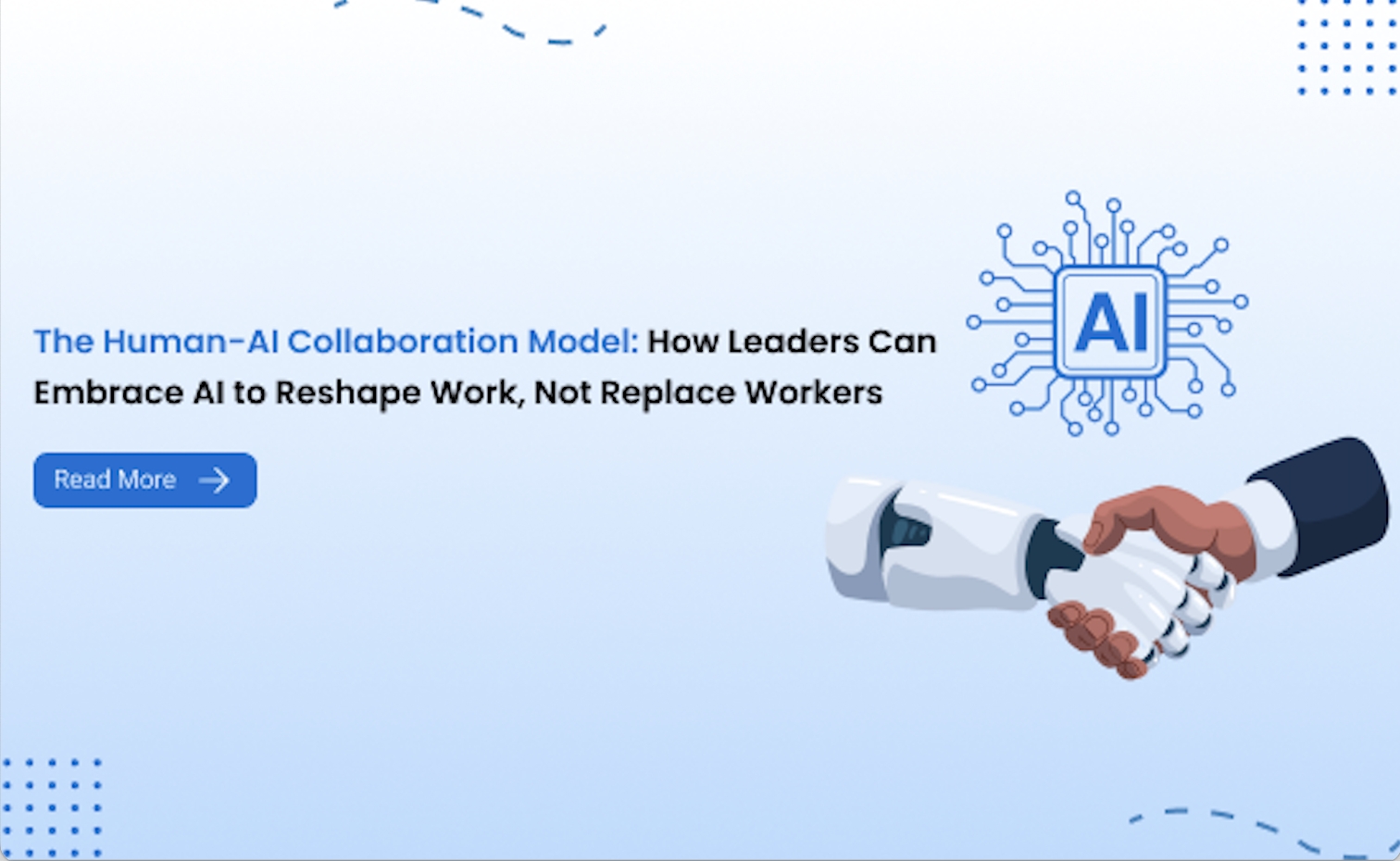
There’s a more effective architecture: integrating human judgment directly into the execution flow at specific, targeted decision points, not as a fallback, but as a deliberate design choice. Consider a financial services contact center handling refund requests. Rather than allowing the AI to make refund decisions autonomously or escalating every refund conversation to a human agent, the system pauses at the precise moment a judgment call is required. A human agent provides one targeted input, essentially a policy decision on a specific case, and the AI continues the interaction. The customer experiences a single, uninterrupted conversation. The human’s involvement is invisible. The outcome is consistent and fast.
This architecture produces measurably different results. In contact center deployments, this approach has demonstrated a 21% reduction in full escalations to human agents. More significantly, it reduces the rate at which returning customers preemptively bypass the AI entirely, because successful interactions build the credibility that failed ones destroy.
The Compounding Returns of Reliability
There’s a financial logic to this that enterprise leaders should find compelling. Trust compounds. Every interaction a customer has with an AI system is, effectively, a data point that updates their mental model of that system. Successful interactions increase the probability they’ll use it again. Failed interactions decrease it. And negative experiences, particularly the ones that waste time or leave customers more confused than when they started, can permanently shift behavior.
This means the cost of a trust failure isn’t just the individual interaction. It’s every future interaction that customer will route around the AI. In high-volume contact centers, those multiplied costs are substantial. The inverse is equally true. A user who has consistently positive experiences doesn’t just use the system more. They’re more forgiving when it makes mistakes. They give it the benefit of the doubt. They don’t reach for the bypass. That tolerance is extraordinarily valuable, and it can only be earned through behavioral consistency over time, not through any single accuracy improvement.
What the Next Phase of Enterprise AI Actually Requires
The competitive dynamics of enterprise AI are shifting. The model layer is commoditizing. Foundation model providers are converging on similar capability levels. The differentiating work is happening at the system level, in how AI is deployed, monitored, calibrated, and integrated with human judgment.
Organizations winning with AI are not necessarily running the most powerful models. They’re building systems that behave predictably under uncertainty, that integrate human input without creating visible seams, and that accumulate trust across interactions rather than spending it. The enterprises still chasing benchmark improvements while struggling with adoption have the diagnosis backwards. Their users aren’t abandoning AI because the model is wrong often enough to matter. They’re abandoning it because they can’t predict when it will be right.
Solving that problem doesn’t require a better model. It requires a different architecture, one that treats trust not as an outcome of accuracy, but as an engineering discipline in its own right. The companies that figure that out first won’t just have better AI deployments. They’ll have customers who actually use them.
Author Bio
Panagiotis Coutoulas leads Product for the Messaging Platform, AI Services, and Human-in-the-Loop parts of the CXP at ASAPP. He focuses on how human and agentic systems interact to work seamlessly together and deliver measurable value for enterprise customer support teams.