
We’re still learning about what AI is really capable of.
When I spoke with Neel Somani, he was interested in what sits underneath the surface layer of the AI market. “AI is probably the biggest phenomenon that everyone’s interested in,” Neel Somani said. But his own attention has moved away from the part of the market that gets the most headlines and toward the places where systems break, stall, or turn into real infrastructure problems.
2026 has already made one thing clear: the conversation around AI is getting more serious. OpenAI has been pushing further into agentic systems that can act across tools and workflows, while Anthropic has been trying to reduce approval fatigue in Claude Code without letting the model run wild.
These are product decisions, but they also reveal that the industry is moving from what a model can say toward what a system can actually do, under what constraints, and at what cost.
Neel Somani described his own pivot in similarly practical terms. “Ultimately, I felt that there wasn’t enough of a defensible moat behind software that I was building or incubating,” he said, so he “got more interested in three areas.” Those areas were data, compute power, and fundamental research. That strikes me as one of the more useful ways to read the market right now. Other players are working on AI transformations for legacy companies, and building new products with AI. Neel Somani is looking at what the next wave of AI will actually require to function. Both sides are required to move the needle forward.
The Infrastructure Beneath the Model
The first requirement is data that reflects reality. In Neel Somani’s framing, there are “tons of private troves of data that are not tapped into,” including high-dimensional data like audio and video. That also includes unusual data that might not be available on the internet at all. Neel Somani’s broader view is that human judgment, local context, physical presence, and quality control are not residual categories. They represent the last mile problem for the agent economy.
The second requirement is power. Neel Somani’s background in commodities makes his perspective here sharper than most. He has argued that the economics of inference and training are going to matter more as the market matures. In his words, “The topic of the day has shifted from ‘How do I just use code agents and use LLMs in a useful way?’ to ROI and the return you’re getting on each token that you’re spending.”
He also thinks the shape of compute matters. Training requires concentrated power on a very large scale. Inference is more flexible, which creates room for unusual infrastructure plays.
By way of example, Crusoe has built an “energy-first” AI infrastructure business around exactly that logic. The company says it began by harnessing wasted, stranded energy like flare gas to power co-located compute and is now scaling into larger AI factories powered by a broader portfolio of energy solutions. That example fits Neel Somani’s view that power is becoming part of the AI product stack itself.
Where AI Still Needs the Human Layer
The third requirement is fundamental research. Most researchers are focused on scaling and improving performance, which is a first-order problem. The next problem is reliability, interpretability, and safety. This is where Neel has been spending time on mechanistic interpretability and formal methods, and he has been explicit that the endgame for interpretability is stronger guarantees. When I asked how he sees the next layer of AI research, he pointed to systems where you can “prove useful properties,” not just test a bunch of cases and hope the failures are rare. He is looking for ways to replace today’s ad hoc confidence with something closer to analysis.
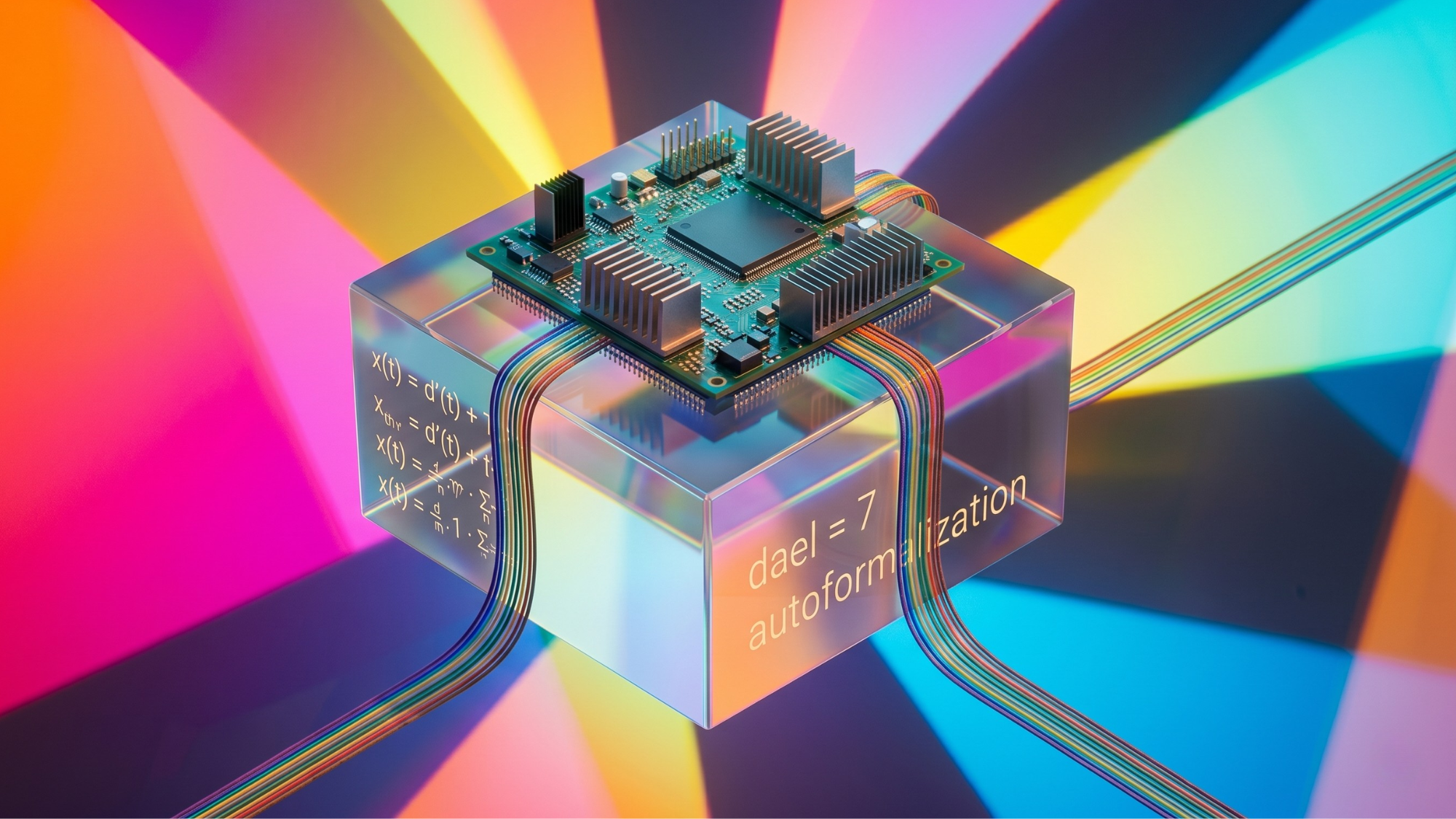
That’s why Neel Somani’s work around autoformalization matters. In his Erdos work, he described a process where GPT-5.2 Pro could generate a candidate proof, and Harmonic’s Aristotle could formalize and verify it in Lean. Almost 90% of problems could not be reliably solved with Somani’s methodology. Many errors were subtle. Harmonic itself now describes Aristotle as a system built around formal verification, and the broader point is clear enough even without the math. AI is getting better at producing output. The harder question is how much of that output can be trusted in domains where correctness actually matters.
There is a second, quieter pattern inside Neel Somani’s 2026 worldview. He keeps returning to the systems around the model. In a recent experiment with Grok, he found that “there’s no way around giving Grok some sort of real-time scaffold” for trading. In the Hedgineer podcast, he made a similar point about smaller models, saying that “if you can put together a scaffold or something that’s able to work with a really, quote unquote, dumb model, then you’re probably better off.” The language changes depending on the problem, but the underlying view is stable. The model is only one piece of the system. The harness, the data, the power, the human layer, and the verification layer often determine whether the thing is actually useful.
That perspective also helps explain why Neel Somani is skeptical of the flood of AI-generated content and shallow product surfaces. He has said that on platforms like TikTok and Instagram, you have to be “ridiculously authentic and non-produced” or the audience tunes it out. In enterprise AI, the parallel is obvious. Buyers are moving past generic novelty. They want systems that can operate in the real world, justify their costs, and fail in legible ways.
Neel Somani’s framework for 2026 is unusually grounded because it starts from those constraints instead of treating them like footnotes.
What I took away from the conversation is that Neel Somani is tracking the part of AI that is getting harder, not easier. The easy layer is already crowded. The harder layer involves power, data acquisition, human judgment, and provable behavior. That is where he thinks durable opportunities are forming. It is also where the industry is slowly being forced to grow up.