

At EMC 25, held April 20-21, 2026, under the theme “The Power Shift: Redefining Competitive Energy Markets”, a group of retail energy technology leaders explored how IT is shaping competitive advantage in the energy sector. Their discussion reflected broader trends emerging across the industry, particularly around AI adoption, operational agility, and the growing importance of data-driven decision-making in an increasingly volatile market.
The event brought together technology executives and advisors from across the retail energy and generation landscape, including leaders from 174 Power Global, Chariot Energy JERA,, Direct Energy, and CG Infinity. While perspectives differed on where disruption will arrive first, there was broad agreement on the foundations retailers will need to compete over the next decade.
The CIO’s Role Has Shifted Beyond Technology
One of the clearest themes to emerge across the industry is how significantly the role of the CIO has evolved over the past decade. Technology leaders are no longer focused solely on infrastructure, system uptime, or software delivery. Increasingly, they are expected to influence commercial strategy and help shape business outcomes.
Former Direct Energy technology executive Brian Hines pointed to the changing nature of customer engagement as evidence of this shift. A decade ago, call centers represented one of the primary sales and service channels for many retailers. Today, digital engagement dominates, with mobile applications becoming the primary touchpoint for customer interaction.
This transition has fundamentally changed expectations around customer experience. Energy retailers are no longer benchmarked only against competitors in the utility sector. Customers increasingly compare every interaction to experiences delivered by digital-first companies across industries.
As a result, CIOs are now expected to operate as business leaders as much as technical leaders. Commercial awareness, operational understanding, and risk management are becoming just as important as technical expertise.
The rise of AI has accelerated this trend. Boards are demanding guidance on AI strategy, governance, and risk, often before organizations have fully defined what successful AI adoption should look like. Technology leaders increasingly find themselves responsible for translating broad AI ambitions into practical business applications.
Data Integration Is Becoming Table Stakes
For much of the last decade, retail energy IT transformation has focused on data integration and system modernization. Many organizations have invested heavily in consolidating fragmented systems, improving data quality, and creating more unified operational views. While this work remains essential, integrated data alone is no longer enough to create lasting differentiation.
The next challenge is making organizational knowledge scalable.
Companies that can unify and access data quickly are likely to react more effectively to changing market conditions. Faster access to information creates operational speed, and AI systems can amplify that advantage when built on reliable data foundations.
Increasingly, the real competitive edge may come from embedding institutional expertise directly into operational systems. In retail energy, profitability often depends on nuanced knowledge developed over years of market participation. Pricing behavior, hedging strategies, contract structures, regulatory interpretation, and customer segmentation all contain layers of context that are difficult to capture in traditional workflows.
Historically, much of this expertise has remained concentrated within small groups of experienced employees. The challenge now is determining how organizations can operationalize that knowledge more broadly.
The emergence of AI has increased the urgency of this problem. AI systems require broad access to organizational data in order to generate useful insights at scale. At the same time, companies remain cautious about governance, security, and reliability.
Many organizations are therefore trying to balance two competing priorities: enabling faster decision-making while maintaining strong controls around sensitive information and operational risk.
AI Still Depends on Human Expertise
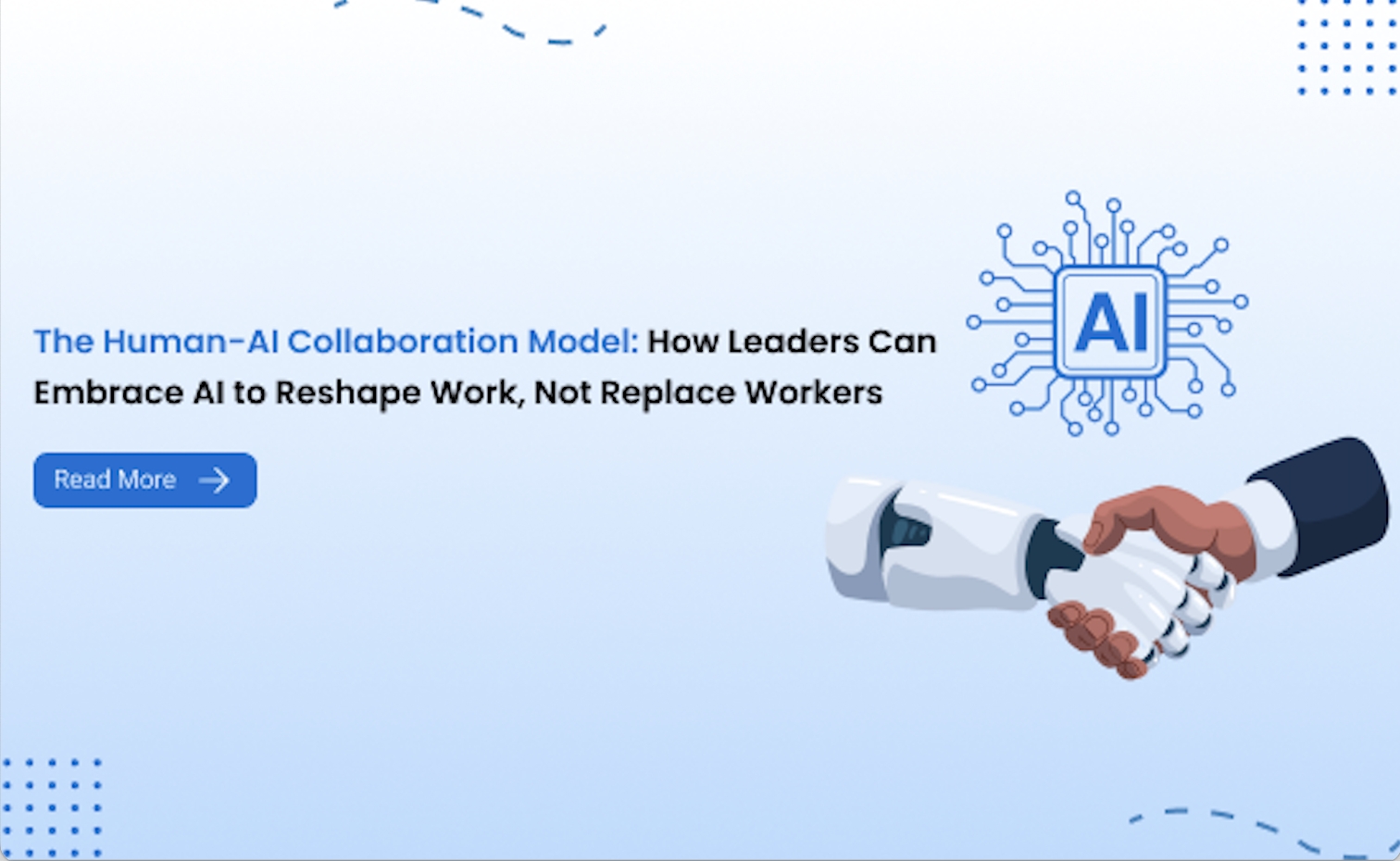
Artificial intelligence is increasingly being viewed as an augmentation tool rather than a replacement for experienced professionals.
Many industry leaders warn that generic AI models often struggle in highly specialized industries such as retail energy. Market rules, regulatory structures, contract logic, and operational constraints vary significantly across regions and organizations. Without sufficient domain context, AI-generated recommendations can appear credible while producing fundamentally flawed conclusions.
This concern is especially relevant in areas involving pricing, forecasting, portfolio management, and risk analysis.
A more practical near-term model is one in which AI expands the capacity of experienced teams rather than automating decisions independently. Traditionally, senior analysts or portfolio managers may only have time to review a limited number of contracts, accounts, or market scenarios in depth. AI tools could potentially extend that analysis across much larger datasets while still leaving final validation to human experts.
Under this approach, experienced professionals shift from performing every analytical task manually to supervising, validating, and refining AI-assisted outputs.
Questions around accountability also remain unresolved. In power generation and other operational environments, AI systems are increasingly capable of recommending maintenance procedures and troubleshooting steps. While these systems can improve efficiency, responsibility for operational decisions still ultimately rests with human operators.
For many energy companies, this creates an important distinction between AI-assisted decision support and fully autonomous decision-making.
The Industry Is Moving Toward Outcome-Based Technology Delivery
Another important shift is occurring in the relationship between technology teams, business stakeholders, and external vendors.
Historically, many large energy technology projects have been scoped primarily around functional requirements. Organizations defined detailed specifications upfront and measured success based on whether those features were delivered.
This approach is becoming less effective in rapidly changing environments.
Instead, companies are increasingly focusing first on desired business outcomes. Metrics such as churn reduction, pricing accuracy, customer acquisition efficiency, or operational responsiveness are becoming the starting point for project planning.
Under this model, implementation details become secondary to measurable business impact.
This shift reflects broader changes in enterprise technology adoption. As platforms become more configurable and AI capabilities evolve quickly, organizations are finding it harder to define fixed long-term requirements at the beginning of projects.
Outcome-based approaches may also reduce implementation complexity by allowing technology teams to iterate around measurable operational goals rather than static specifications.
Greater transparency around commercial objectives can also improve collaboration between internal teams and external partners. Sharing operational metrics and expected ROI targets creates a clearer framework for evaluating whether projects are actually delivering value.
The Next Major Disruption Remains Unclear
While there is growing agreement on the foundational capabilities retailers will need, there is less certainty about where the next major disruption will emerge.
One school of thought focuses on speed and responsiveness. Increasing market volatility, evolving regulations, and changing customer expectations are all adding complexity to retail energy operations. Companies that can absorb new information and react quickly may gain a significant advantage.
Others emphasize adaptability instead. Technology cycles are accelerating, and the rapid rise of generative AI illustrates how quickly industry assumptions can change. Organizations that build rigid architectures around a single technology model may struggle if the market shifts again over the next several years.
Another perspective centers on customer acquisition and digital engagement. Search behavior itself may change significantly as AI-powered interfaces alter how customers discover products and services online. Retailers that rely heavily on existing digital marketing channels may eventually need to rethink how they acquire and engage customers.
While these viewpoints differ, they point toward a common conclusion: future success may depend less on predicting the exact source of disruption and more on building organizations capable of adapting continuously.
What This Means for Retail Energy
Retail energy technology strategy is moving beyond basic digitization and system integration. Reliable, integrated data remains foundational, but it is increasingly viewed as the starting point rather than the end goal. The larger challenge is enabling organizations to scale expertise, improve responsiveness, and make better decisions in environments that are becoming more complex and less predictable.
AI is likely to play a significant role in that transition, particularly in areas involving analysis, forecasting, operational support, and customer engagement. However, domain expertise remains critical. In highly specialized markets such as retail energy, human oversight continues to be essential for ensuring accuracy, accountability, and risk management.
The growing importance of organizational flexibility is becoming increasingly apparent. Whether disruption comes from regulation, customer behavior, AI adoption, or market volatility, companies will likely need operating models and technology architectures capable of evolving quickly.
For retail energy providers specifically, these challenges are closely tied to margin management. Profitability often depends on how effectively organizations align pricing, forecasting, hedging, billing, and customer operations. Improving those processes requires more than access to data alone. It requires systems and workflows that can apply institutional knowledge consistently and at scale while allowing experienced professionals to focus on oversight, strategy, and decision-making.
As the industry continues to evolve, the companies best positioned for long-term success may not necessarily be those with the most advanced technology, but those most capable of combining technology, expertise, and adaptability into a coherent operating model.