For most of the technology era, we have thought about innovation as the creation of something new. New software. New platforms. New products. New markets.
But I believe one of AI’s biggest economic opportunities may come from doing something very different: helping us discover more value in the assets that already exist.
The opportunity existed before AI. What AI changes is the economics and scale of discovering it.
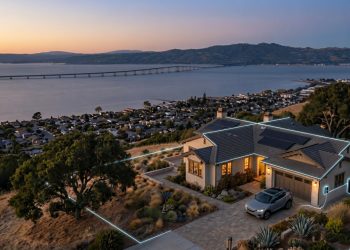
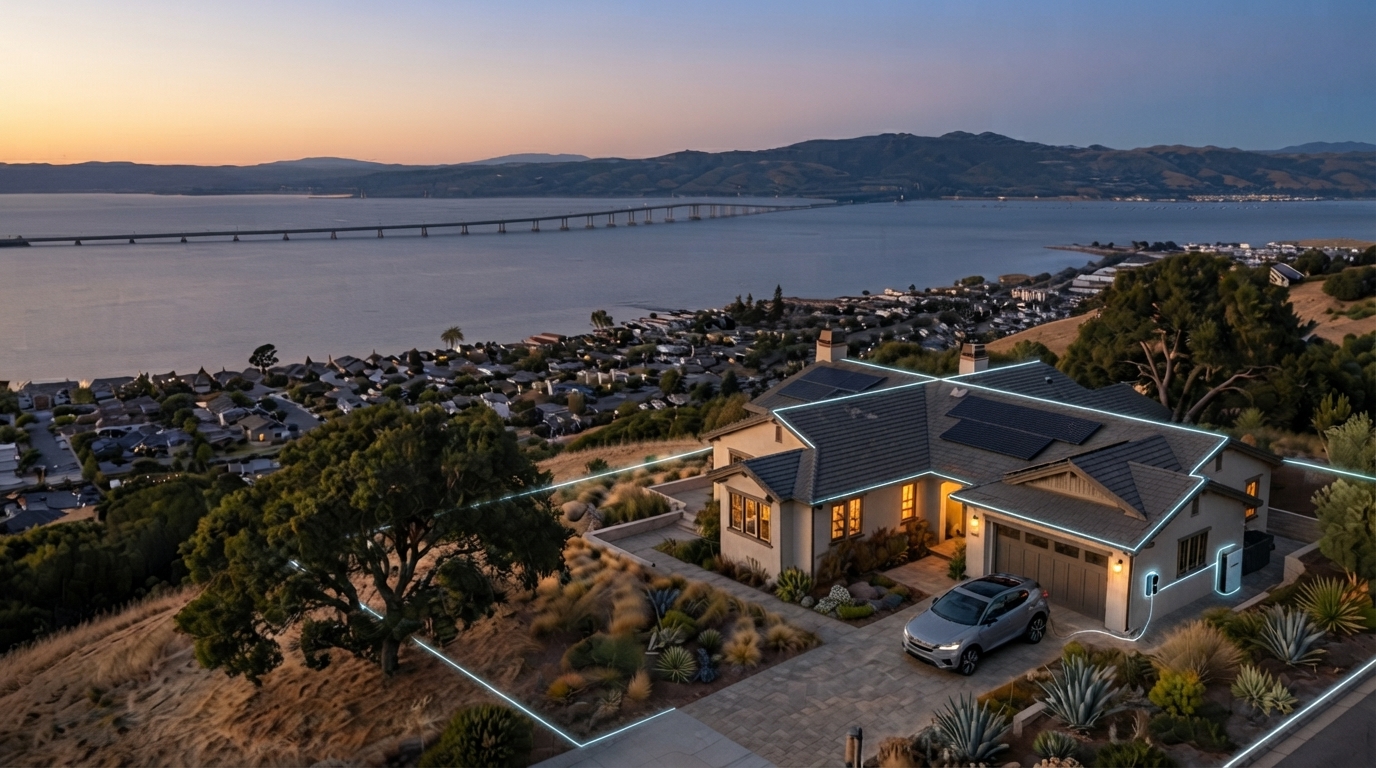
Look at a house.
Conventionally, we understand it through a relatively narrow set of characteristics: its location, size, number of rooms, condition, comparable sales and market value. But what if that is only part of its economic story?
Its roof may be capable of generating energy. Its battery could potentially participate in a distributed energy network. Its location may make it suitable for infrastructure that does not exist there today. The property may qualify for incentives, financing or programs its owner has never encountered. Its land may carry ecological or natural-capital value that conventional property data does not capture.
None of those opportunities necessarily requires creating a new asset. The asset is already there.
What is missing is the intelligence to see what else it could do.
The underused economy
We dramatically underuse many of the physical assets around us because our systems are very good at recording what something is, but much less effective at understanding what it could become.
Property is a good example. For decades, property data has been built primarily around ownership, transactions and existing characteristics. Those are important, but they largely describe the present and the past.
Increasingly, the more valuable questions are forward-looking.
Could this property generate renewable energy? Could it support storage or charging infrastructure? Does it qualify for a particular incentive? Could it contribute to conservation or restoration? Is there an infrastructure opportunity that has never been identified? Could an owner generate a new source of income from an asset they already possess?
Answering those questions traditionally requires pulling information from different datasets, systems, experts and institutions. In many cases, nobody asks the question in the first place because the cost and complexity of answering it outweigh the perceived opportunity.
AI changes the economics of that process.
When you can analyze large numbers of physical assets against multiple layers of information simultaneously, opportunities that were previously too expensive, fragmented or difficult to identify can start becoming visible at scale.
And once something becomes visible, it can potentially become a market.
From hidden potential to transactions
This is where I think the commercial implications become particularly interesting.
Imagine identifying thousands of properties with suitable characteristics for distributed solar.
The opportunity is not simply the insight that solar might work.
The real value begins when you can quantify that opportunity and connect the relevant property owners with installers, utilities, financing, incentives or energy markets capable of acting on it.
The same principle applies elsewhere.
A battery can become more than backup power if it can participate in a wider energy system.
Land with ecological potential can become more actionable if it can connect to conservation programs, funding or environmental markets.
A property that qualifies for an incentive becomes more valuable when the owner actually knows that incentive exists and can access it.
At Earth Ledger, we describe this process very simply:
Identify. Quantify. Connect.
Identify an opportunity.
Quantify its potential, feasibility and what it could be worth.
Connect the asset and its owner to the capital, infrastructure, expertise or market needed to activate it.
That final step matters.
AI becomes economically transformative not when it produces another insight on a screen, but when that intelligence enables something to happen in the real world.
We discovered this in the market, not in a strategy session

One of the most useful lessons we have learned building Earth Ledger came from listening to a prospective customer.
We went into a conversation expecting to discuss one use of our platform. Instead, the customer described a different pain point. What interested me was that the underlying intelligence and architecture we had already built could address it.
Within weeks, we were able to adapt what we had into a new product around that need.
A conversation that began around a relatively straightforward use case instead revealed something much more valuable: a paying customer and a market opportunity we hadn’t gone into the meeting expecting to find.
For a startup, those moments matter.
Founders spend a lot of time talking about product-market fit as though it is something you discover once. In reality, some of the most important commercial opportunities appear when customers show you that the technology you have built solves a problem adjacent to the one you initially set out to address.
That experience reinforced something important for us.
We were not building a single-purpose property tool.
We were building an intelligence layer that could be applied to different questions about the same underlying asset.
One parcel. Multiple opportunities.
At Earth Ledger, we are already seeing what this looks like in practice.
Our Earth Ledger Parcel Intelligence Reports bring fragmented information around an individual property into a single view, helping identify and quantify opportunities that might otherwise require multiple searches, datasets and specialist assessments.
I believe this is the future of real estate listings. A listing should no longer simply tell you how many bedrooms a property has, its square footage and its asking price. It should help you understand the property as an asset: how livable it is, the context of the neighborhood around it, its energy potential, its environmental characteristics, and what other opportunities may exist there. In other words, the listing should begin to tell you not only what a property is, but what it could be capable of.
We are now extending that approach into Earth Ledger Spatial Intelligence, where questions around planning and development potential can be answered across properties at scale.
The significance isn’t that these questions were impossible to answer before. It is that answering them individually has traditionally been slow and expensive.
When technology can surface that intelligence quickly across thousands or millions of parcels, the economics change.
For investors, developers and organizations managing large portfolios, that creates the potential to move from analyzing opportunities individually to identifying them systematically across entire markets.
That changes the scale of the opportunity completely.
AI could change what we consider an asset
None of these opportunities are necessarily new. It has always been possible to assess a building for solar potential, evaluate land for ecological value or determine whether a property could support new infrastructure.
The problem is that doing so individually has traditionally been slow, expensive and dependent on specialist analysis.
Technology changes that equation.
AI, geospatial intelligence and increasingly connected datasets allow us to identify and quantify the same opportunities across thousands, millions and eventually billions of physical assets, faster and more cost-effectively than was previously possible.
That shift from individual analysis to intelligence at global scale has the potential to change the entire value chain: not only how we understand and value physical assets, but how opportunities are discovered, aggregated, financed and connected to the markets capable of acting on them.
And there is a broader technology thesis here that goes far beyond property.
The physical economy is full of assets that are defined according to what they were originally built or acquired to do.
A building is a building. A roof is a roof. A battery is a battery. Land is land.
But increasingly, the value of an asset may depend on the number of systems and markets it can participate in.
A roof can become part of the energy system.
A building can become a flexible energy asset.
A parcel can simultaneously have property, infrastructure, ecological and economic value.
Agricultural land can carry productivity, water, biodiversity and carbon considerations at the same time.
Infrastructure can generate data that changes how it is financed, operated and maintained.
AI gives us an unprecedented ability to understand those relationships at scale.
That means the next generation of technology companies may not only create new digital markets. They may reveal previously invisible supply inside existing physical markets, then create the intelligence and connectivity required to activate it.
The hidden economy is already here
We often talk about AI in terms of productivity: how much faster it can help us write, code, analyze or automate.
Those gains are real.
But I think the larger commercial opportunity may eventually be measured in something else: how much previously inaccessible value AI allows us to discover and activate in the physical world.
There are billions of physical assets around us whose potential is understood only partially. And crucially, much of that potential did not suddenly appear because of AI.
It was already there.
What is changing is our ability to find it, understand it and connect it to demand at a speed, cost and scale that were previously impossible.
The question is no longer simply: What is this asset worth today?
It is: What else is this asset capable of?
And once we can answer that question at scale, the next one becomes even more interesting: Who needs what it can provide?
That is where intelligence becomes a transaction.
And where entirely new markets can begin.
I believe this is ultimately where the physical world is heading: every parcel carrying its own evolving intelligence, continuously revealing what it is, what it could contribute and which markets, opportunities and systems it could connect to.
The value was already there. What changes now is our ability to see it, and act on it, at scale.
Luka Vulić
Co-Founder & Chief Business Officer, Earth Ledger