
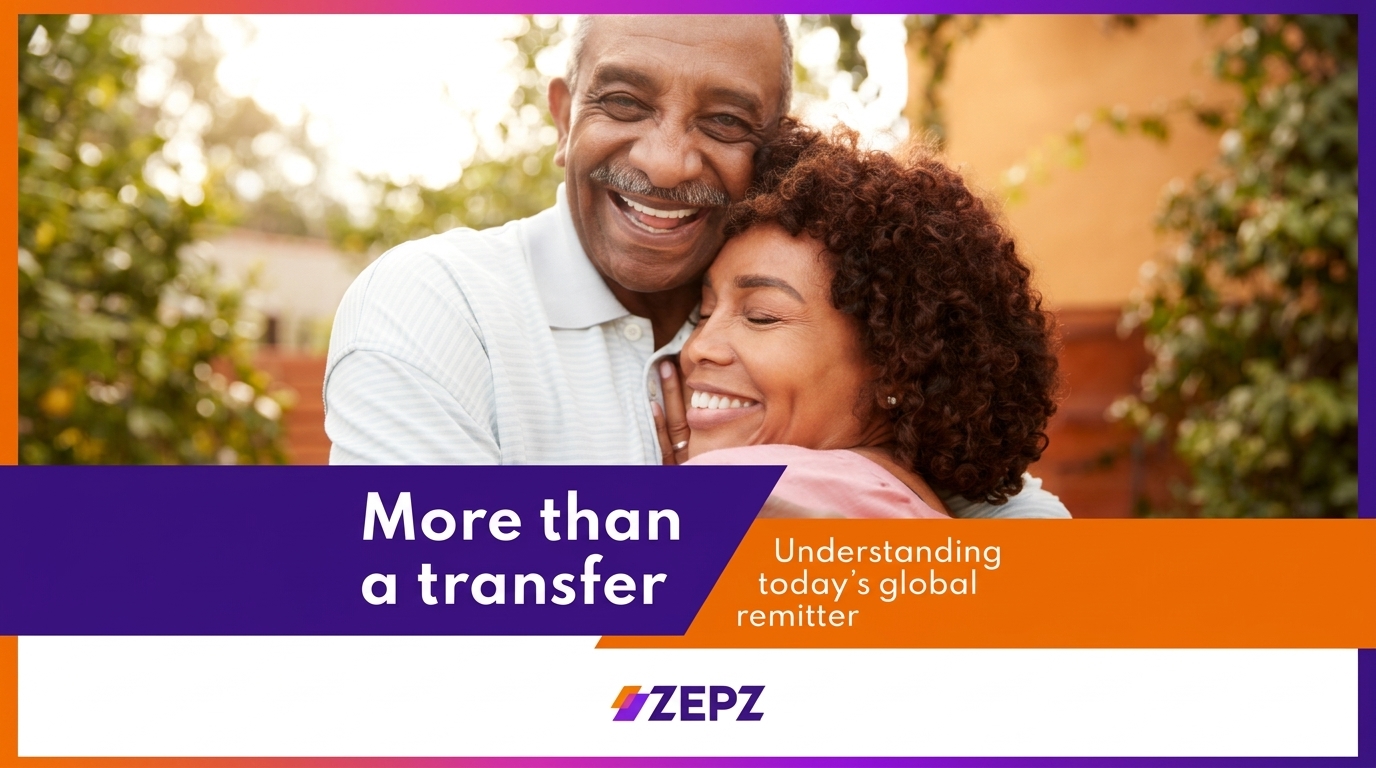
In 2025, more than $700 billion flowed to low- and middle-income countries as remittances, nearly twice the amount recorded in 2016 and confirming remittances as one of global finance’s most powerful forces. Yet financial products have traditionally been designed around the individual: one customer, one account, one market. An individual account tells only part of the story for millions of people whose financial lives stretch across borders, where income earned in one country pays for rent, school fees, groceries or healthcare in another. The account may belong to one person, but the life around it extends far beyond them.
For these customers, sending money means supporting people across countries and generations. Their needs extend beyond the transfer to saving and planning for the future, as research from the European Centre for Development Policy Management indicates. New technology gives product teams the chance to support that fuller financial life, not simply make the next payment faster.
One customer can represent an entire financial network
Speed, simplicity and affordability remain fundamental to any cross-border payment product. But if the ambition is to support a fuller financial life, the product brief must start with a fuller understanding of the customer: who they support, what worries them and what they need their money to make possible.
At Zepz, we build that understanding through ongoing analysis of how customers use WorldRemit and Sendwave and through direct conversations with them. Our More Than a Transfer report brings those insights together and shares them more widely, drawing on five years of payment behaviour from more than 5.5 million customers. It shows that more than 70% send to more than one recipient, while more than one in eight send to more than one country, a 34% increase over five years.
In real life, cross-border support moves with life itself, from rent or urgent medical care one week to a bus fare, a cinema ticket or a birthday present the next. The amount and purpose may change, but the responsibility does not. These are people others count on, whose money helps families and communities meet today’s needs, share everyday moments and plan for what comes next. For product teams, that reframes the challenge: how can we give customers more choice, more control and a stronger foundation for the financial lives they already manage across borders? That is how product innovation becomes financial empowerment.
Human purpose must drive product innovation
Yet the industry can still confuse more capability with more progress. More currencies, more products and invisible rails all have value, but only when they give people greater control over their financial lives. For customers supporting loved ones in several places, the product opportunity is to make that responsibility easier to carry.
A wallet powered by a dollar-backed stablecoin offers one example. Used within a simple product, it can allow someone to hold value in digital dollars and choose when to convert it into local currency, giving them the flexibility to meet today’s needs and plan ahead. The real value is not the token itself, but the stability and choice it can place in someone’s hands.
Customers should not need to understand blockchain to benefit from it; they need clear answers to practical questions: What does it cost? When will the money arrive? Can I receive it on my phone, transfer it to a bank account or collect cash nearby? The technology should sit quietly behind a product experience that feels simple, while connecting with the mobile wallets, bank accounts and cash services people already trust.
Moving money was only the beginning
The industry has transformed how money moves across borders over the past decade, but better infrastructure alone does not transform people’s financial lives. That progress gives us a platform for greater ambition: turning better access into financial empowerment and helping people do more with their money once it arrives. For product leaders, progress cannot be measured by how many features we launch, but by the choice, stability and control people gain, and what that makes possible for the families and communities who depend on them. When innovation delivers that, it does more than move money: it helps people move their lives forward.