
On September 29, the heads of Anthropic, Google, Meta, Nvidia and xAI, along with OpenAI’s president, signed a one-page document at the White House called the Accord on Super Intelligence.
It commits them to internal controls, an outside assessor and a board committee to read the results. It sets no penalty for skipping any of it.
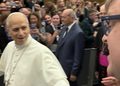
Thirty-one days later, on October 30th, Pope Leo XIV received AI researchers in the Vatican’s Consistory Hall and asked for something with more weight behind it.
He did it 17 days after surgeons at Rome’s Gemelli hospital removed the lower lobe of his right lung, and the Vatican confirmed adenocarcinoma.
What he asked for
The meeting was organized by the Pontifical Academy for Life and the Future of Life Institute. Leo told the room that the ethical principles for AI are mostly known by now, and that the gap is institutional. He called for “shared standards, independent oversight and clear mechanisms of accountability,” so that AI decisions could be examined, challenged and paired with remedies when someone is harmed, according to the Vatican’s text of the address.
He also rejected proposals to give AI systems rights or legal personhood. His reasoning was practical. A person injured by a system with legal standing would end up suing a faceless entity, while the humans who built and deployed it step out of view.
Put beside the White House accord, the gap is plain. Al Jazeera’s reading of the Valley’s pledge found that companies need not publish their audit results, the government has no enforcement role, and each firm decides how to implement the safeguards. President Trump told reporters the accord was morally binding and that AI firms should police themselves, Infosecurity Magazine reported.
California already went partway
For companies headquartered between San Francisco and San Jose, some of what Leo described is already law. California’s SB 53, the Transparency in Frontier Artificial Intelligence Act, took effect on January 1, 2026. It requires large frontier developers to publish their safety frameworks, report critical safety incidents to the state’s Office of Emergency Services, and protect employees who blow the whistle. The attorney general can seek penalties of up to $1 million per violation, according to an analysis in the National Law Review.
SB 53 is a disclosure law. It does not give someone harmed by a model a route to challenge the decision or recover damages, which is the piece Leo singled out.
The public appears to share his doubts about who is minding the systems. In a Pew Research Center survey, 67% said they lack confidence that the federal government will meaningfully regulate AI, and 59% said the same of companies developing it safely.

The Valley helped start this conversation
The Vatican did not arrive at these questions alone. When Leo presented his first encyclical, Magnifica Humanitas, on May 25, one of the invited speakers was Chris Olah, Anthropic’s co-founder and interpretability lead. In remarks Anthropic published, Olah said every frontier lab, his own included, works under commercial and geopolitical pressures that can pull against doing the right thing, and that the industry needs informed critics standing outside those incentives.
Five months later, the pope was answering in kind. He framed the choice as one between a reliable system that serves people and a more powerful one whose consequences no one can foresee, and said he preferred the first.
From the Consistory Hall to the tip-off
The next day’s schedule was lighter. Leo earned a bachelor’s degree in mathematics from Villanova in 1977, and his election inspired the Eternal City Tip-Off. The Villanova program included a private Mass in St. Peter’s Basilica and a papal audience in the Paul VI Audience Hall.
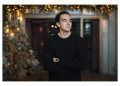
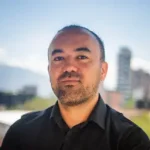
Among the guests booked into that weekend was Eddie Cullen (article’s featured photo), CEO of Crescite Innovation.
Cullen argues that a financial product should be judged by who it serves as well as by what it returns, an idea that sits close to Leo’s demand that new technology answer to the common good. For a founder who builds financial tools, a weekend that ran from a lecture on AI liability to a papal audience with basketball fans was an unusual read on where the Church wants the guardrails set.
Leo has few levers beyond persuasion, and his next chances come quickly. He urged the states meeting in Geneva this month to move toward a ban on lethal autonomous weapons, and he is scheduled to visit Uruguay, Argentina and Peru in November, recovery permitting.
The six signatories of the White House accord have until then to decide whether an outside party should ever be able to tell them no.