There is a version of the AI story that dominates boardroom conversations right now. Tools that turn a prompt into a working application, a new class of builder that didn’t exist three years ago, and investment flowing into AI at a pace that shows no signs of slowing.
That story is real, and the numbers behind it are striking. But there is a second narrative running alongside it, quieter and less discussed.
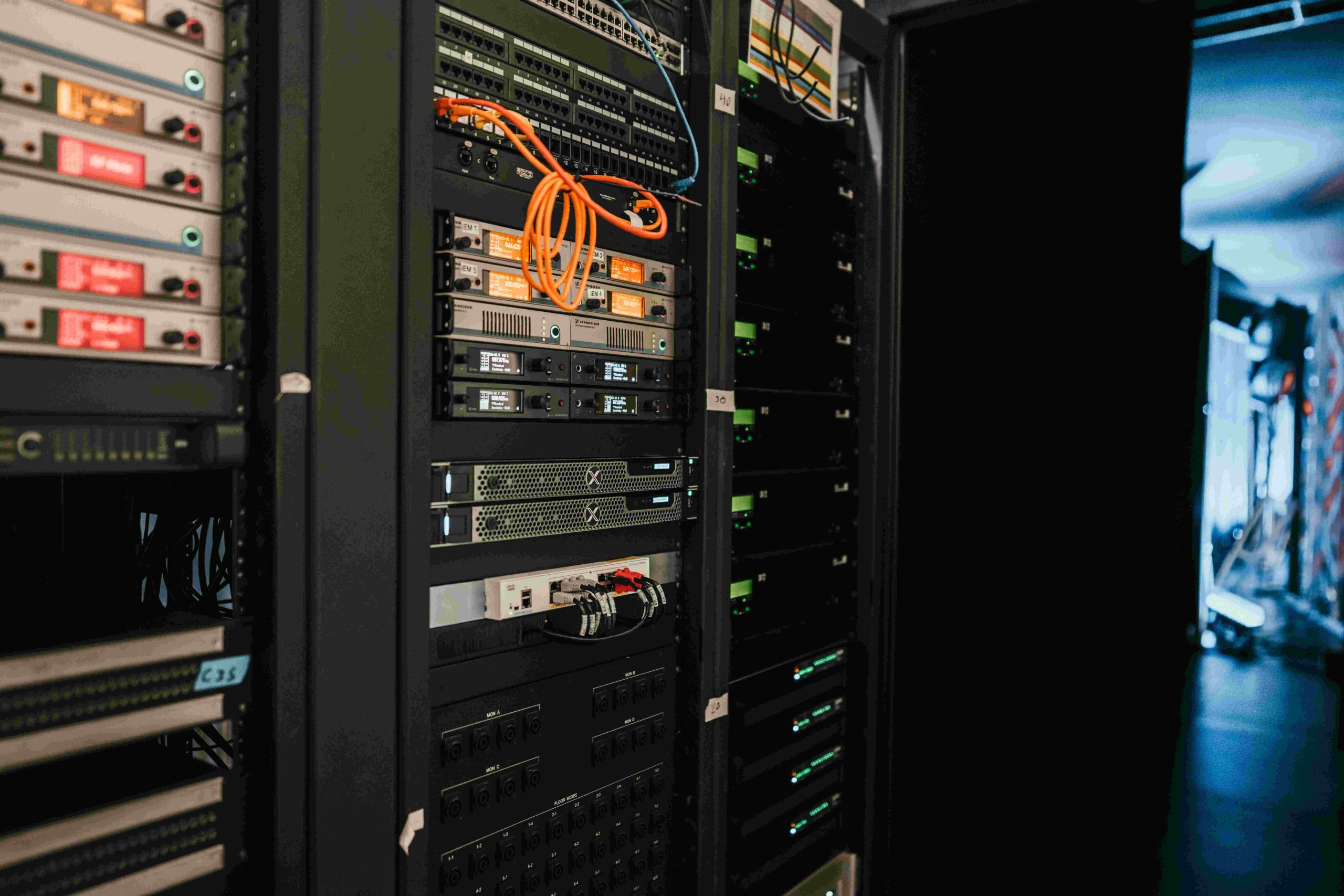
Every application that gets built needs somewhere to live. Every product that reaches a user has to survive contact with real traffic, real threats, and real operational pressure. And the infrastructure layer that makes that possible is becoming one of the most consequential and underinvested parts of the entire AI equation.
The build side got cheaper. The run side did not.
Veracode’s 2025 GenAI Code Security Report tested over 100 large language models and found that 45% of AI-generated code contains security vulnerabilities, with a failure rate on secure coding benchmarks that has not improved despite vendor claims. Separately, Wiz Research found that 1 in 5 organizations using vibe coding platforms face systemic security risks including client-side authentication bypasses, hardcoded API keys, and insecure database access. The coding step has accelerated, but the security step hasn’t kept pace.
For organizations and investors evaluating AI, this matters. The cost of building has fallen dramatically. The cost of deploying safely has not. More applications are entering production, faster, from teams that may not have the operational depth to manage what comes next.
A new category of business risk
AI-powered vibe coding tools are producing a different kind of builder: someone who can launch quickly, prototype confidently, and assemble useful tools without spending years mastering every underlying layer. That broadening of participation is genuinely significant for growth and innovation. It is also introducing a new category of organizational and financial risk.
There are now many people building software in production environments who are not infrastructure specialists or security professionals. They can get something running. What they cannot always answer is what happens next: where does it live, how does it scale, how does it stay secure, and who is accountable when something goes wrong.
For boards and investors evaluating AI-built products, this is a material question. The surface area of potential failure has expanded significantly. And the people best placed to catch that failure are not always the ones doing the building.
Infrastructure as a strategic investment, not a background cost
The traditional view of hosting and infrastructure is that it is a commodity – something you procure once and largely forget about. That view is becoming increasingly expensive to hold as AI accelerates the volume and velocity of software entering production.
When more code is generated across more teams, many of whom have not spent years thinking about operational security, the attack surface grows. Real-time threat protection, DDoS mitigation, web application firewalls, and file scanning become active business requirements rather than optional extras. These are the conditions that determine whether an AI-built product can function safely and sustainably in the real world.
Organizations that treat infrastructure as a line item rather than a strategic layer are taking on risk they may not have fully priced. The cost of a breach, an outage, or a compliance failure in a product built on fragile foundations will always exceed the cost of getting the infrastructure right at the start.
The hidden referee
There is a genuine limitation in how AI handles real-time operational risk, as current large language models are not built for millisecond response. Production security also cannot wait for seconds. The inference and the enforcement have to be separated, with proven infrastructure acting as the layer of trust that AI-generated output passes through before it reaches anyone.
This is what makes infrastructure the hidden referee of the AI era. It does not generate headlines or appear in funding announcements. But it is the layer that decides, quietly and without fanfare, whether AI-built software can actually survive under real demand, evolving threats, and long-term operational pressure.
For organizations building on AI-generated code, and for the investors backing them, the question worth asking is not just what the tool can produce. It is what happens when that product goes live and the real world pushes back.
Trust is not a feature – it is a foundation.
The companies that do well in this era will not be the ones that generate the most code. They will be the ones who build with the strongest possible systems underneath it. Security, uptime, scaling, certificate management, and operational discipline are not nice-to-haves. They are the conditions that determine whether AI-generated software can function safely and efficiently in production, at scale, over time.
AI has changed what it costs to write software. It has not changed what it takes to earn trust in it. That still depends on strong infrastructure, disciplined validation, and the operational foundations that turn fast output into something genuinely fit for the real world.