
Silicon Valleys Journal
  • Topics
    • Finance & Investments
      • Angel Investing
      • Financial Planning
      • Fundraising
      • IPO Watch
      • Market Opinion
      • Mergers & Acquisitions
      • Portfolio Strategies
      • Private Markets
      • Public Markets
      • Startups
      • VC & PE
    • Leadership & Perspective
      • Boardroom & Governance
      • C-Suite Perspective
      • Career Advice
      • Events & Conferences
      • Founder Stories
      • Future of Silicon Valley
      • Incubators & Accelerators
      • Innovation Spotlight
      • Investor Voices
      • Leadership Vision
      • Policy & Regulation
      • Strategic Partnerships
    • Technology & Industry
      • AI
      • Big Tech
      • Blockchain
      • Case Studies
      • Cloud Computing
      • Consumer Tech
      • Cybersecurity
      • Enterprise Tech
      • Fintech
      • Greentech & Sustainability
      • Hardware
      • Healthtech
      • Innovation & Breakthroughs
      • Interviews
      • Machine Learning
      • Product Launches
      • Research & Development
      • Robotics
      • SaaS
  • Media Kit
  • Contact Us
No Result
View All Result
Silicon Valleys Journal
No Result
View All Result
Home Technology & Industry AI

The Future of Personalized Health Can’t Be Built on Data We Don’t Control

By Lisa Loud, CEO of DEPH Labs

SVJ Thought Leader by SVJ Thought Leader
November 1, 2026
in AI, C-Suite Perspective, Enterprise Tech, Future of Silicon Valley, Healthtech, Leadership & Perspective, Leadership Vision, Technology & Industry
0
The Future of Personalized Health Can’t Be Built on Data We Don’t Control

The scale of the recent Oracle Health breach should make everyone working in digital health uncomfortable. Nearly 20 million people reportedly had information compromised, potentially including medical records, addresses, Social Security numbers, diagnoses, medications and test results.

The problem with health data is that you can’t really replace it. If somebody steals your password, you change it. If your credit card gets compromised, you cancel it. You can’t cancel your DNA or request a new medical history. I’ve spent years arguing that privacy needs to be built into technology from the beginning, rather than retrofitted as a compliance feature. That’s becoming much more urgent as AI becomes more embedded in healthcare along with the proliferation of more detailed biological data.

At the same time, I don’t think the answer is to become scared of using health data. It’s arguably the opposite. We have an opportunity to use this information much more intelligently than we do today. AI can identify patterns across huge datasets that would be incredibly difficult for humans to find. Epigenetics can help us understand how our biology changes over time. Genetics gives us another layer, while wearables, biomarkers and lifestyle information can make that picture richer again.

The mistake would be building this future around the same centralized data model that has repeatedly and so clearly demonstrated its weaknesses.

There is no such thing as the average patient

Healthcare has historically depended heavily on averages. We take a population, study what generally happens and use that information to make decisions about individuals. That has obviously produced enormous medical progress, but people aren’t averages. Two people can be the same age and have completely different biological profiles. Their genetics differ. Their lifestyles differ. Their environments differ. Men and women can experience ageing and disease differently. Even two people with similar backgrounds can respond very differently to the same intervention.

This is what we’re trying to address through the wider DEPH ecosystem. We’re interested in bringing together genetics, epigenetics, biological-age research, lifestyle information and AI to build a more individual picture of health. Instead of asking what normally happens to somebody like you, we want to get much closer to understanding what is actually happening to you.

Epigenetics is particularly interesting because DNA isn’t the whole story. Your genetic code provides a foundation, but epigenetic patterns can change alongside age, lifestyle and environmental factors. That gives us a potentially more dynamic way of understanding health.

AI then becomes useful because humans aren’t particularly good at manually interpreting millions of relationships across these different signals. But I don’t want the consumer experience to become more complicated as the science gets more sophisticated.

I’ve seen this mistake before in technology. People building crypto products often expected ordinary users to understand wallets, keys, networks and protocols. Most consumers don’t care how the infrastructure works. They care whether the product works for them. Health should be the same. Nobody should need a PhD in epigenetics to understand their own body.

The goal is to take enormously complicated science and translate it into useful information that somebody can actually act on.

Better AI shouldn’t mean giving away more of yourself

This brings us back to the Oracle breach. The obvious tension in personalized health is that better personalization generally requires more information. An AI that understands your genetics, epigenetics, lifestyle and health history can potentially provide much more relevant insights than one working from population averages.

But that’s also an incredibly sensitive dataset to place in somebody else’s hands.

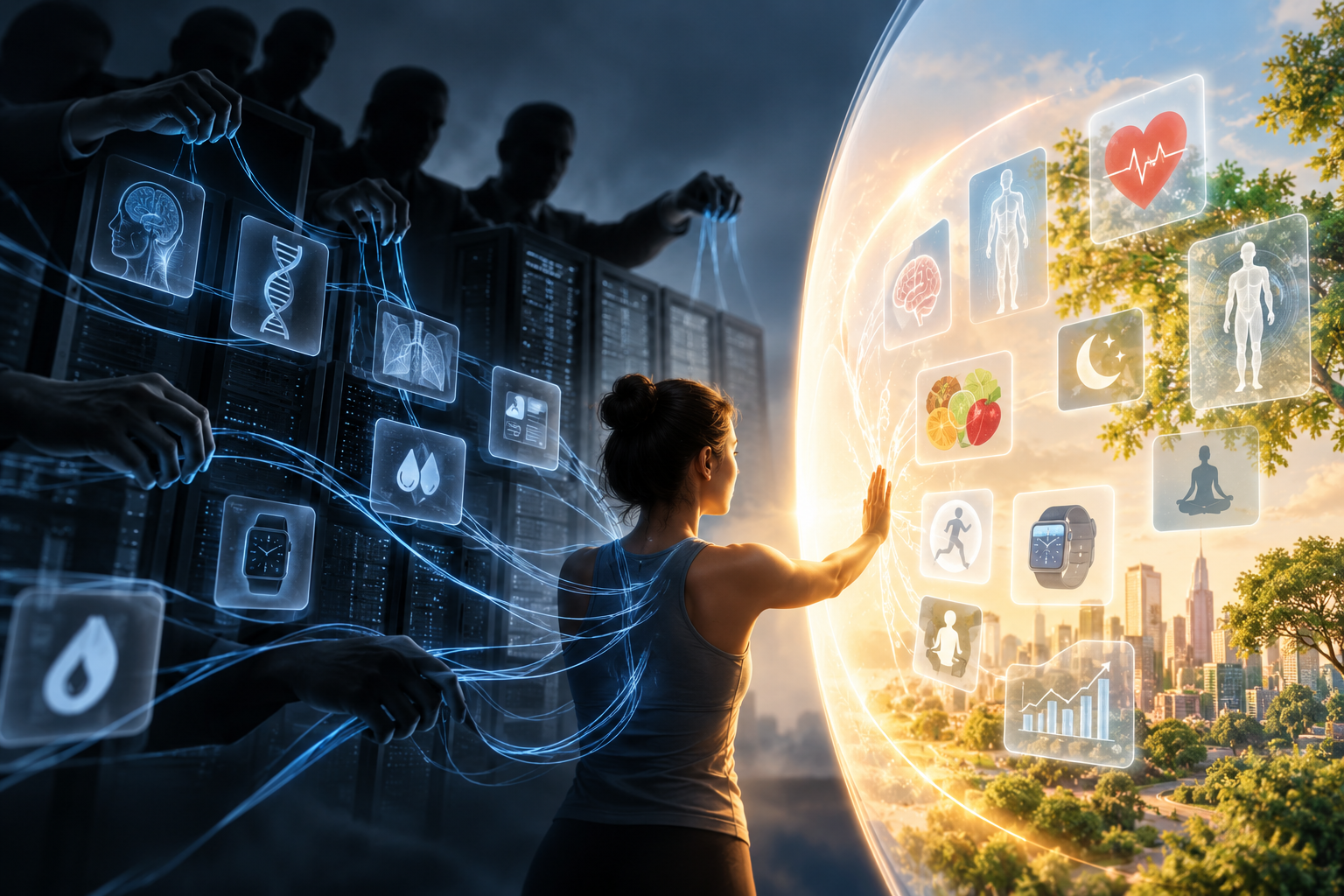
I don’t accept that this means we have to choose between personalization and privacy. A key part of the wider DEPH ecosystem is changing who controls the information in the first place. Health data can remain encrypted and off-chain, while individuals control who gets access, what they can use it for and when that permission ends.

That information could still contribute to scientific research and the development of better AI models, but permission should sit with the individual. This idea has shaped a lot of my work around confidential computing. There are enormous private datasets that could make AI dramatically better, particularly in healthcare. We shouldn’t need to expose all of that information simply to learn from it.

That distinction becomes increasingly important as AI becomes embedded in healthcare. We’re moving toward systems capable of combining biological information, medical histories and real-time lifestyle signals. Done properly, that could help us understand disease earlier, personalize interventions and give people a much clearer picture of how their health changes throughout their lives.

Done badly, we create enormous centralized repositories containing some of the most intimate information humans possess.

The Oracle incident shows why this isn’t some theoretical debate about privacy. We’re already putting incredibly valuable health information into systems that can fail.

The next generation of health technology therefore needs to understand individuals much better while in tandem exposing their underlying information as little as possible. That’s ultimately what personalized health should mean. Not simply giving an algorithm more information about you, but giving you better information about yourself. In this future framework your biology becomes more useful, your health insights become more personal, all while researchers and AI systems are empowered to learn from better datasets. But the underlying information remains yours.

If we’re serious about building healthcare around the individual rather than the average patient, ownership needs to be central to that conversation.


Previous Post

When AI Is Allowed to Be Wrong: Designing Research Around Independent Evidence

Next Post

Why AI Adoption Is Becoming a Software Engineering Challenge

SVJ Thought Leader

SVJ Thought Leader

Next Post
Why AI Adoption Is Becoming a Software Engineering Challenge

Why AI Adoption Is Becoming a Software Engineering Challenge

Leave a Reply Cancel reply

Your email address will not be published. Required fields are marked *

  • Trending
  • Comments
  • Latest
Faith and the Digital Transformation of Religion: How One Person Began Helping Faith Communities and People of Faith

Faith and the Digital Transformation of Religion: How One Person Began Helping Faith Communities and People of Faith

December 27, 2025
The AI Cold War and How to Prepare for It

The AI Cold War and How to Prepare for It

May 1, 2026

What to Do If You Can’t Log Into Your X Account in 2026: A Complete Guide

April 20, 2026
AI’s Most Underrated Role: Giving Enterprise Architects Back Their Focus

AI’s Most Underrated Role: Giving Enterprise Architects Back Their Focus

November 24, 2025
The Human-AI Collaboration Model: How Leaders Can Embrace AI to Reshape Work, Not Replace Workers

The Human-AI Collaboration Model: How Leaders Can Embrace AI to Reshape Work, Not Replace Workers

1

50 Key Stats on Finance Startups in 2025: Funding, Valuation Multiples, Naming Trends & Domain Patterns

0
CelerData Opens StarOS, Debuts StarRocks 4.0 at First Global StarRocks Summit

CelerData Opens StarOS, Debuts StarRocks 4.0 at First Global StarRocks Summit

0
Clarity Is the New Cyber Superpower

Clarity Is the New Cyber Superpower

0
The under-the-radar Artificial Intelligence mistake that businesses are making that’s ‘leaving money on the table’

The under-the-radar Artificial Intelligence mistake that businesses are making that’s ‘leaving money on the table’

November 1, 2026
Your Website Bot Has a Disclosure Deadline: The EU AI Act Rules for Chatbots

Your Website Bot Has a Disclosure Deadline: The EU AI Act Rules for Chatbots

November 1, 2026
How AI Is Changing Care Coordination for Health Plans

How AI Is Changing Care Coordination for Health Plans

November 1, 2026
Missing AI ROI isn’t Hiding in Tokens or Training, It’s in Your Workflows

Missing AI ROI isn’t Hiding in Tokens or Training, It’s in Your Workflows

November 1, 2026

Recent News

The under-the-radar Artificial Intelligence mistake that businesses are making that’s ‘leaving money on the table’

The under-the-radar Artificial Intelligence mistake that businesses are making that’s ‘leaving money on the table’

November 1, 2026
Your Website Bot Has a Disclosure Deadline: The EU AI Act Rules for Chatbots

Your Website Bot Has a Disclosure Deadline: The EU AI Act Rules for Chatbots

November 1, 2026
How AI Is Changing Care Coordination for Health Plans

How AI Is Changing Care Coordination for Health Plans

November 1, 2026
Missing AI ROI isn’t Hiding in Tokens or Training, It’s in Your Workflows

Missing AI ROI isn’t Hiding in Tokens or Training, It’s in Your Workflows

November 1, 2026

About & Contact

  • About Us
  • Branding Style Guide
  • Contact Us
  • Help Centre
  • Media Kit
  • Site Map

Explore Content

  • Events
  • Newsletter
  • Press Releases
  • Reports & Guides
  • Topics

Legal & Privacy

  • Advertiser & Partner Policy
  • Communications & Newsletter Policy
  • Contributor Agreement
  • Copyright Policy
  • Privacy Policy
  • Prohibited Content Policy
  • Terms of Service

Tiny Media Brands

  • Silicon Valleys Journal
  • The AI Journal
  • The City Banker
  • The Wall Street Banker
  • World Lifestyler
  • About
  • Privacy & Policy
  • Contact

© 2025 Silicon Valleys Journal.

No Result
View All Result

© 2025 Silicon Valleys Journal.